Then & Now delivers a startling historical reframing: the modern fear of corporate bigness isn't a new leftist invention, but a foundational American value rooted in the fight against monarchical tyranny. The piece argues that the concentration of power we see today—from sunglasses to search engines—isn't just an economic inefficiency, but a direct echo of the "unjust authority" that sparked the American Revolution.
The Quiet Monopolies We Accept
The commentary opens by exposing the illusion of choice in our daily lives. Then & Now writes, "you find them almost everywhere you look quite literally... Oakley Rayban DK and Y Sunglasses Hut Prada Chanel Ralph Lauren well peer a little closer and you'll find they're all made by one company luxotica." This observation is jarring because it dismantles the consumer's sense of agency. The author extends this to travel, noting that while "hotels.com trvago booking.com kayak Expedia homeway Price Line Travelocity Hotwire orbits" appear distinct, they are "all owned by two companies Expedia group and booking Holdings."
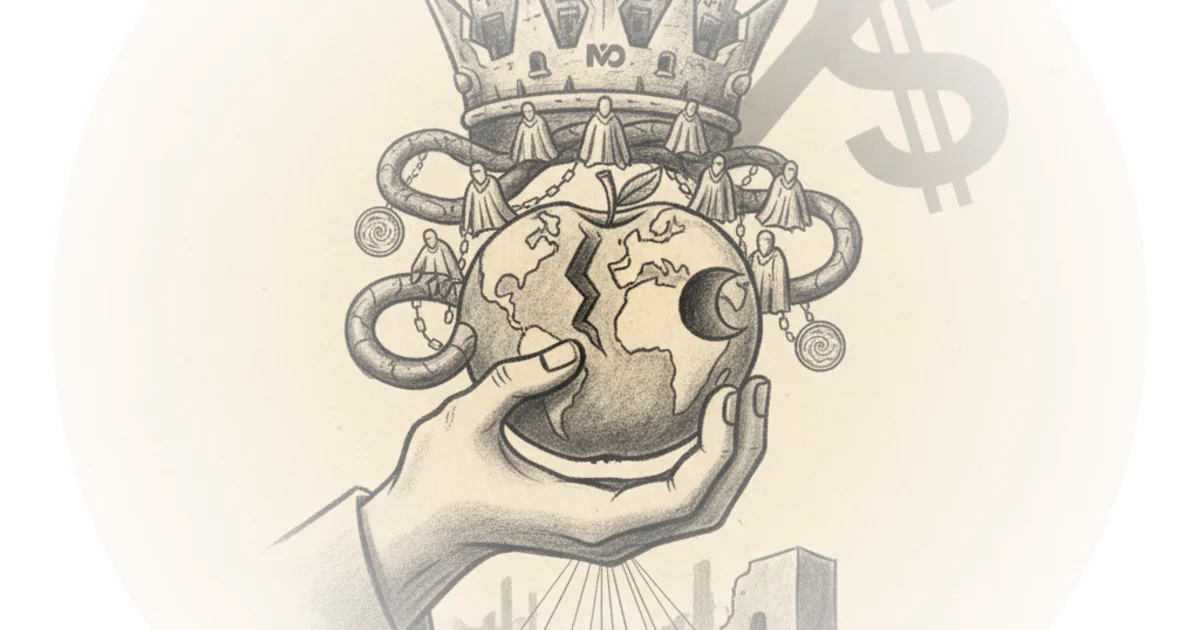
The argument here is that we have normalized a world of "quiet monopolies duopolies oligopolies." This framing is effective because it shifts the blame from individual bad actors to a systemic structure that has quietly consolidated across industries like sugar, banking, and media. Then & Now points out that "Comcast controls 70% of the media Market" and "just four companies control 80% of the beef packing market." The sheer scale of this consolidation suggests that the "invisible hand" of the market has been replaced by a visible, bureaucratic hand. Critics might argue that some of these mergers were driven by genuine efficiency gains that lowered costs for consumers, but the author's focus remains on the long-term erosion of competition and the resulting power imbalance.
"The entire period of American capitalism since the industrial revolution has been an unrelenting Trend towards consolidation... a story about totalitarianism too."
From Monarchs to Boardrooms
The piece's most distinctive contribution is its historical lineage, tracing the anti-monopoly sentiment back to the 17th century and the English courts. Then & Now explains that the original criticism wasn't about corporate power per se, but about "royal monarchical power" granting exclusive trade rights. The author cites Sir Edward Coke, who argued that a monarch could not "restrain from exercising any trade but by Parliament."
This historical context is crucial because it reframes the modern debate. Then & Now writes, "the origin of the criticism against them was not one necessarily of corporate power per se but of royal monarchical power." The argument suggests that the American Revolution was, in part, a revolt against the "Restraint of commer" enforced by the state. As the author notes, "Thomas Jefferson went as far as arguing that the constitution should include the freedom of quote Commerce from monopolies."
The piece draws a sharp parallel between the East India Company's tea monopoly and today's tech giants. Then & Now observes that "monopoly then to them equaled unjust Authority and so at the outbreak of the American Revolution 342 chests of East India Company te were jettisoned into a harbor." The author argues that the founders viewed monopolies as "odious contrary to the spirit of a free government." This historical grounding gives the piece weight, suggesting that the current concentration of power is not just an economic anomaly but a betrayal of the nation's founding principles.
The Shift from Invisible to Visible
The commentary then pivots to the late 19th century, describing how the "invisible hand" of Adam Smith was replaced by a "very visible structure of bureaucratic management." Then & Now writes, "that that invisible process that was happening across the market kind of condensed and moved into boardrooms written out with pens put into spreadsheets."
This transition from market equilibrium to corporate planning is the core of the author's warning. The piece highlights how "giant National conglomerates or trusts dominated their Industries in oil meat packing Railways coal tobacco lead and steel sugar." The author notes that by the end of the 19th century, "over 2,000 companies merg into just 157 corporations." This consolidation was driven by the logic of economies of scale, where "it's much more efficient to have one system unified... than it is to have hundreds separately."
However, the author argues that this efficiency came at a steep cost. Then & Now identifies four main critiques of these trusts: price fixing, political influence, autocracy, and labor suppression. The piece cites Ida Tarbell, who described these corporate leaders as "dictators and Tyran ists." The author also quotes The Economist, which described the leaders of the Erie train line as "absolute dictators neither rendering account."
A counterargument worth considering is that the regulatory frameworks of the Gilded Age were often ineffective or captured by the very industries they were meant to regulate, suggesting that the problem wasn't just the size of the firms but the state's inability to check them. Then & Now acknowledges this by noting that the early monopolies were often "granted by the state by the Monarch," implying that the state's role in enabling these giants is a recurring theme.
Bottom Line
Then & Now's strongest move is connecting the modern anxiety about tech and media consolidation to the revolutionary fervor against the East India Company, proving that the fear of concentrated power is deeply American. The piece's biggest vulnerability is its reliance on historical analogy without fully addressing the unique complexities of digital platforms and network effects that distinguish today's monopolies from their 19th-century predecessors. Readers should watch for how this historical framing influences current antitrust enforcement, as the administration may find new political capital in reviving these founding-era arguments.