Tim Mak's reporting strips away the sterile metrics of modern warfare to reveal a terrifying truth: the most devastating weapon in Kyiv today is not the ballistic missile, but the weaponization of sleep itself. While headlines obsess over interceptor counts and diplomatic shifts, Mak forces the listener to inhabit the paralysis of a civilian who calculates the odds of outrunning a warhead in the split second between a siren and an explosion.
The Geometry of Terror
The piece's most arresting contribution is its refusal to treat missile strikes as abstract data points. Mak writes, "Figures cited in news articles tell you Ukraine is running out of Patriot interceptors in a matter-of-fact manner. But we are here to share with you what cold, faceless numbers can't: what it actually feels like each night." This reframing is essential. It shifts the burden of proof from the geopolitical analyst to the human nervous system. The author argues that the sheer frequency of attacks has normalized the abnormal, creating a society where a 10-year-old girl can distinguish between Zircon and S-300 missiles while clutching a toy fox.
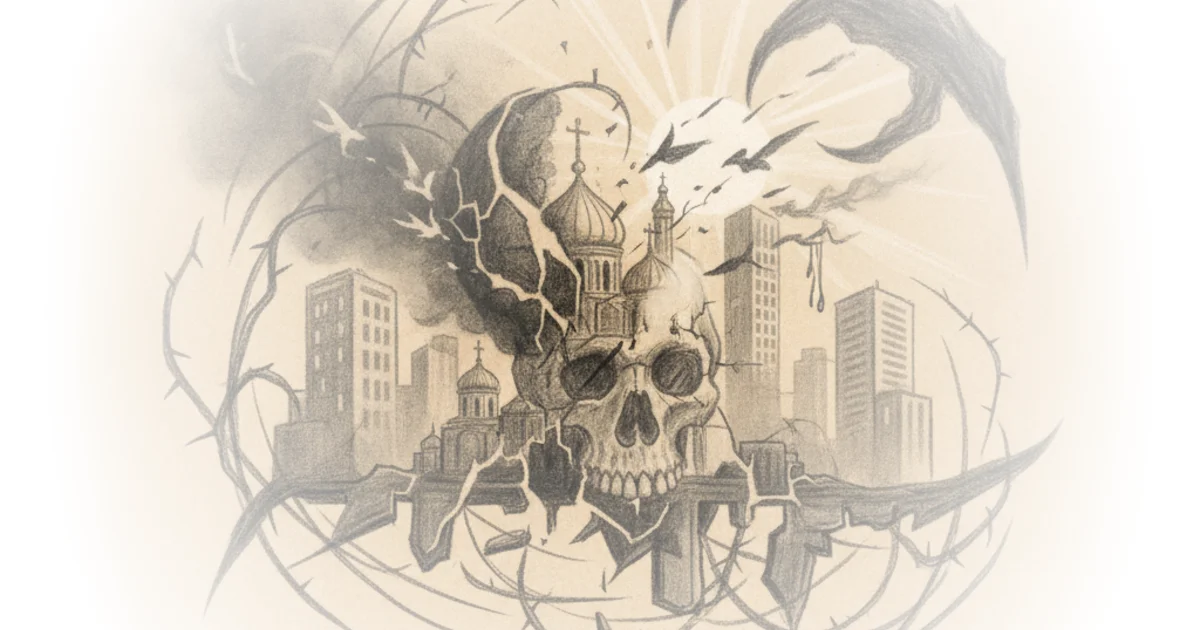
Mak highlights a critical policy failure: the reversal of a potential license for Ukraine to produce its own Patriot interceptors. The administration initially teased the idea, only to leave Kyiv dependent on a dwindling stockpile just as Russia escalated its campaign. This decision has real, visceral consequences. As Mak notes, "Your body has no chance to brace for the danger, yet it is never given the opportunity to relax and process the trauma either." The exhaustion described is not merely fatigue; it is a systemic collapse of the human capacity to rest. Critics might argue that the administration's hesitation was a calculated move to avoid direct escalation with Moscow, but the text illustrates that the cost of that caution is paid in the sleepless nights of civilians.
"I feel as though I'm living in a constant state of alert, bolting into the hallway at every sudden noise in the night, even when it's just a passing car or a train rolling beneath my window."
The narrative draws a sharp distinction between the "productive dread" of a warned attack and the chaos of surprise strikes. When warnings are issued, residents can prepare, sleep in pajamas, and wait in shelters. But when the warning disappears, the dynamic changes entirely. Mak describes the terrifying calculus of the moment an alert comes too late: "Will I be faster than the next missile or is the missile faster than me?" This question transforms the act of running for cover from a safety measure into a gamble with one's life. The author points out that in a recent attack, seven people died while trying to reach a shelter less than 50 meters from their homes, proving that the act of fleeing can be more dangerous than staying put.
The Infrastructure of Survival
The commentary also exposes the stark inadequacy of Kyiv's protective infrastructure. Despite having over 4,300 registered protective structures, only 512 are legally classified as true shelters capable of withstanding extended emergencies. Many are inaccessible to the general public or are merely basements. Mak observes, "A building or a basic shelter... can save you from debris, but not from a direct hit." This reality forces residents to make impossible choices. The author notes that while the sound of an explosion is terrifying, it paradoxically brings relief because it signals the missile has already hit somewhere else.
This section of the piece is strengthened by the context of the broader conflict. Just as the Graham-Cassidy amendment once sought to overhaul healthcare by shifting burdens to states, the current strain on Kyiv's defenses shifts the burden of survival entirely onto individuals. The lack of a robust air defense net, exacerbated by the diversion of systems to the Middle East, leaves the capital exposed. Mak writes, "Life in Kyiv now feels like we are under thousands of spotlights — watched, exposed, yet ignored until the picture becomes horrific enough that no one can look away." This captures the frustration of a population whose trauma is only validated by the scale of destruction, as if 30 missiles are somehow less tragic than a hundred.
The Global Disconnect
The piece concludes by addressing the disconnect between the international audience and the daily reality of war. Mak notes that friends abroad ask, "U stayin safe over there?" with a tone of distant worry, unaware that safety is no longer a binary state. The author argues that the "smaller" attacks, which do not make international headlines, carve a different, deeper emotional scar than the record-breaking strikes. "I will never acclimate, as some said I would, to hiding underground while missiles rain down and take civilian lives, steal childhoods, and chip away at the sanity of those lucky enough to survive," Mak writes.
This framing challenges the notion of "acclimatization" often pushed by observers who view war as a manageable condition. The author insists that the constant threat of death prevents any return to normalcy. The narrative also touches on the diplomatic stalemate regarding Starlink, where the former defense minister pushed for expanded capabilities to target Russian missile systems, only to be blocked by concerns over escalation. This highlights the tension between the immediate need for defense and the long-term strategic fears of the executive branch.
"There was one time when the missile was faster: I heard a loud click and an even louder explosion while I was outside and nothing could protect me. I am lucky the missile didn't hit nearby."
The argument here is that luck, not policy or infrastructure, is the primary determinant of survival. This is a devastating indictment of the current state of affairs. While the administration debates sanctions and the Senate passes the Graham sanctions bill to pressure Russia's economy, the people in Kyiv are left to calculate the speed of their own running against the trajectory of a ballistic missile.
Bottom Line
Tim Mak's piece succeeds by refusing to let the reader look away from the human cost of policy decisions, grounding abstract geopolitical shifts in the visceral terror of a parent waiting for a child to return from a basement. Its greatest strength is the unflinching portrayal of the psychological toll of living without sleep, though it could have explored more deeply how international aid could be redirected to address the specific gap in shelter infrastructure. The reader must watch for how the administration balances the risk of escalation against the immediate, lethal reality facing civilians who are out of time and out of options.