This piece reframes the birth of modern free agency not as a triumphant victory, but as a cold, calculated legal maneuver that nearly cost two pitchers their careers. The Baseball Nerd makes a startling claim: the moment the reserve clause was broken, the arbitrator who did it was fired on the spot, revealing the raw power dynamics that still define labor negotiations today.
The Architecture of Control
The article opens by dismantling the romanticized view of the 1975 ruling. The Baseball Nerd writes, "The moment Seitz handed down his decision, John Gaherin, the owners' chief negotiator, handed him a letter of dismissal." This immediate reaction underscores the owners' fear; they were not merely losing a negotiation, they were losing a system of control that had existed since 1879. The author effectively illustrates how the reserve clause was a "paragraph buried in every player contract" that owners interpreted as perpetual ownership, turning players into property rather than employees.
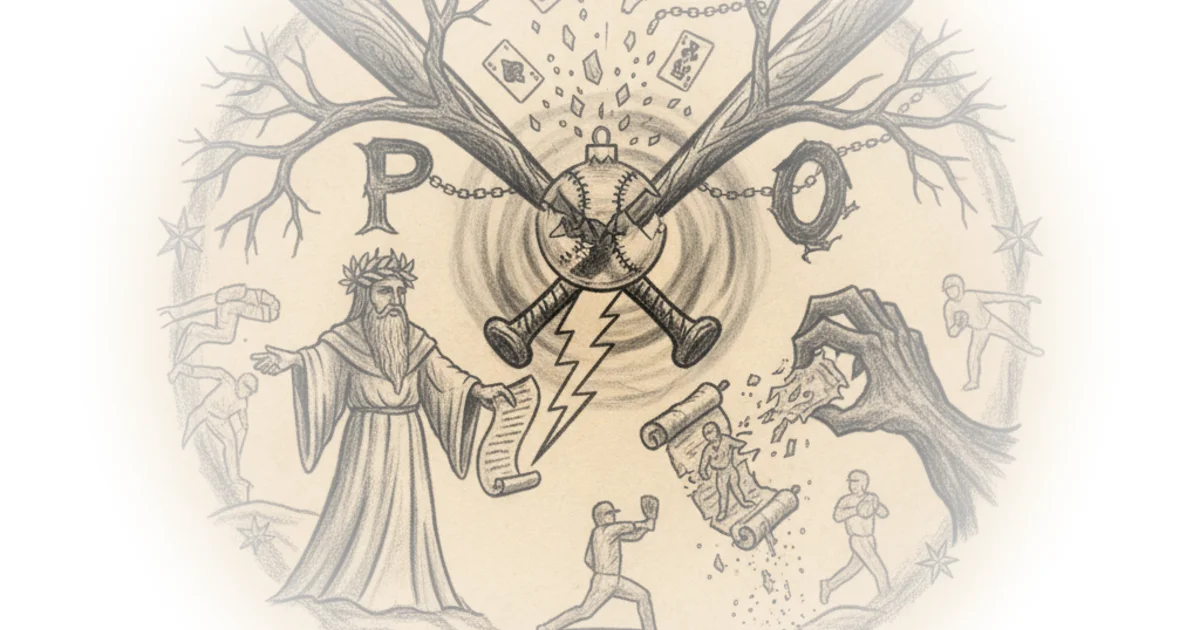
The narrative correctly identifies that the courts were a dead end, a lesson learned when Curt Flood lost his Supreme Court case in 1972. As The Baseball Nerd notes, "His lawsuit had cracked the foundation without bringing the structure down." This historical context is vital because it explains why Marvin Miller, the executive director of the Major League Baseball Players Association, pivoted to the grievance process. The strategy required a player willing to play a full season without a contract, a gamble that most athletes could not afford.
"It was less of an economic issue than a fight for the right to have control over your own destiny."
This quote from Andy Messersmith, delivered a decade after the fact, captures the emotional core of the dispute. The author uses Messersmith's refusal to sign as the catalyst, contrasting his desire for a no-trade clause with the owners' rigid refusal to negotiate. The Baseball Nerd points out that owner Walter O'Malley's claim that the league would not approve a no-trade clause was dismissed by Miller as "Absolute bull," highlighting the absurdity of the owners' position.
The Man Who Had Nothing to Lose
Perhaps the most compelling section of the coverage is the portrait of Dave McNally. While Messersmith had a career to protect, McNally was a retired pitcher in Montana with no salary at stake. The Baseball Nerd writes, "A retired pitcher in Montana, with no salary at stake and no career to protect, was the owners' worst nightmare: a man they could not buy." This distinction is crucial; it shows that the owners' power relied entirely on the players' economic vulnerability.
The article details how the Expos offered McNally a $25,000 signing bonus and a $125,000 contract just to drop the grievance, only to be rebuffed. The author includes a poignant reflection from former teammate Wally Bunker: "To this day, I have tremendous respect for Dave... because he turned down significant money in his pocket for a cause that helped a lot of other future players." This framing elevates McNally from a footnote to a co-architect of the revolution, emphasizing that the victory was a collective act of defiance rather than a single legal win.
Critics might note that the article glosses over the long-term consequences for the players themselves. While the ruling created free agency, it also introduced a new era of volatility and, as the text admits, "hate mail" for Messersmith. The shift from a stable, albeit exploitative, system to a high-stakes market was not universally welcomed by the fanbase or the players immediately.
The Unfinished Revolution
The commentary shifts to the present day, arguing that the 2027 collective bargaining agreement negotiations are a direct continuation of the 1975 struggle. The Baseball Nerd asserts, "The Seitz decision gave players the right to a market. It did not guarantee the market would be fair." This is a sharp observation that challenges the notion that free agency solved the labor dispute. Instead, it merely changed the battlefield.
The author connects the historical dots to modern issues like service time manipulation and the treatment of minor league players. "Owners have spent fifty years finding new ways to suppress player earnings within the boundaries free agency created," the piece states. This reframing suggests that the current labor tensions are not a new problem but a persistent structural flaw that the 1975 ruling exposed but never fully fixed.
"Messersmith wanted a no-trade clause and got a revolution instead. McNally wanted nothing at all and gave every player who came after him the right to something."
This concluding thought from the author serves as a powerful summary of the unintended consequences of the legal battle. It highlights the irony that the players who risked everything did not necessarily reap the most personal rewards, yet their sacrifice built the foundation for the $4.5 million average salary seen today.
Bottom Line
The Baseball Nerd delivers a masterful analysis that strips away the mythology of free agency to reveal the gritty, high-stakes legal warfare beneath. The strongest element is the juxtaposition of Messersmith's career risks with McNally's principled stand, proving that the system was only broken by those who had the most to lose and those who had nothing to lose. The piece's vulnerability lies in its brief treatment of the fan perspective, which often viewed these changes as the destruction of the game's tradition, but this omission does not undermine the central argument about labor rights. Readers should watch the 2027 negotiations closely, as the same dynamics of leverage and suppression that defined 1975 are once again at play.