Mick Ryan delivers a sobering reality check: the war in Ukraine is no longer just a battle for territory, but a test of whether a nation can systematically dismantle an adversary's war machine from the inside out. While diplomatic channels remain frozen, Ryan argues that the most significant shifts are happening in the skies over the Urals and the deep waters of the Pacific, where the rules of engagement are being rewritten in real time.
The Strategic Shift in Ukraine
Ryan frames the current conflict not as a stalemate, but as a dynamic contest where Ukraine is increasingly dictating the terms of engagement. He points to a prisoner exchange on April 24 as a rare diplomatic signal, noting that "both parties have an interest in limited bilateral engagement, even in the absence of a broader settlement." However, he quickly pivots to the ground reality, where the human cost remains staggering despite tactical shifts. The author highlights that while Russia has failed to make net territorial gains in early 2026, the price of this attrition is measured in civilian lives. Ryan writes, "In Dnipro, a combined missile-and-drone strike destroyed a residential building and injured civilians; in Kharkiv, an enemy drone struck a multi-storey residential building." These are not collateral details; they are the central tragedy of a war where air defense, though improving, remains imperfect.
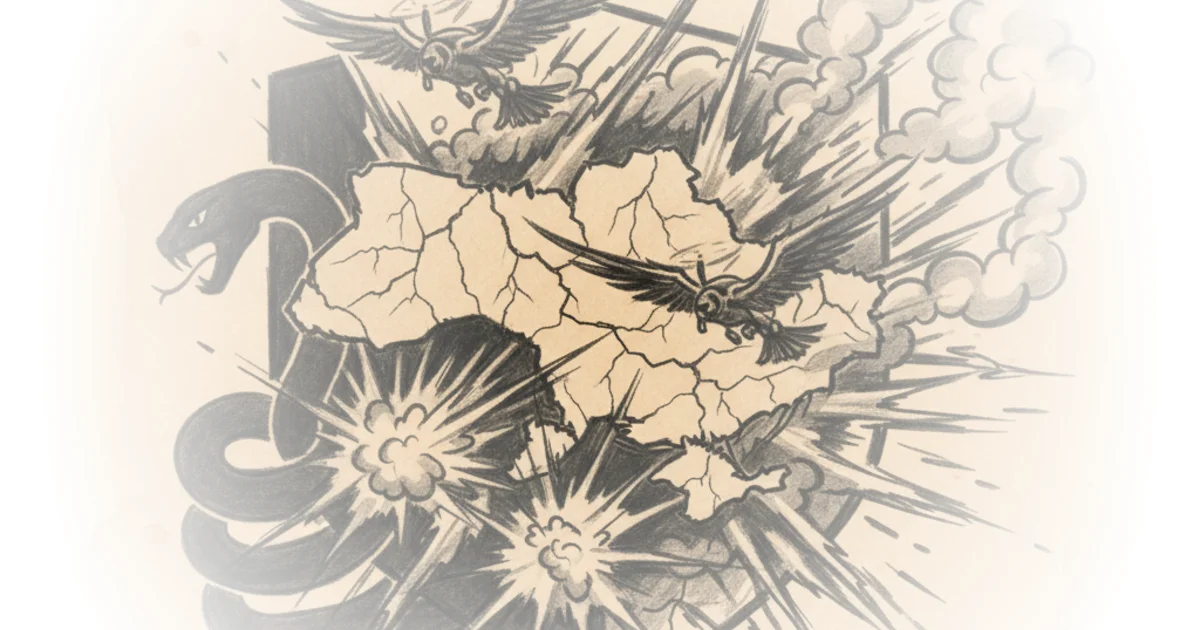
The most striking development Ryan analyzes is Ukraine's ability to strike deep into Russian territory. He details how Ukrainian drones bypassed air defenses to reach the Urals, covering over 1,800 kilometers. "Ukrainian drones reached the Urals for the first time, covering more than 1,800 kilometres from the Ukrainian border and bypassing Russian air defences for over ten hours," Ryan notes. This capability has forced a strategic dilemma for Moscow. By targeting oil refineries and military training schools, Ukraine has degraded Russia's economic engine and its ability to train future pilots. Ryan observes that this campaign has "damaged or destroyed approximately 20 percent of Russia's refining capacity since early 2024," a move that prioritizes long-term strategic pressure over short-term diplomatic comfort.
Critics might argue that such deep strikes risk escalating the conflict or alienating international partners concerned about global energy prices. Yet, Ryan counters this by suggesting that the alternative—allowing Moscow to fund the invasion indefinitely—is far costlier. He emphasizes that "degrading Russian oil revenues, even at some diplomatic cost, is preferable to permitting Moscow to continue funding the invasion."
"Survivability is increasingly tied to the concealment of critical nodes rather than the protection of platforms alone."
This insight into the changing nature of warfare is crucial. Ryan draws on data from the Snake Island Institute to show that Russia is losing air defense systems faster than it can replace them, striking 27 Pantsir systems in a period where production is estimated at only 30 to 45 units annually. This attrition is not just a numbers game; it leaves Russian cities and infrastructure vulnerable, a fact that "demonstrated that no part of Russia's territory now sits safely beyond Ukrainian reach."
The Pacific: A New Front of Tension
Ryan seamlessly connects the European theater to the Pacific, arguing that the lessons of attrition and deep strikes are being applied to the contest between China and its neighbors. He recounts his recent visit to Taiwan, where he found a nation bracing for a sustained pressure campaign. The focus here is on the shifting balance of power, exemplified by Exercise Balikatan 2026. Ryan highlights that this year's exercise is the "largest iteration of this annual exercise since it began in 1991," with Japan deploying its largest contingent ever to participate in live-fire drills near the disputed Scarborough Shoal.
The response from Beijing has been aggressive, fitting a pattern Ryan describes as a "grey-zone playbook." He notes that "every allied exercise draws a proportionate Chinese military response, ratcheting up the tension in the region." This includes the transit of the aircraft carrier Liaoning through the Taiwan Strait and the erection of floating barriers to block Philippine fishing boats. Ryan's framing is clear: these are not isolated incidents but a coordinated strategy to alter facts on the water. "This pattern of action and Chinese counter action is now well established," he writes, warning that the region is moving toward a more volatile status quo.
The connection to the broader geopolitical landscape is sharp. Ryan suggests that just as Ukraine has forced Russia to redeploy air defenses, the Pacific nations are forcing China to stretch its naval resources. He notes that the geographic scope of the exercises, concentrated in Luzon and facing both the South China Sea and Taiwan, sends a "clear and unambiguous message that the Philippines and its partners are prepared to defend the rules-based international order."
Bottom Line
Ryan's analysis is most compelling when it strips away the noise of diplomatic posturing to reveal the hard mechanics of modern conflict: the erosion of air defenses, the targeting of economic infrastructure, and the human toll of aerial bombardment. His argument that Ukraine has gained a strategic advantage through deep strikes is supported by concrete data on Russian losses, though the vulnerability remains the sheer scale of Russian manpower and the potential for escalation. The reader must watch whether the Pacific's grey-zone tactics can be contained before they harden into open conflict, just as the war in Ukraine has shown that no territory is truly safe from the reach of modern drones.