Most people believe credit card rewards are a generous gift from banks to savvy shoppers, but PolyMatter dismantles this illusion with a startling economic reality: the lavish perks enjoyed by the wealthy are not funded by bank profits, but by a hidden tax on the poor and on merchants who cannot opt out. This piece is essential listening because it exposes the mechanics of a system where your free airport lounge access is likely subsidized by a neighbor paying 20% interest on a car repair or a local bakery baking fees into every loaf of bread.
The Myth of Generosity
PolyMatter begins by painting a picture of the American credit card landscape as a "Paradise" where an 18-year-old with no job can instantly access thousands of dollars and earn significant cash back. However, the author quickly pivots to the core economic principle driving this industry. "For every lucky card holder redeeming free business class flights to Cancun there's another one still paying 20% interest on a car repair from 3 years ago," PolyMatter writes. This observation sets the stage for the piece's most provocative claim: that the common assumption—that rewards come from interest paid by the poor—is actually incorrect.
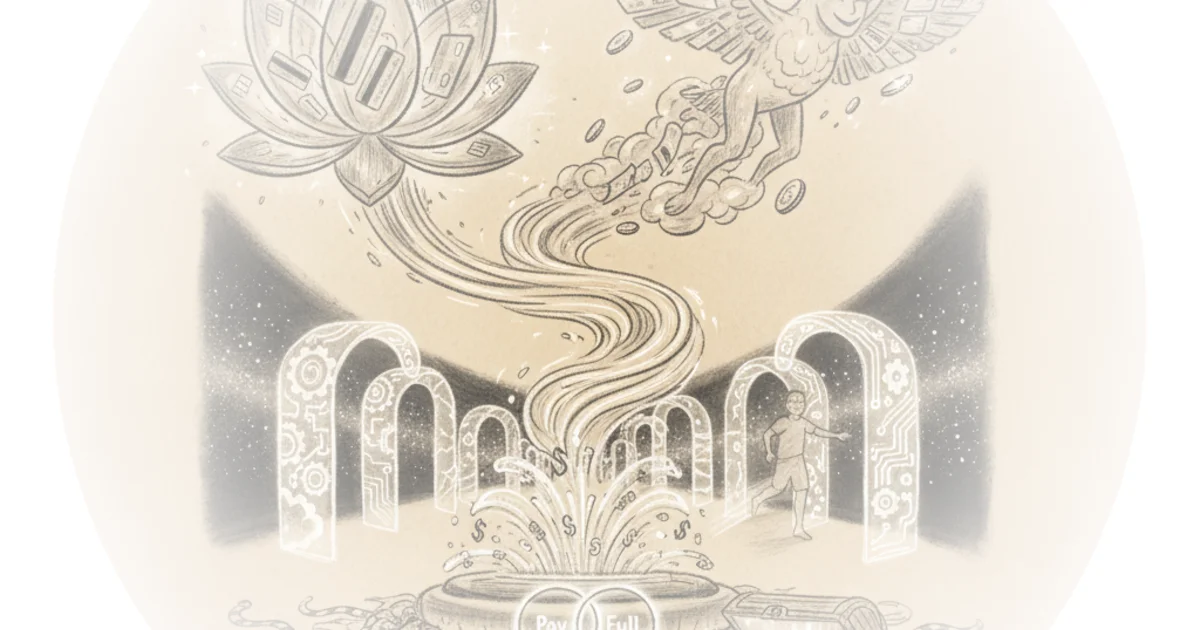
The author argues that banks are not charities, nor are they losing money on high-reward customers to subsidize them with interest from the struggling. "Credit card companies despite their best efforts to appear otherwise are not Charities for rich people," PolyMatter states, noting that the industry is far too sophisticated to rely on a model where they lose money on one group to make it back on another. Instead, the real engine of profit lies elsewhere. The commentary here is sharp and effective because it forces the listener to abandon the simple narrative of "rich vs. poor" within the cardholder base and look at the transaction fees paid by merchants.
The Interchange Engine
The piece shifts to the true source of revenue: interchange fees. PolyMatter explains that when you buy a banana, your money passes through three intermediaries, each taking a slice. "The biggest myth about credit cards is that you can outsmart City Bank simply by paying your bill on time," the author asserts. This is a crucial distinction for the busy listener to grasp; paying your bill on time does not make you "win" against the bank, because the bank is profiting from the merchant, not you.
The argument details how these fees, which are a percentage of every transaction, have skyrocketed. PolyMatter notes that in 2008, Home Depot spent more on these fees than on health care for its 300,000 employees. The author then traces how American Express changed the game by raising these fees to offer better rewards, forcing competitors like Chase to follow suit in a "rewards arms race." "American Express is not really in the business of lending money... it's becoming increasingly clear that it's really in the business of hoarding wealthy Americans," PolyMatter writes. This reframing of credit card companies as "toll booths" between merchants and wealthy spenders is the piece's analytical high point.
Critics might note that merchants do benefit from the increased spending and fraud protection that credit cards provide, suggesting the fees are a fair exchange for value. However, the author counters that the rewards often exceed the incremental spending they generate, turning the system into a transfer of wealth rather than a value-add.
The Hidden Subsidy
Perhaps the most disturbing revelation in the coverage is how the cost of these rewards is distributed. PolyMatter explains that merchants cannot charge different prices for different cards due to network rules, so they bake the average cost of interchange into the price of goods for everyone. "In 2010 economists at the Federal Reserve estimated that the average cash household loses $149 a year this way and the average card household receives an incredible $1,133," the author points out. This creates a regressive system where those who pay with cash—often the poorest Americans—are effectively subsidizing the travel perks of the wealthy.
Families on food stamps are effectively supporting the 1%.
The author highlights that this dynamic is obscured by design. While the benefits of rewards are visible and celebrated, the costs are invisible, hidden in the price of a loaf of bread or a tank of gas. PolyMatter argues that this lack of transparency is why regulation has been so difficult, noting that politicians face confusion and anger if they try to cap these fees because voters fear losing their points.
The Global Context and Regulatory Failure
The piece concludes by contrasting the American system with the rest of the world. PolyMatter observes that the US is an outlier in its "credit card Paradise," where the average American owns nearly four cards while the French average is less than one. The difference, the author explains, is that the European Union capped interchange rates, which effectively killed the lavish rewards market there. "0.3% doesn't leave enough room for free trips to Hawaii," PolyMatter writes, illustrating the direct link between regulation and the availability of perks.
The commentary ends on a note of political frustration, noting that powerful lobbying groups like "The Points Guy" actively fight against legislation that would cap these fees, framing it as a loss for consumers. The author suggests that without regulation, the status quo of this hidden wealth transfer will continue, as the system is designed to be opaque and the beneficiaries are vocal.
Bottom Line
PolyMatter's strongest contribution is exposing the regressive nature of interchange fees, proving that the credit card rewards system is a hidden tax on the poor and cash users. The piece's biggest vulnerability is its near-total dismissal of the merchant benefits regarding fraud protection and sales volume, which some economists argue justify a portion of the fees. Readers should watch for the ongoing legislative battles over the Credit Card Competition Act, as the outcome will determine whether this "Paradise" remains exclusive to the few or is reined in for the many.