In an era where algorithms dictate our cultural diet, this piece from Reason offers a startling reminder of what was lost when radio became a prepackaged commodity: a curator who treated absurdity as a serious act of cultural liberty. The article doesn't just celebrate a DJ; it reframes Barret Hansen's 55-year career as a quiet, decades-long rebellion against censorship and conformity, arguing that the most profound political act can sometimes be playing a song about fish heads. This is not nostalgia; it is an analysis of how a single voice can dismantle barriers that institutions spend billions trying to build.
The Architecture of Absurdity
The piece argues that Hansen's true legacy lies not in the novelty hits themselves, but in the radical unpredictability of his programming. In the early 1970s, mainstream media was suffocating under strict codes. Reason reports, "Television shows still had to pass strict censorial review to be aired, and the same code policed much of what could be heard on mainstream radio." Hansen's show was the breach in the dam. He juxtaposed the innocent with the illicit, playing "Beep Beep" alongside Ruth Wallis's "Davy's Dinghy" (not about a boat) and the Lemon Sisters' "In My Country," which the article notes features lyrics like, "The swamp is thick, but don't be a wussie/Come steer your canoe right through my pussy." This wasn't just shock value; it was a deliberate dismantling of the gatekeepers who decided what was "appropriate" for the American public.
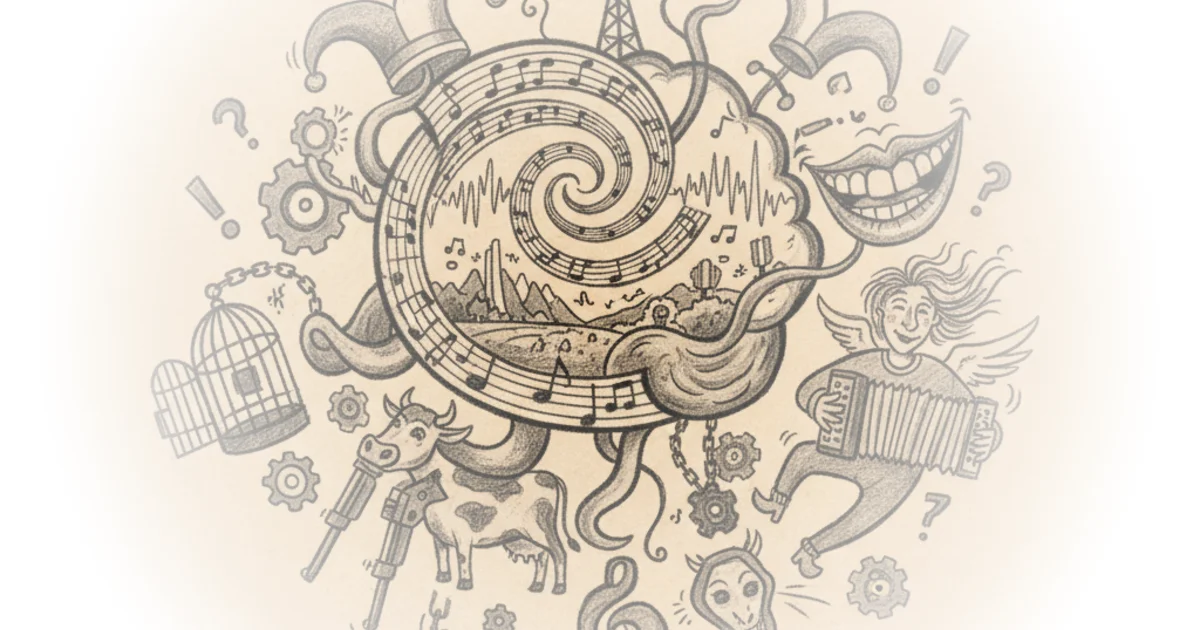
The coverage highlights how this approach created a unique listener experience. "Listeners never knew what Hansen might play," the editors note, creating a sense of shared secret knowledge among the audience. This aligns with the historical context of radio's golden age, where the medium once served as a primary engine for cultural disruption before the rise of rigid formatting. By refusing to categorize humor, Hansen validated the listener's intelligence, treating them as peers rather than consumers. A counterargument might suggest that novelty songs are inherently trivial and lack the staying power of serious art, yet the piece effectively counters this by showing how these tracks preserved voices that would otherwise have been erased by the cultural mainstream.
"I didn't think of myself as being in the same boat as those people... I just thought of myself as playing things on the radio that you would never otherwise hear on the radio."
The Mentor and the Muse
Perhaps the most compelling section of the article details the symbiotic relationship between Hansen and "Weird Al" Yankovic. The piece posits a causal link that is often overlooked: "There would be no Weird Al if there were no Dr. Demento." Reason reports that Hansen didn't just play Yankovic's early tapes; he exposed the young musician to a lineage of satirists like Tom Lehrer and Stan Freberg, effectively curating his education. The article notes that Hansen "considered myself perhaps a bit of a father figure" to Yankovic, a relationship that transcended the typical manager-talent dynamic. "I never managed Weird Al," Hansen is quoted as saying, yet his influence was arguably more profound because it was rooted in mentorship rather than commerce.
This dynamic underscores a broader point about the ecosystem of comedy. While the article mentions that Johnny Carson or Lorne Michaels could launch careers, Hansen's role was distinct because he was an arbiter of musical comedy specifically, a niche that required a deep, encyclopedic knowledge of the genre. The piece illustrates this by noting that Yankovic's breakout song, "Another One Rides the Bus," was written in a cabin where he was staying with Hansen. This personal investment highlights a model of cultural transmission that is increasingly rare in a digital age where discovery is passive. Critics might argue that the internet has democratized this process, allowing artists to bypass gatekeepers entirely, but the article suggests that without Hansen's curation, the quality and context of that comedy would have been lost.
The Libertarian of the Airwaves
The editorial takes a sharp turn to analyze the political philosophy underpinning the show, labeling it a form of "cultural libertarianism." The piece argues that Hansen's belief in tolerance and freedom was the show's true engine. "Hansen believes in tolerance and freedom, and he brought that view to his show," the editors state, noting that he played material from all races, genders, and ages as long as it wasn't cruel. This philosophy was tested when he aired songs mocking political correctness in the early 1990s, arguing that colleges were "defeating their mission of teaching people how to think for themselves." The article connects this to his joining the Libertarian Party in the 1980s, suggesting his show was a practical application of the belief that "barriers are bad whether they come from the right or the left."
This framing is particularly potent when contrasted with the current political climate. The piece notes that in his final episodes, Hansen "decried the bitterness of contemporary politics," observing that anger had made political songs less funny. This is a crucial distinction: the show wasn't about pushing a specific agenda, but about preserving a space for genial toleration. The article cites Harry "The Hipster" Gibson, whose 1943 song "Who Put the Benzedrine in Mrs. Murphy's Ovaltine?" was banned for being "subversive" until Hansen played it. Gibson told the DJ, "You probably didn't know it was labeled subversive," to which Hansen chuckled, admitting he knew exactly what he was doing. This moment encapsulates the show's power: it was a deliberate, informed act of defiance against censorship.
"Occasionally [it] would cross my mind... that I was a gatekeeper, that if I could open a door, other people could walk through it. 'I don't like barriers,' he adds."
The End of an Era
The final section of the coverage addresses the decline of the format, attributing it to the rise of the internet and prepackaged radio. "Those that remain tend to feature prepackaged formats that suppress the spontaneity and originality that the best disc jockeys brought to their programs," Reason reports. While the article acknowledges that artists like Kira Coviello are still making "demented" music, it laments the loss of the centralized curator. The piece suggests that while the internet allows for discovery, it lacks the human curation that made Hansen's show a "lifeline" for listeners. "Each Sunday, Hansen's train would take us into a demented land and return us home safe and sound," the article concludes, evoking a sense of community that is difficult to replicate in an algorithmic feed.
This analysis holds up well against the backdrop of modern media fragmentation. The loss of the DJ as a cultural gatekeeper means we have more content but less shared experience. The piece effectively argues that Hansen's retirement marks the end of an era where a single voice could shape the national conversation about humor and freedom. While the internet has lowered the barrier to entry for creators, it has also removed the filter that ensured a certain level of quality and context, leaving audiences to navigate a sea of content without a guide.
Bottom Line
This piece succeeds by elevating a story about funny songs into a profound meditation on cultural freedom and the human need for curation. Its strongest argument is that Hansen's show was a practical exercise in libertarianism, proving that tolerance and humor are powerful antidotes to censorship. The article's biggest vulnerability is its slight romanticization of the pre-internet era, which may overlook how the digital age has allowed niche voices to thrive without a single gatekeeper. However, the core insight remains vital: in a world of algorithms, the human voice that dares to be weird is still the most revolutionary force we have.