Tom van der Linden argues that the most fascinating aspect of the recent sequel is not its failure to match the original, but its bold, albeit flawed, attempt to deconstruct the very idea of righteous vengeance. He suggests the film captures a modern disillusionment where rage and justice are no longer aligned, a thematic pivot that feels more urgent than a simple retread of past glories.
The Fracture of the Hero
Van der Linden begins by acknowledging the film's ambitious premise: it intentionally breaks the unified character of the original hero. "Unlike the first movie where Maximus resolving his own Vendetta was perfectly aligned with the Redemption of Rome as a whole in Gladiator 2 it is quickly revealed that these two elements do not go hand in hand here but actually come at the cost of each other." This is a sharp observation. The film forces the audience to confront a world where personal anger might actually harm the collective good, a complex moral landscape that the first film never had to navigate.
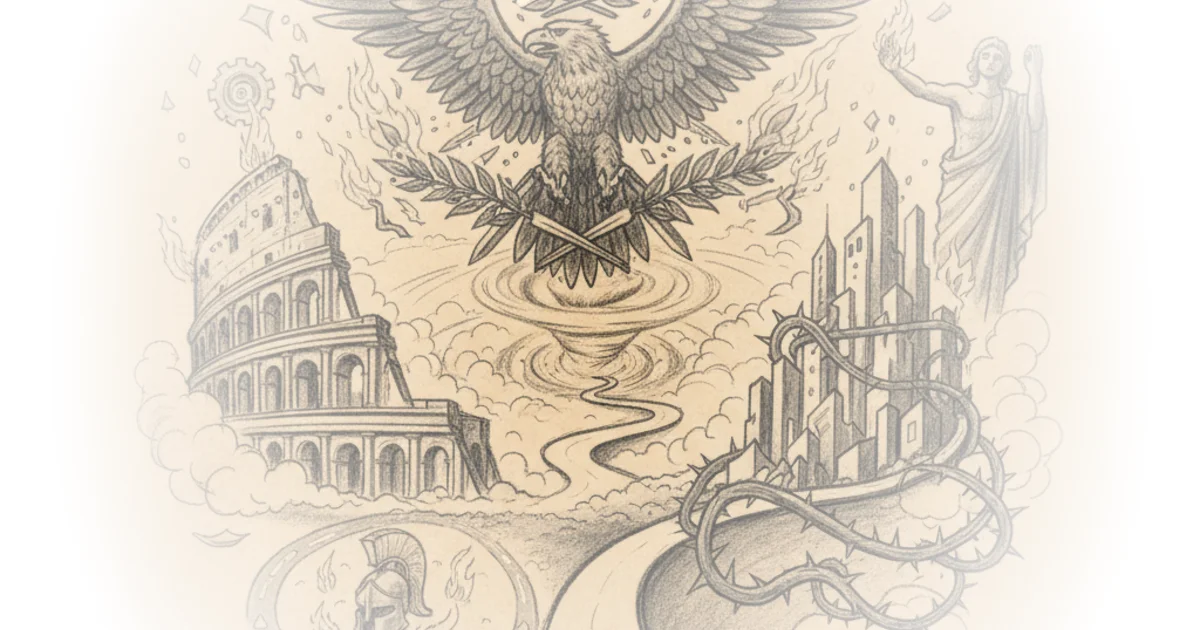
The author posits that this shift reflects a broader cultural fatigue. "The dream of Rome has been forgotten... this city is diseased it's a state of De gate that has not just allowed harmful forces to flourish but that also significantly complicated the path towards righteous ones." Van der Linden sees this not as a weakness, but as an accurate mirror of our current era, where the path to justice is obscured by systemic decay. However, one might argue that by making the moral compass so ambiguous, the film risks alienating viewers who seek the clear heroic catharsis that defined the genre for decades.
"Gladiator 2 is a story about recollecting ourselves on the prus of a grand societal collapse it's about realigning rage and action emotion and reason."
The Shadow of Power
The commentary takes a compelling turn when analyzing the antagonists. Van der Linden suggests the film splits the original villain, Commodus, into two distinct figures to explore different facets of tyranny. He notes that the twin emperors represent the "insecure erratic and almost infantile" side of the original, while a new character, Macrinus, embodies the "perceptive... conniving and combined with his Relentless Will To Power" that was previously overlooked.
This deconstruction is the piece's strongest analytical move. By separating the buffoonery from the calculated malice, the film attempts to show how totalitarianism thrives on both chaos and cold strategy. Van der Linden writes, "Macrinus makes explicit this other arguably more dangerous end of The Shadow he is deliberate clever and methodical." This reframing offers a nuanced look at how power operates, moving beyond the simple "evil emperor" trope. Yet, the execution of this duality often feels rushed, leaving the audience to infer the connection rather than experiencing it through the narrative flow.
The Cost of Familiarity
Despite the strong thematic setup, Van der Linden identifies the film's fatal flaw: it tries to force this complex new story into the rigid mold of the original. "Unfortunately however while the sequel had the in my opinion right ingredients to walk A New Path and be something different it also wants to follow in maximus's Footprints retrace the same comfortable steps and general through line of the first movie." The friction arises when the film demands the same emotional investment in a protagonist who hasn't earned it in the same way.
The author critiques the introduction of the new hero, Lucius, noting that unlike Maximus, whose virtue was established immediately, Lucius feels "rather fague and nondescript." Van der Linden argues, "by keeping that secret the movie's introduction creates an even greater distance between us and the main hero making it even more difficult for us to get a sense of who this lucious guy is and connect to his character." This is a crucial point; the film asks us to care about a man's rage without fully showing us the man before the rage took over. Critics might note that mystery can be a tool for engagement, but here it seems to serve as a barrier to empathy.
Spectacle vs. Substance
The final critique focuses on how action sequences drive character development. Van der Linden praises the first arena fight for revealing Lucius's "animal instincts" but finds the subsequent battles lacking in narrative cohesion. He observes that while the rhino fight shows the "limitations" of pure instinct, the naval battle feels disconnected because the film "hadn't established that Lucius has any sea fairing skills whatsoever." The result is a spectacle that entertains but fails to deepen the thematic argument.
The author concludes that the film is a "misguided projectile" that strikes the wrong targets. "Rage has become somewhat of a misguided Pro protile driven by skewed perceptions willful ignorance and a general lack of self-reflection." While the intent to critique blind rage is noble, the film's inability to fully commit to its own subversive premise leaves it stranded between a classic hero's journey and a modern deconstruction.
Bottom Line
Van der Linden's analysis is most compelling when he identifies the sequel's desire to challenge the audience's moral assumptions, even if the execution falters. The film's greatest vulnerability is its refusal to fully abandon the comforting tropes of the original, creating a disjointed experience that satisfies neither the nostalgia seeker nor the thematic critic. Readers should watch for how future blockbusters attempt to balance modern moral complexity with the structural demands of the franchise format.