In a stream that could have easily devolved into standard gaming chatter, Benn Jordan pivots to a profound meditation on the intersection of analog computing, physical limitation, and the creative process. The piece is notable not for its technical walkthrough of a new software update, but for its candid admission that the author's own body is failing, forcing a reimagining of how art is made. Jordan transforms a routine software review into a study of resilience, arguing that constraints—whether imposed by a game engine or by aging hands—are not barriers to creativity but its essential catalysts.
The Physical Cost of Performance
Jordan opens by addressing the elephant in the room: the physical toll of a decades-long career as a musician. He does not sugarcoat the reality of chronic pain, describing his condition with a visceral metaphor that immediately grounds the technical discussion in human experience. "I have this like fatigue with it and it's an ongoing issue that's been getting worse and worse as I get to my elderly ages," Jordan explains, noting that playing guitar now feels like shaking a head that has a hidden headache. This honesty reframes the entire stream; the subsequent exploration of software is not just about features, but about finding a new interface that respects the limits of the human body.
The author weighs the options of surgery against the pain of continuing to perform, ultimately choosing the latter to avoid the "intense boredom" of inactivity. "I feel like suffering from the pain is easier than suffering from the intense boredom I would feel from not being able to use my hands for weeks or months," Jordan writes. This stark calculation highlights a common, often unspoken reality for aging artists: the fear of irrelevance often outweighs the fear of physical suffering. It is a compelling, if somber, entry point that elevates the content from a product demo to a personal manifesto.
Critics might argue that this framing romanticizes the struggle of chronic pain, potentially discouraging necessary medical intervention. However, Jordan's context is specific to the unique demands of a touring musician who cannot afford a months-long hiatus. The choice is presented not as a universal solution, but as a survival strategy for a specific professional identity.
The Sandbox as a New Instrument
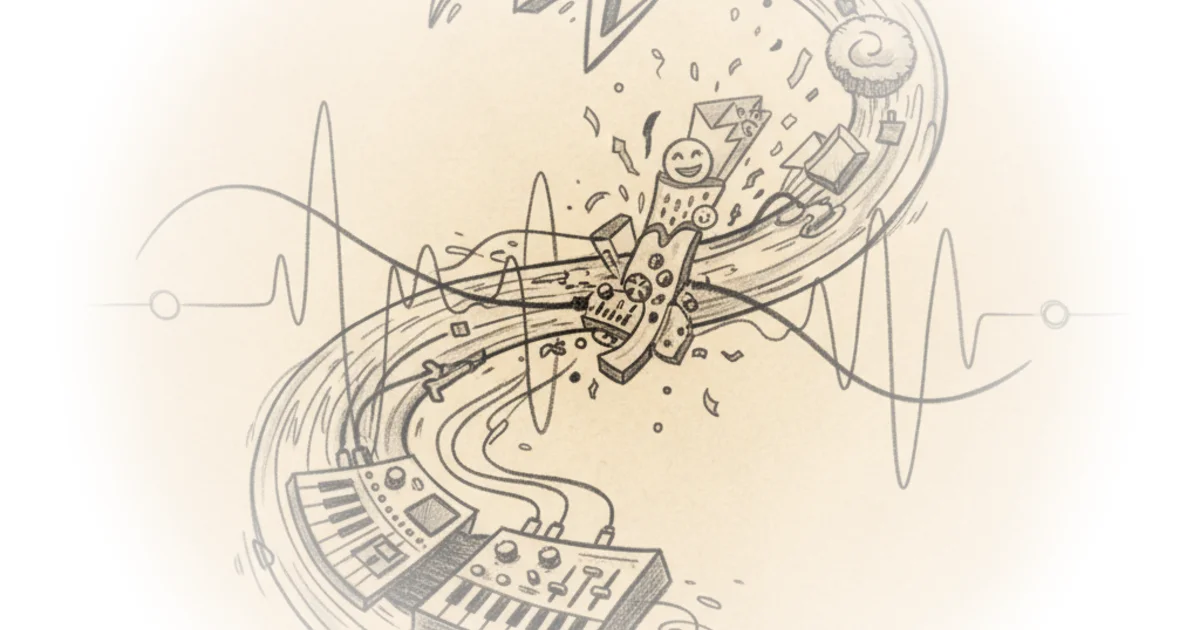
The core of the commentary shifts to the software itself, a game called The Signal State, which Jordan identifies as a unique hybrid of puzzle-solving and analog synthesis. He notes that while the interface mimics a modular synthesizer, the underlying logic is that of an analog computer. "This is a game like this isn't actually audio software this is this is an actual video game," Jordan asserts, distinguishing it from traditional Digital Audio Workstations (DAWs) like VCV Rack. The distinction is crucial: the game forces the user to think in terms of signal processing and logic gates rather than just musical arrangement.
Jordan's exploration of the new "sandbox mode" reveals a system that rewards experimentation over immediate musical gratification. He struggles initially with the interface, noting that "attenuation is one of those things that you really only know you really only like get used to if you're already a modular." This admission of learning curves serves to demystify the technology for the audience, suggesting that the barrier to entry is intellectual rather than financial. The software's ability to generate sequences and manipulate voltage without a traditional sequencer challenges the standard workflow of modern music production.
This is a game like this isn't actually audio software this is this is an actual video game.
The author's journey from confusion to clarity mirrors the experience of the player. He describes the moment of breakthrough not as a triumph of technical mastery, but as a moment of connection with the system's logic. "I just want to see if I can accomplish this without a sequencer which you know is silly but this is a challenging game after all that's the whole point," he admits. This reframing of the "silly" constraint as the source of fun is a powerful argument for the value of limitation in creative tools.
The Philosophy of Constraint
Ultimately, Jordan's commentary suggests that the most effective creative tools are those that impose boundaries. The game's narrative—where the player saves civilization by fixing infrastructure through patching cables—resonates with the author's own need to find new ways to make music despite physical limitations. "The point of the game is you are like restarting civilization and they have to figure out things like getting the water sprinklers to work and stuff like that," Jordan observes, drawing a parallel between the game's fictional stakes and the real-world stakes of an artist adapting to change.
The piece concludes with a realization that the software is more than a toy; it is a viable alternative for those who find traditional instruments increasingly difficult to manage. Jordan's willingness to admit his own struggles and to find a solution in a video game offers a refreshing perspective on the future of music technology. It suggests that the next generation of instruments may not look like guitars or pianos, but like the interfaces of the games we play.
Bottom Line
Benn Jordan's commentary succeeds because it refuses to separate the tool from the user, weaving a narrative where software features are directly linked to human vulnerability. The strongest part of the argument is the assertion that analog computing logic offers a fresh, accessible path for musicians facing physical decline. The biggest vulnerability lies in the niche nature of the software itself, which may not appeal to those seeking immediate musical results. However, for the smart, busy reader looking for a deeper understanding of how technology can adapt to human needs, this piece offers a vital, forward-looking perspective.