An independent panel of legal experts spent months carefully assessing the harm done to survivors of clerical sexual abuse in Portugal — then the bishops cut their recommendations by as much as half, and told no one. That gap between what the experts proposed and what victims actually received is the story The Pillar has uncovered, and it is not a comfortable one for the Portuguese Catholic Church.
The Architecture of the Process — and Its Betrayal
The process Portugal built looked, on paper, like a serious institutional reckoning. Following an independent commission's landmark 2023 report on clerical sexual abuse, victims were invited to present their cases to a dedicated panel. Their stories were first vetted by a pair of experts who assessed credibility and the extent of damage suffered. The cases then moved to a Compensation Determination Commission — seven legal professionals, including two judges, lawyers, and university law professors, all working without pay. That commission produced individual compensation recommendations for each case.
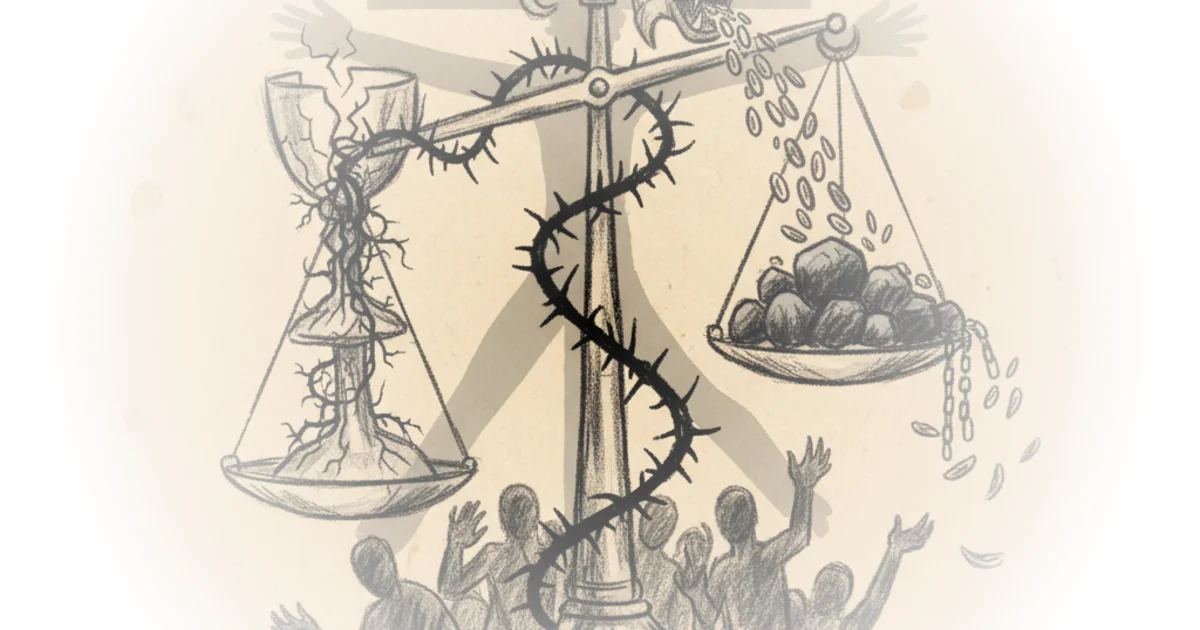
The bishops retained the right to make final decisions. That was known. What was not disclosed — not to victims, not to the public, not in any official statement — was that the bishops voted in February to apply a uniform percentage cut to every single recommended amount. The Pillar reports that the cuts are believed to be as high as fifty percent.
The bishops' conference, in its written response to The Pillar's questions, did not confirm a uniform policy of cuts. Instead, it stated that "the final amounts attributed were defined in accordance with the procedural regulation, which allowed for a distinction between the technical report and the final decision." That is a carefully worded non-denial. It acknowledges that the bishops departed from the commission's recommendations without saying so in plain terms — which is precisely the problem at the heart of this story.
The Bishops' Rationale: Benchmarking Against Civil Courts
The bishops' stated reasoning centers on legal context. Several bishops, The Pillar reports, expressed shock at the compensation levels the independent commission proposed, viewing them as high relative to what Portuguese civil courts typically award in sexual abuse cases, and high compared to what the Catholic Church has paid voluntarily in other European countries with stronger economies.
The bishops' conference pointed to reference ranges from France and Germany — minimums of five thousand euros and maximums of sixty thousand euros in France, fifty thousand in Germany — and argued that its own awards, ranging from nine thousand to forty-five thousand euros, were calibrated to Portugal's lower cost of living and its own legal standards for non-pecuniary damages.
That argument has a certain internal logic. Portugal is a poorer country than France or Germany. Civil law compensation in any jurisdiction reflects local economic conditions. The bishops were not inventing criteria from thin air.
But a member of the Compensation Determination Commission dismantled the analogy in conversation with The Pillar. Portuguese courts do tend to award lower damages in sexual abuse cases, the commission member explained — but for a specific structural reason: "Often the culprit does not have financial means to pay more, and besides that there will often be a prison sentence." The lower damages in civil court, in other words, reflect a system where criminal punishment and civil remedy interact, and where the defendant's financial capacity constrains the award. None of those factors apply to the Catholic Church, which has institutional resources and faces no criminal sanction in these proceedings.
The commission member made the comparison stark: "Damages awarded by courts to people whose lives are wrecked in a traffic accident can be as high as 200 thousand or 300 thousand euros. And in the cases we considered, people did have their lives destroyed by these barbarous acts."
The commission, moreover, had been given explicit latitude in its methodology. The bishops' own procedural regulations stated that "the choice of methodology for determining the amount to be awarded is the responsibility of the Compensation Determination Commission," and that the commission should take into account "the type of abuse committed and an overall assessment of the case." The regulation did not say that civil court awards for sexual abuse cases were the binding ceiling. The bishops gave the commission broad discretion, then overrode it — and the commission members say they were never told that limits would be imposed.
The Transparency Failure
Even if one grants the bishops' legal reasoning, the transparency failure is harder to defend. Victims received compensation offers. They were not told those offers had been reduced from what the independent commission recommended. They had no way of knowing the gap existed. The public statements issued by the bishops' conference described the final amounts as having been reached "taking into consideration" the commission's reports — technically accurate, and functionally misleading.
"We keep doing this. We take one good step, and screw it up with the second. When the Church created the Independent Commission, that was a good thing, but then the way we treated the findings was terrible. Now we created this mechanism to provide victims with compensations, which was a good initiative, but we messed it up with the confusion and lack of transparency."
That assessment comes from a senior cleric who was involved in the compensation process, speaking to The Pillar. It captures the recurring structural pattern: the Portuguese Church builds a credible institution, then undermines it through the exercise of exactly the authority that institution was meant to check. Another individual involved in the process told The Pillar: "You could even justify the bishops' final decision, but they should have been clear about it, and they weren't. They should have said that these are the values, and explained how they reached them."
Commission members are frustrated not only that their work was overridden, but that it was overridden invisibly. The Pillar notes that commission members "would like the bishops to make that clear" — that the final amounts are nowhere near what the commission suggested — because the bishops' public communications have never acknowledged the discrepancy. The bishops have accepted the credit for creating the process. They have not accepted accountability for departing from it.
The Nine Unresolved Cases
There is a further wrinkle that The Pillar has surfaced. Nine cases have not yet been finalized, and the Compensation Determination Commission has now ceased its work. Those cases will therefore not be assessed by the same body that handled the first fifty-seven. When The Pillar asked how those evaluations would be conducted, the bishops' conference communications department did not respond before publication.
A member of the outgoing commission made the implication explicit: any new panel, if one is named, would not have the independence the original commission enjoyed. "They will have to follow the criteria applied [by the bishops' conference] to the final compensations," the commission member said — meaning the cuts have now effectively become the template, and future assessors will operate within constraints the first commission was never given.
This is a significant detail. The bishops can argue, as they have, that they retained final authority from the beginning. But the original commission operated without knowing that authority would be exercised to apply a uniform discount. Whatever freedom of methodology it believed it had has now been retroactively defined as bounded. The nine remaining cases will be assessed under that revised understanding.
Religious Orders: A Revealing Carve-Out
The bishops' uniform cuts apply only to diocesan cases. Superiors of religious orders and institutes were free to accept the commission's original recommendations or to apply the same cuts — their choice. The Pillar reports that the superior of the Jesuits in Portugal decided to pay the amounts the commission originally proposed, reaffirming that decision when contacted directly.
This is a quietly significant divergence. Within the same national process, under the same commission's work, victims of diocesan abuse will receive substantially less than the recommended amount, while at least some victims of religious-order abuse will receive the full recommendation. The Church is not presenting a unified position on what its victims deserve. It is presenting a negotiation in which institutional structure determines outcome.
Critics might note that the bishops' conference was navigating genuine uncertainty — legal precedent in Portugal is genuinely lower than what the commission proposed, and the bishops were not wrong that the amounts were comparatively high. A reasonable institution might have disclosed its reasoning publicly rather than silently discounting the commission's work. The bishops chose the latter.
Critics might also observe that the process, for all its documented failures, did result in compensation reaching fifty-seven survivors — 1.6 million euros in total — for cases that were already beyond the reach of civil courts. That is not nothing. The counterfactual is not a more generous process; it may be no process at all. Still, the standard for a voluntary accountability mechanism is not merely that it functions but that it functions honestly.
What Institutional Accountability Actually Requires
The bishops' conference issued a statement that contains a passage worth reading carefully: "This is a process that cannot be reduced to a mere financial issue, foremost because no compensation can truly make up for the gravity of what happened, nor repair all that was destroyed in somebody's life. What the Church has attempted is to make a concrete gesture of accountability and possible reparation. There is always an inevitable imperfection in such an exercise, and to recognize that is part of the honesty and humility that the topic demands."
The language of honesty and humility sits uneasily alongside the decision to withhold from victims the knowledge that their awards had been cut from what independent experts recommended. Humility, in this context, would mean telling people what happened and why. The bishops did neither.
The broader pattern is familiar from clerical abuse responses in many countries: institutions create mechanisms designed to project accountability while retaining maximum control over outcomes. Independent panels are convened, expert processes are established, and the results are then quietly adjusted by the same authority structures those panels were meant to assess. The adjustment is never announced because announcing it would undermine the legitimacy the entire process was designed to generate.
The Pillar's reporting draws this dynamic into the open in the Portuguese case. Commission members speaking on the record, senior clerics willing to describe what happened as a failure — these are not anonymous leaks but named participants in the process who believe the public account has been incomplete. They are asking the bishops to say plainly what they did and why. That is not a radical demand. It is the minimum that honest institutional accountability requires.
Bottom Line
Portugal's Catholic Church built a serious independent process for compensating survivors of clerical abuse, then quietly discounted its recommendations by up to half — telling no one, least of all the victims. The bishops may have defensible legal reasoning; they have no defensible transparency record. Accountability mechanisms that conceal their own departures from independent expert guidance are not accountability mechanisms. They are reputation management dressed in the language of reform.