Kevin Alexander tackles the impossible task of curating the first half of a decade's music not by pretending to be an objective arbiter, but by embracing the subjective chaos of personal taste. While many critics retreat into genre taxonomies to avoid the accusation of bias, Alexander leans into the "homework" of recommendation, arguing that the value of a list lies in its ability to cut through the noise of 4,000 annual releases. This is a refreshingly honest approach for a decade defined by isolation and digital overload, offering a human hand to guide listeners through the fog.
The Case for Subjective Curation
Alexander opens by dismantling the pretense of objectivity that often plagues "best of" lists. He writes, "Are these objectively the best, or are they your favorites? Maybe a blend of both?" This question sets the stage for a collection of lists from four distinct voices, each bringing a different demographic and sonic preference to the table. The author admits that narrowing down favorites is a "fool's errand," yet insists that the attempt is necessary for anyone trying to avoid the "homework assignment" of sifting through endless catalogs.
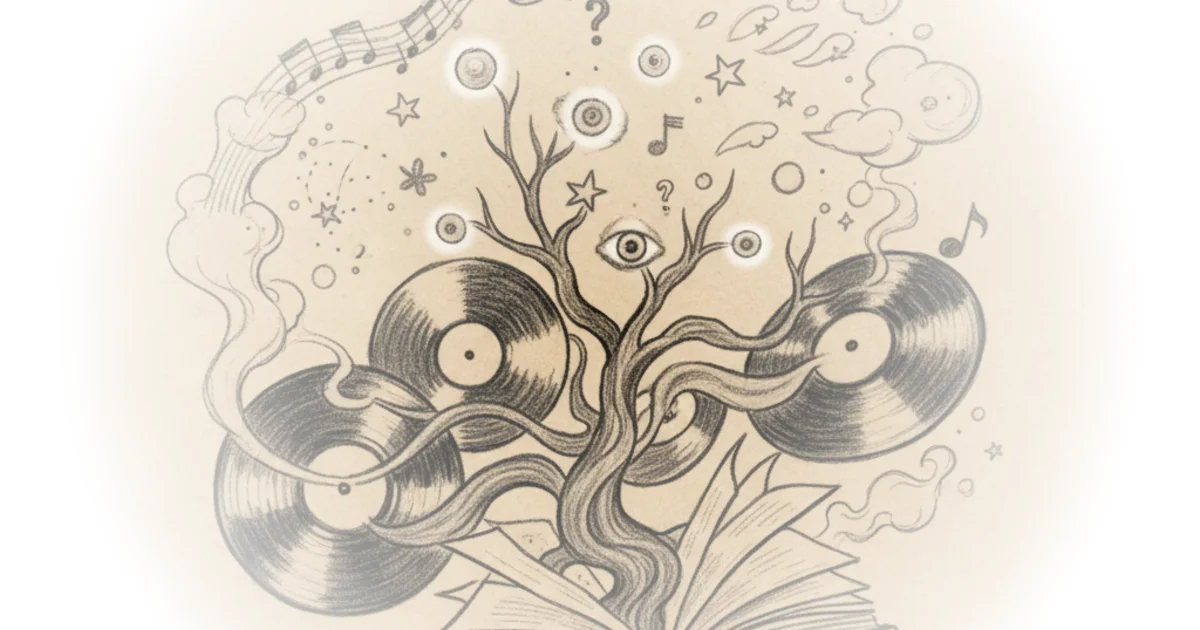
The piece's strength lies in its transparency about the contributors' identities. By introducing Jami Smith, a writer exploring queer perspectives, alongside Sam Colt, a recovering copywriter, and Steve Goldberg, an essayist focused on songs that lodge in the brain, Alexander creates a mosaic rather than a monolith. As he notes, "There's not a lot of overlap in taste—or any other demographic—and that's what keeps this so fun." This structural choice validates the reader's own fragmented listening habits, suggesting that a single "definitive" list is less useful than a curated conversation between different listeners.
"Every music writer is really just three Rob Gordons in a trench coat, and I think (hope?) people like reading them."
This self-deprecating metaphor acknowledges the obsession that drives music journalism without taking itself too seriously. It frames the act of writing about music as a deeply personal, almost compulsive endeavor, which makes the recommendations feel more like a friend's suggestion than a critic's decree. Critics might argue that this approach lacks the rigorous methodology of a data-driven analysis, but in an era of algorithmic playlists, the human element is precisely the missing ingredient.
The Sound of a Decade in Motion
Alexander's year-by-year breakdown reveals how the music of the 2020s has been inextricably linked to the global trauma of the pandemic and the subsequent search for normalcy. For 2020, he highlights Working Men's Club, noting that the band's sound "harkened back to those late '80s/early '90s post-punk and dance records" during a time of lockdown. This choice is particularly resonant when considering the broader post-punk revival context, where bands like IDLES and Fontaines D.C. had already begun reimagining the genre's urgency for a new generation. Alexander captures the specific emotional utility of this music: it provided a rhythm for a world that had stopped moving.
Moving into 2021, the author observes a "dearth" of releases, attributing it to the logistical realities of lockdown rather than a lack of creativity. He writes, "The dearth of 2021 releases more accurately reflects what lockdown life looked like—a year of live streams and doing shows via Zoom to survive, not booking studio time." This is a crucial piece of historical context that often gets lost in retrospective lists. Instead of forcing a narrative of abundance, Alexander lets the silence speak, highlighting Dry Cleaning's New Long Leg as a standout precisely because it broke through the static with its unique blend of spoken-word musings and dense soundscapes.
By 2022 and 2023, the tone shifts toward a "return to normal" and a "collective stride." Alexander praises Alvvays' Blue Rev for its ability to blend power pop, dream pop, and shoegaze without feeling derivative. He notes that while the album contains "vestigial traces of the usual suspects (Lush, MBV, etc.), nothing is derivative." This observation connects to the broader trend of the 2020s, where artists are increasingly comfortable mining the past without simply replicating it. The inclusion of Godspeed You! Black Emperor's 2024 album, NO TITLE AS OF 13 FEBRUARY 2024 28,340 DEAD, in the contributors' lists serves as a stark reminder of the decade's darker undercurrents. The band, known for their apocalyptic soundscapes, continues to reflect the anxiety of the times, grounding the celebratory tone of the list in a necessary gravity.
The Human Element in a Digital Age
The most compelling aspect of Alexander's commentary is his focus on the emotional resonance of the music rather than technical proficiency. He admits, "I'm not your guy" when it comes to "breakdowns on drop tuning, chord changes, or whatever." Instead, he champions records that offer a "nudge in the right direction." This philosophy is evident in his selection of Wussy's Cincinnati, Ohio, which he describes as an album that helps him "'get' what living in the Midwest is like."
Alexander's personal anecdote about 2020—fracturing his foot and blowing out his knee just before the world shut down—grounds the entire piece in a shared human experience. He writes, "At the time, I assumed that would be the defining event of 2020. Silly me." This moment of vulnerability transforms the list from a mere catalog of albums into a chronicle of survival. The music becomes a companion in the struggle, a way to make sense of the "world almost unrecognizable" that emerged from the pandemic.
"This is one of those cases [where] I often find myself writing, 'Just go buy this record!' as a placeholder until I can better articulate my thoughts."
This admission of the limits of language is perhaps the most honest moment in the piece. It suggests that some art transcends analysis, and that the ultimate goal of a critic is simply to point the listener toward the experience. While some might argue that this lack of critical rigor undermines the authority of the list, it actually strengthens its appeal to a busy audience that values authenticity over academic dissection.
Bottom Line
Kevin Alexander's guide succeeds because it abandons the pretense of objective authority in favor of a genuine, multi-voiced conversation about what music means in a fractured decade. Its strongest asset is the willingness to let the personal and the political intersect, acknowledging that the best records of the 2020s are those that helped us navigate the chaos of the last few years. The only vulnerability lies in its reliance on the contributors' specific tastes, which may not resonate with every listener, but that is precisely the point: there is no single soundtrack for the 2020s, only a collection of personal anthems that together tell the story of a generation.