Rohin Francis, alongside co-panelists Heidi Larson and Katherine Furman, reframes the global vaccine crisis not as a failure of science, but as a collapse of the human relationship between patients and the medical establishment. While much of the public discourse fixates on the speed of development or the efficacy of the shots, this forum argues that the true barrier is a volatile, politicized trust deficit that has turned vaccination into a culture war rather than a public health imperative.
The Volatility of Trust
The discussion opens with a stark reality check: the pandemic has not unified the public behind vaccines as many hoped. Instead, Heidi Larson notes that "there's been an amplification of distrust in the context of this hyper uncertainty." The data supports this anxiety; Larson cites a UK sample where "70 percent were concerned about side effects" and nearly 40 percent viewed the effort as a "big business" money grab. This is not a fringe issue but a mainstream hesitation that threatens the 60 to 70 percent uptake required for herd immunity.
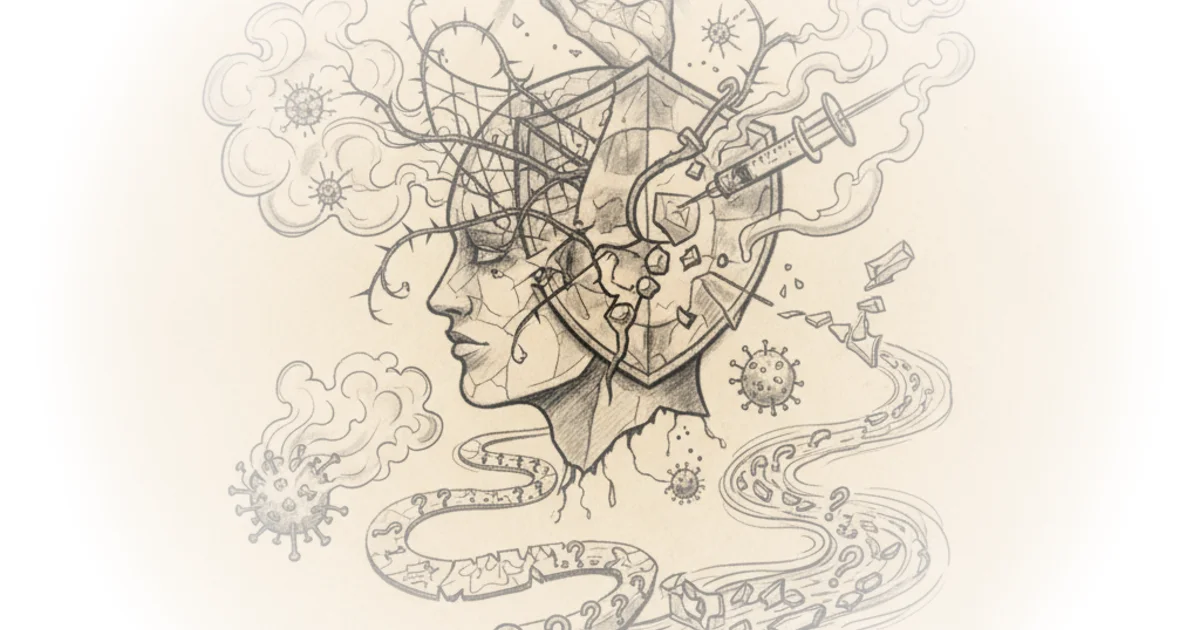
Francis and Larson both emphasize that this is a structural shift, not a temporary glitch. Larson observes that "the state of the world's confidence is highly volatile," comparing current sentiments to political polling where the "swing vote in the middle" is now the deciding factor. The argument here is compelling because it moves beyond blaming "anti-vaxxers" as a distinct, static group. Instead, it highlights how social media algorithms have fused disparate grievances—anti-lockdown, anti-mask, and anti-vaccine—into a single narrative of "pro-freedom" resistance.
We don't have a misinformation problem; we have a relationship problem between people and doctors.
This distinction is crucial. It suggests that fact-checking alone is insufficient. Critics might argue that without addressing the specific falsehoods spreading online, the "relationship" argument is too abstract to solve immediate public health threats. However, the panelists correctly identify that the root cause is emotional—fear and hope—rather than purely informational.
The Leap of Faith
Rohin Francis brings a clinician's perspective to the table, contrasting the immediate, tangible nature of emergency cardiology with the abstract, long-term promise of vaccination. In his daily work treating heart attacks, the benefit of intervention is "very obvious" and "immediate." Vaccines, however, require a different cognitive leap. As Francis explains, "you're healthy... but trust us this intervention is going to help the general population."
He draws a parallel to dietary advice, noting that "diet is a field where we see a great deal of misinformation because the results are less tangible." This analogy effectively explains why skepticism thrives in preventive medicine. When the threat is invisible and the benefit is statistical, the public is far more susceptible to doubt. The panel argues that the rapid development of COVID-19 vaccines, while scientifically sound due to new platforms and funding mechanisms, exacerbates this fear. Francis and Larson agree that the medical community failed to explain why the process was faster, leading the public to assume corners were cut rather than recognizing the deployment of "brand new technologies."
Historical Echoes and Global Context
The conversation also touches on the deep historical roots of medical mistrust, particularly in the Global South. Katherine Furman and Larson discuss the Ebola trials in Africa, where suspicion was not born of ignorance but of a "long history of medical abuse and malpractice." In Ghana, stage one trials were suspended due to rumors that populations were being used as "guinea pigs." This context is vital; it reminds the audience that trust is not a universal default but a fragile asset that must be earned, especially in communities with a legacy of exploitation.
Larson points out that "if you shut down Facebook tomorrow this problem would not go away," because the sentiments are rooted in "deep human emotions and anxieties." The panelists argue that the solution lies in acknowledging these fears rather than dismissing them as irrational. This approach challenges the traditional top-down medical model, suggesting that rebuilding trust requires humility and transparency rather than just more data.
Bottom Line
The strongest element of this commentary is its refusal to treat vaccine hesitancy as a simple knowledge gap, instead identifying it as a complex crisis of confidence and communication. Its greatest vulnerability is the difficulty of translating this insight into actionable policy; knowing that the problem is a "relationship" does not automatically provide the tools to fix it. Readers should watch for how health authorities pivot from purely scientific messaging to addressing the emotional and historical drivers of distrust in the coming months.