Natalie Wexler delivers a jarring diagnosis: the crisis in American education isn't just about failing to teach phonics or basic arithmetic; it is a systemic failure to build the knowledge base required for deep comprehension. While headlines focus on students who can't read words, Wexler argues the real problem is that students cannot read ideas, a deficit that now plagues even the most elite university campuses. This matters now because the gap between what schools teach and what the workforce—and democracy—requires has become a chasm, threatening the economic viability of non-college paths and the intellectual capacity of future leaders.
The Myth of Transferable Skills
Wexler dismantles the prevailing educational dogma that reading is a set of abstract skills that can be applied universally. She writes, "The problem is that skills like making inferences aren't transferable. Readers can apply them only if they have enough relevant knowledge." This is a crucial distinction that many policymakers miss. The current system treats texts merely as vehicles to practice finding the "main idea" or making inferences, assuming these techniques work regardless of the subject matter. Wexler counters that this approach is fundamentally flawed because comprehension relies entirely on background knowledge. As she notes, "It's easy to make an inference about a text on a topic you know a lot about... And it might be impossible to make an inference if the text is on a topic you've never heard of."
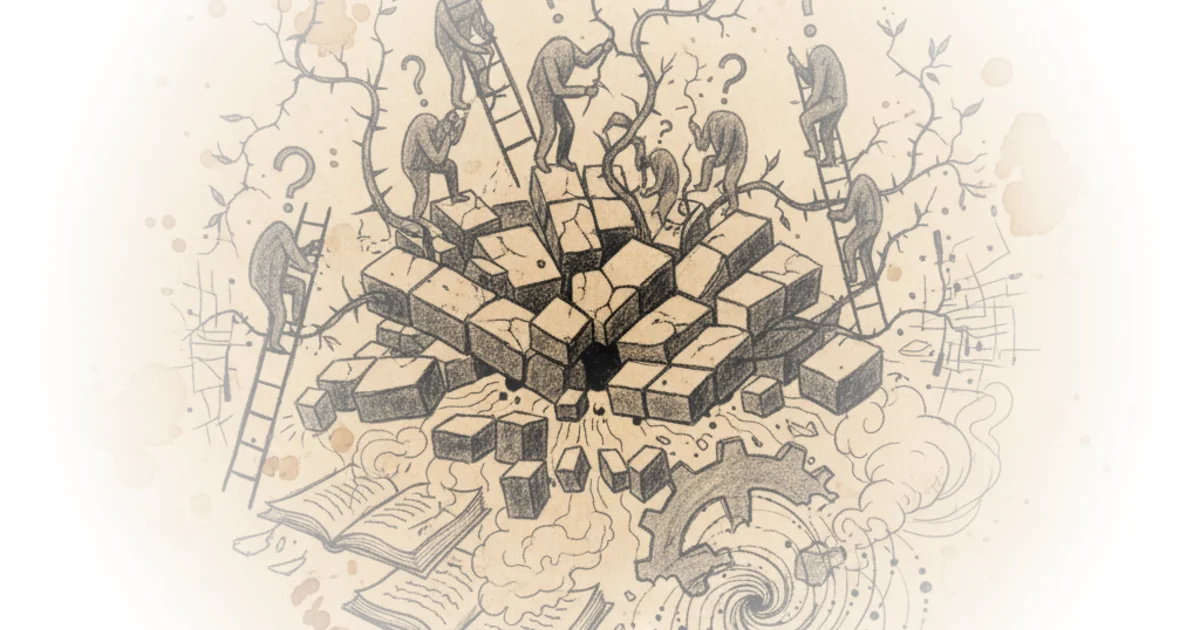
This framing is powerful because it shifts the blame from the student's lack of effort to the curriculum's lack of substance. The argument holds up under scrutiny: cognitive science consistently shows that reading is not just decoding symbols but integrating new information with existing mental models. Without a broad base of knowledge in history, science, and civics, students are left trying to decode complex sentences without the context to make them meaningful. Critics might argue that teaching specific content limits flexibility in a rapidly changing world, but Wexler's evidence suggests that without a foundation of facts, students cannot think critically at all.
Readers can apply them only if they have enough relevant knowledge. It's easy to make an inference about a text on a topic you know a lot about—so easy you may not realize you're doing it.
The Math and Literacy Disconnect
The commentary extends to mathematics, where Wexler identifies a parallel failure in instructional design. She points out that "commonly used curricula and teaching techniques don't line up with what science has discovered about how people learn." This results in students being passed along grade levels without mastering fundamentals like multiplication or number relationships. The consequence is stark: "A lack of math skills may be most obvious in the kinds of jobs mentioned in the Times: if you're a health care worker, for example, you need to be able to calculate the dosage of a medication."
Wexler highlights a disturbing disparity in support: "students who struggle with reading are more likely to get tutoring or other support than those who struggle with math." This observation underscores a cultural bias in education that prioritizes literacy interventions while neglecting the structural gaps in math instruction. The result is a workforce ill-equipped for technical roles that do not require a four-year degree. The administration and school districts often focus on "back to basics" rhetoric, yet Wexler argues the issue is deeper than just returning to old methods; it requires a complete overhaul of how concepts are sequenced and taught based on cognitive principles.
The Elite Illusion
Perhaps the most alarming section of the piece addresses the decline in high-achieving students. Wexler notes that "recent NAEP scores show declines even among the top achievers, with much of that drop attributable to students from middle-class or wealthier families." This shatters the assumption that privilege guarantees educational success. She cites professors at elite institutions who report that students with high SAT scores "lack the capacity to read a 25-page article." The irony is palpable: "Even when they do read an article, I was told, they often fail to grasp the main idea—which is ironic, considering many have probably spent years practicing that very 'skill.'"
The evidence presented is anecdotal but compelling, drawn from interviews with a dozen professors across the spectrum. One history professor revealed that students read a text on the Dreyfus affair but "thought Dreyfus was guilty of the charges against him, when in fact he was innocent." This suggests that students are skimming for keywords to answer test questions rather than engaging with the narrative or argument. Wexler writes, "Students also struggle to dig deeply into a text... they essentially expect to be spoon-fed the material—'just tell me what I need to know'—rather than being willing or able to engage in analysis or critical thinking themselves." This dependency on summaries, potentially generated by AI, indicates a collapse in the habit of sustained intellectual effort.
Even professors at selective schools are seeing a difference in what their students can read. These students have almost certainly done well on standardized reading tests like the NAEP.
A Path Forward
Wexler concludes by rejecting the notion that schools should admit defeat to digital distractions or the pandemic. She argues that "the education system is actually in the best position to fight back against those social forces by immersing students in engaging whole texts." The solution lies in curriculum reform that prioritizes content knowledge in a logical order. She points to international examples, noting that "England has been in the vanguard and is now being joined by New Zealand, Northern Ireland, and parts of Australia" in aligning instruction with cognitive science. In contrast, she observes that in the US, "this conversation has barely begun, at least among policymakers."
The urgency of her call to action is clear. If the system continues to produce graduates who can decode words but cannot understand complex manuals, regulations, or historical arguments, the societal cost will be high. Wexler warns that without intervention, "our society as a whole is likely to suffer, whether it's because of medical workers who can't calculate dosages... or 'thought workers' who can't engage in independent analytical thinking." The piece serves as a wake-up call that the current trajectory is unsustainable for both the economy and the health of democratic discourse.
Bottom Line
Natalie Wexler's strongest argument is the reframing of reading comprehension as a knowledge-based deficit rather than a skills-based failure, a distinction that exposes the inadequacy of current standardized testing and curriculum models. Her biggest vulnerability lies in the difficulty of implementing such a content-rich curriculum in a fragmented, decentralized US education system resistant to top-down mandates. Readers should watch for whether the growing evidence of elite student decline finally forces a shift in federal and state education policy toward cognitive science-aligned instruction.