Natalie Wexler delivers a sobering diagnosis of a crisis that goes far beyond simple literacy rates: the systematic erosion of the ability to engage with complex, long-form thought. While much of the current discourse blames students for a lack of attention, Wexler points a finger at a curriculum that has abandoned the very texts that build cognitive endurance, leaving future teachers and leaders ill-equipped to navigate the nuance of the past or the present.
The Bleak Reality of Modern Comprehension
Wexler anchors her argument in a startling study conducted on English majors at two regional Kansas universities, a group one would assume to be the vanguard of literary literacy. The task was deceptively simple: read the opening seven paragraphs of Charles Dickens' Bleak House and translate them into plain English. The results were catastrophic. As Wexler notes, "only five percent—four of the 85 subjects—managed to gain a 'detailed, literal understanding' of what they had read." The majority didn't just struggle; they were lost, often guessing wildly at meanings or skipping over unfamiliar concepts entirely.
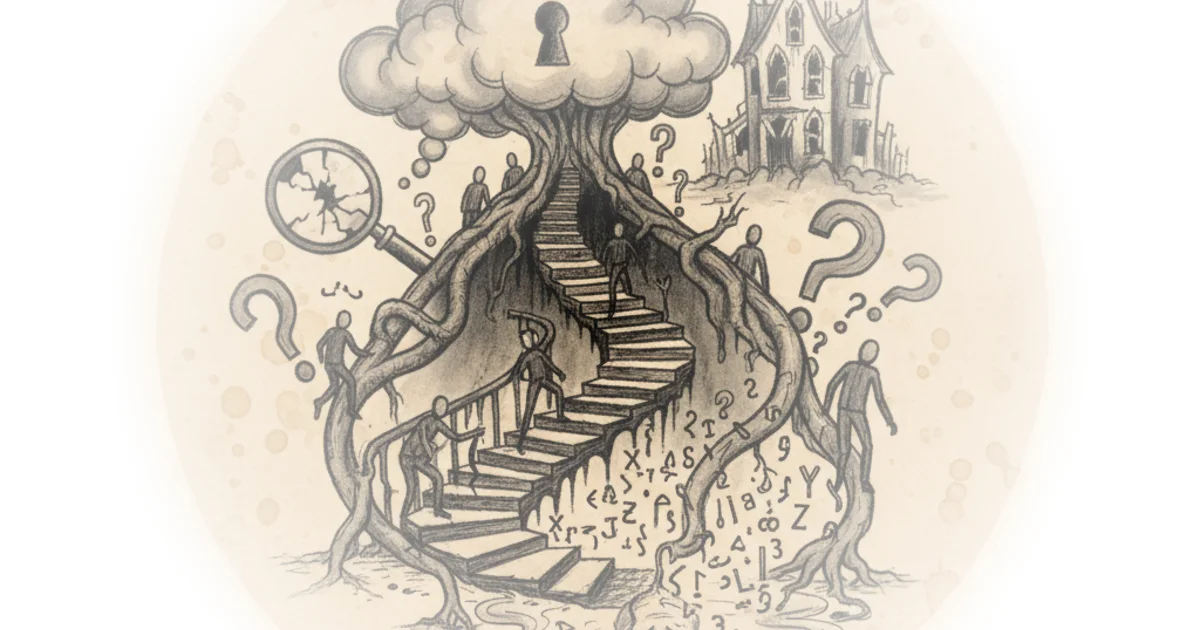
The study reveals a profound gap between the assumption that college students can read and the reality of their capabilities. One student, confronted with the phrase "Lord Chancellor sitting in Lincoln's Inn Hall," guessed it was a hotel before admitting defeat. Another mistook a description of a man with "great whiskers" for a cat. Wexler highlights the sheer scale of this failure, noting that "75 percent [of problematic readers] guessing incorrectly and therefore misinterpreting the sentence." This isn't just a failure of vocabulary; it is a collapse of the inferential machinery required to make sense of dense prose.
The evidence indicates that readers start to struggle with comprehension when just two percent of the words in a text are unfamiliar.
Critics might argue that Dickens is simply an outlier, a stylistic relic whose prose is intentionally difficult and no longer relevant to a modern audience. However, Wexler counters this by pointing out that the issue isn't just archaic syntax, but a lack of background knowledge about history, law, and the Industrial Revolution. The students couldn't contextualize the text because they had never been asked to build that foundation.
The Curriculum Gap and the Skill-First Fallacy
The root cause, Wexler argues, lies in the K-12 education system's pivot away from whole books. For decades, educators have treated texts as mere vehicles for extracting discrete reading skills rather than works to be experienced in their entirety. Wexler writes, "The most commonly used elementary literacy curricula, which foreground comprehension skills, include no whole books." This approach has created a generation of students who are comfortable with short, fragmented texts but paralyzed by the sustained attention a novel demands.
The consequences are visible in the confidence levels of the students in the Kansas study. Despite failing to understand the first few paragraphs of a 900-page novel, they remained convinced they could read the rest. How? By skimming and relying on summaries. Wexler observes, "Several said they had successfully used that approach to 'read' Jane Austen and Shakespeare in their English classes." In the current digital landscape, this has evolved into a reliance on AI. When Wexler fed the same opening paragraph into a large language model, it produced a coherent summary instantly, stripping away the struggle but also the discovery.
Being told that an author 'uses vivid imagery' or has provided a 'powerful, almost surreal depiction of urban decay' isn't the same thing as perceiving those things for yourself.
This reliance on summaries is a dangerous shortcut. It provides the what without the how, denying students the cognitive workout of decoding complex sentences and building mental models. Wexler suggests that while tools like ChatGPT can offer efficiency, they cannot replicate the immersion that allows readers to "learn about the experiences and feelings of people totally unlike ourselves."
The Responsibility of the Instructor
The article shifts from diagnosis to prescription, challenging the academic establishment to stop assuming students arrive ready to tackle difficult texts. Wexler argues that professors cannot simply assign a book and expect comprehension to happen in a vacuum. "Teachers—including professors—can't just assume that students will understand texts like these on their own," she writes. "They need to act as guides through the thicket of words, unpacking complex sentences and providing background knowledge as needed."
This requires a fundamental shift in pedagogy, moving away from the lecture model where the professor assumes the reading is done, toward in-class reading and discussion. Wexler suggests that this might mean "smaller, more discussion-based classes—and shorter nineteenth-century novels than Bleak House." The goal is to scaffold the experience, ensuring that students build the stamina and skills necessary to tackle longer works later.
The author also touches on the cultural resistance to reading "dead white males," noting that some educators would prefer to drop these texts entirely. Wexler pushes back, asserting that the ability to bridge the gap between one's own experience and that of someone from a different time and place is a crucial educational outcome. "A crucial part of education is enabling us—sometimes through the medium of fiction—to learn about the experiences and feelings of people totally unlike ourselves and come to a sense of the common humanity that links us to them."
Bottom Line
Wexler's most compelling insight is that the decline in reading comprehension is not a student failure, but a systemic one driven by a curriculum that prioritizes skills over substance. The strongest part of her argument is the evidence that even English majors lack the background knowledge to decode basic historical context, a gap that no amount of skimming can fix. The biggest vulnerability lies in the practical difficulty of implementing her solution: providing the deep, guided support she advocates for requires resources and class sizes that many institutions simply do not have. The reader must watch for whether higher education can pivot from assigning texts to actually teaching them before the ability to engage with complex ideas disappears entirely.