Chad W. Post uncovers a literary ghost story that predates Deborah Levy's modern fame, revealing how a 1999 Dalkey Archive edition captured the raw, fractured psyche of abandoned children long before the author became a household name. This piece is not merely a reprint; it is a forensic look at how a small press identified a unique voice of "dark humor" and "tragic farce" when the mainstream literary world was largely ignoring it.
The Dalkey Archive's Early Vision
Post frames the narrative around the peculiar timing of Levy's American debut. He notes that while Beautiful Mutants appeared in 1999, the books that would eventually define her career—Swimming Home, Hot Milk, The Cost of Living, and The Man Who Saw Everything—did not arrive until over a decade later. Post writes, "Dalkey was a bit ahead of the curve, with the books through which I think most readers discovered Levy... coming out between 2011–19." This observation is crucial because it highlights how the publisher's taste often diverges from commercial trends, prioritizing experimental, difficult voices before they gain traction.
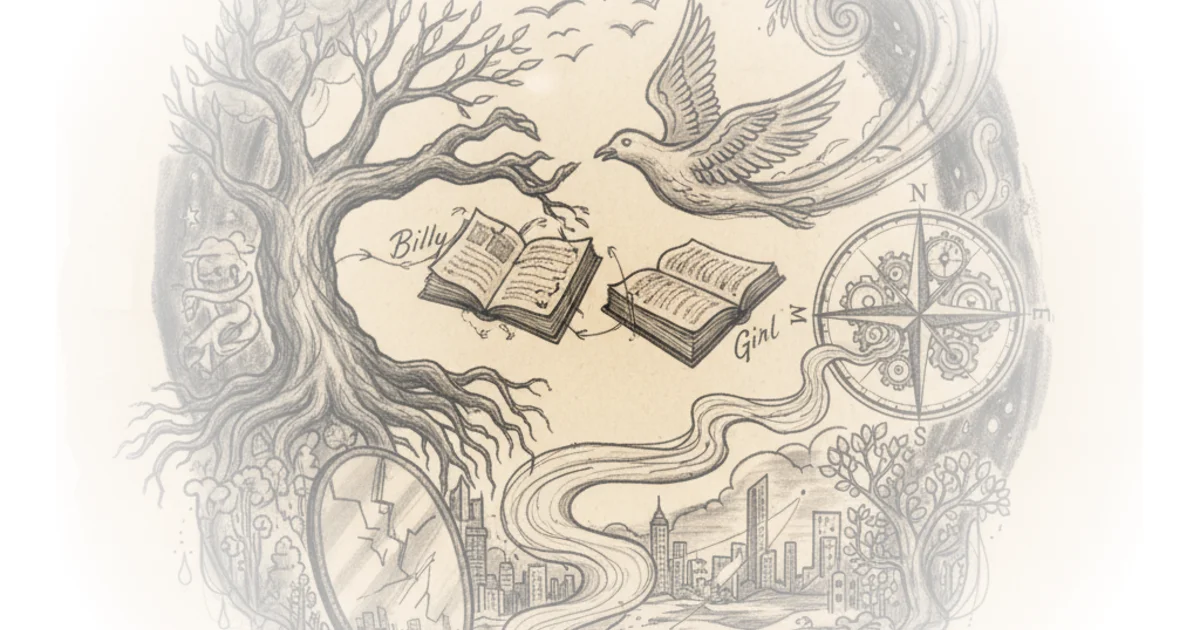
The commentary emphasizes that Billy and Girl serves as a "brilliant example of the sort of 'dark humor' typical of a Dalkey Archive book." Post argues that this specific brand of humor is often diluted in modern marketing, stating, "That term gets thrown around a lot, to the point that it's pretty meaningless—especially in jacket copy for a Big Five title." By anchoring the discussion in the specific history of the press, Post provides a lens to view the novel not just as a story, but as a cultural artifact of a specific literary movement.
"Billy and Girl is a brilliant example of the sort of 'dark humor' typical of a Dalkey Archive book."
Critics might argue that focusing on the publisher's role overshadows the text's universal themes, but Post's point remains valid: the institutional context explains why this book survived and why its tone feels so distinct from contemporary bestsellers.
A Tragic Farce of Abandonment
The excerpt Post provides reveals a narrative structure that is as chaotic as the minds of its protagonists. The story centers on two siblings, Billy and Girl, who have been abandoned by their parents in England. Girl's desperate attempts to find their mother involve a delusional ritual where she addresses strangers as "Mom," while Billy constructs elaborate fantasies of future fame to cope with the present.
Post describes the dynamic between the siblings as one where they "both support and torture each other, barely able to remember their pasts but intent on forging a future that will bring them happiness." This framing effectively captures the novel's central tension: the struggle between the need to forget trauma and the compulsion to reconstruct a narrative that makes sense of it. The text itself is visceral, with the narrator Billy recounting his birth with a mix of biological precision and existential dread. He describes the womb not as a sanctuary, but as a place of confinement where he hears his father's voice and his mother's fear, noting, "I'm in biochemical harmony with Mom and I got fear in me too."
The violence in the text is handled with a stark, almost clinical detachment that Post identifies as "bleak humor." The father's suicide is recounted with a surreal twist: "Dad pulled into a petrol station. He put the pump into his mouth and got five pounds' worth... This was his first and last cigarette and his suicide was the most splendid thing he ever did in his life." This juxtaposition of the mundane and the horrific is the engine of the novel's emotional impact. Post's inclusion of this passage underscores how Levy uses absurdity to process the unbearable weight of family collapse.
"Girl's pain game prepared me for being bashed by Dad. Girl was training me up to receive pain. It's her way of protecting me."
The "Bolt Game" described in the text, where Girl throws iron bolts at Billy to test his stoicism, is a harrowing metaphor for how trauma is transmitted between siblings. Post's commentary helps the reader understand that this is not just cruelty, but a distorted form of survival training. The argument holds up because the text itself refuses to offer a simple moral judgment, instead presenting the children's actions as a logical, if terrifying, response to their environment.
The Mechanics of Memory and Denial
Post draws attention to the unreliable nature of the siblings' memories, particularly Girl's insistence that certain events never happened. When Billy recalls a trip to a video shop, Girl corrects him: "No, Billy, that is someone else's memory. We never went to a video shop." This moment of cognitive dissonance is central to the novel's exploration of how children invent worlds to survive.
The commentary suggests that the novel's power lies in this ambiguity. As Post puts it, "In the end, the reader is as bewildered as Billy and Girl—have they found Mom and a semblance of family, or are they completely out of control and ready to explode?" This uncertainty is not a flaw in the writing but a deliberate feature. The narrative refuses to resolve the trauma, mirroring the characters' inability to move past it. The inclusion of the inscription from the London Book Fair adds a layer of meta-narrative, reminding the reader of the physical journey the book has taken, from a personal copy to a scanned artifact, reinforcing the idea that these stories are fragile and precious.
"In this brilliant, inventive, tragic farce, Deborah Levy creates the ultimate dysfunctional kids, Billy and his sister Girl."
A counterargument worth considering is that the relentless bleakness of the narrative might alienate readers seeking hope or resolution. However, Post's analysis suggests that the value of the book lies precisely in its refusal to offer easy comfort, forcing the reader to sit with the discomfort of the characters' reality.
Bottom Line
Chad W. Post's commentary successfully reframes Billy and Girl as a pivotal, yet overlooked, work in Deborah Levy's bibliography, demonstrating how Dalkey Archive's early support helped cultivate a unique literary voice. The strongest part of this argument is the connection drawn between the publisher's specific brand of "dark humor" and the novel's unflinching portrayal of childhood trauma. The piece's biggest vulnerability is its reliance on the reader's willingness to engage with a narrative that offers no resolution, but this is a fair trade-off for the raw emotional power of Levy's prose.
Readers should watch for how this early work foreshadows the themes of displacement and fractured identity that would later define Levy's most celebrated novels, proving that the seeds of a great writer's career are often sown in the most unlikely places.