PolyMatter challenges the comfortable assumption that North Korea is merely a reckless child throwing tantrums, arguing instead that the regime has executed a radical, high-stakes strategic pivot born from a catastrophic misunderstanding of the international order. This analysis is vital because it suggests that the world's current strategy of ignoring Pyongyang's provocations may be exactly what pushes the peninsula toward its most dangerous conflict since the 1950s.
The Illusion of the Hermit Kingdom
The piece begins by dismantling the perception of North Korea as a static, isolated anomaly. PolyMatter writes, "We think of North Korea as this incredibly isolated backward and rebellious hermit King om and that's all true yet it's about to become far more isolated far more backward and far more rebellious than the world has ever seen." This framing is crucial because it forces the listener to reconsider the last two decades not as a period of stability, but as a fleeting anomaly. The author notes that the regime previously tolerated a surprising amount of capitalism and even hosted 350,000 tourists in 2019, a reality that is now being systematically erased.
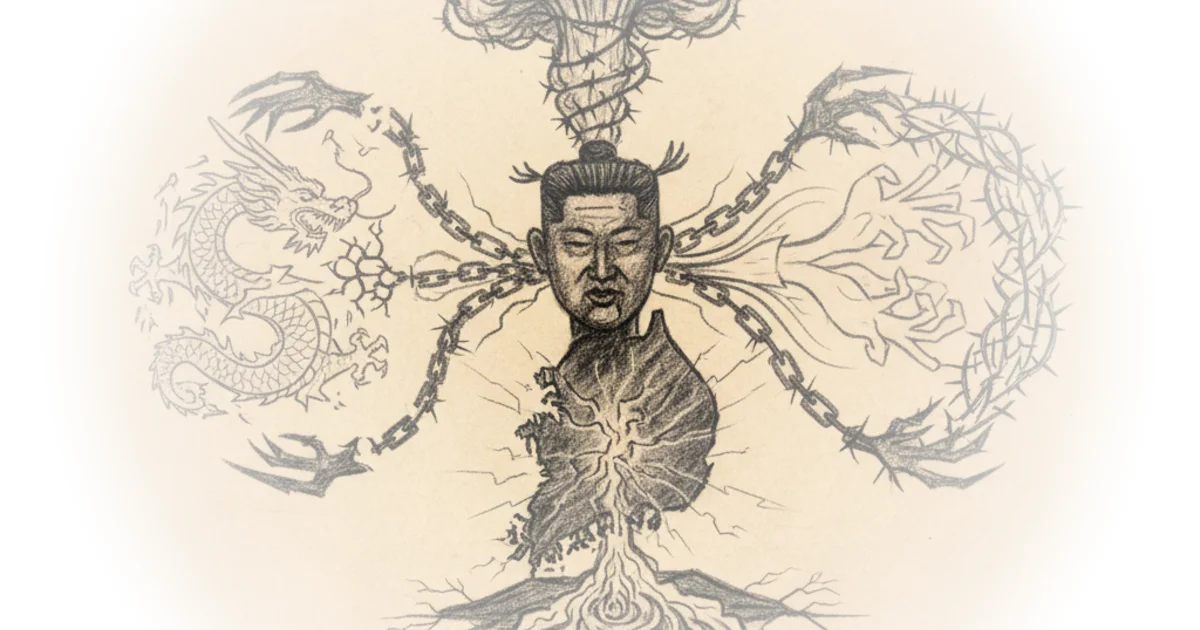
The commentary effectively argues that recent destructive acts, such as the demolition of the Arch of Korean Unity, are not random outbursts but calculated signals. PolyMatter observes, "In an earlier age this may have been laughed at as a childish impulsive Outburst but by now we've grown desensitized here he goes again we say rolling our eyes and quickly moving on." This desensitization, the author contends, is a strategic error by the international community. By treating the regime's actions as a "boy who cried wolf" scenario, the world risks missing a genuine shift in intent. A counterargument worth considering is that even a genuine strategic pivot might still be bluster designed to extract concessions, but the author's insistence on the structural changes in North Korea's worldview adds necessary depth to the discussion.
We may soon look back at the last 20 years as a golden age a brief window of relative openness and optimism.
The Nuclear Bargain That Never Was
The core of PolyMatter's argument rests on a historical reinterpretation of why North Korea pursued nuclear weapons. The author posits that the drive for the bomb was not solely about regime survival in a vacuum, but a desperate bid for legitimacy. "Kim Jong-un doesn't want his country to remain this strange isolated hermit Kingdom he's not building nuclear weapons at Great cost merely to keep things as they are... instead he imagines North Korea becoming a more normal country." The logic follows that the regime believed achieving nuclear status would force the United States to treat them as a sovereign equal, similar to how the US manages complex relationships with other nuclear powers like Saudi Arabia or Pakistan.
This interpretation reframes the 2017-2019 diplomatic overtures not as a trick, but as a genuine, albeit naive, attempt to normalize relations. PolyMatter writes, "He assumes they'll have no choice but to treat us like an adult the problem of course is that he's wrong so very comically wrong." The author highlights the tragic irony that the very weapons meant to secure respect instead cemented North Korea's status as a pariah. The piece notes that every administration, regardless of party, has maintained a singular, non-negotiable goal: "The only thing Washington wanted the complete and verifiable removal of all nuclear weapons was the only thing Pyongyang refused to offer."
Critics might argue that the regime never intended to denuclearize and that the negotiations were always a stalling tactic. However, PolyMatter's focus on the regime's internal logic—that they believed the "deal" was already struck upon achieving capability—offers a compelling explanation for their subsequent devastation and strategic recalibration.
The Collapse of the Patron System
Perhaps the most insightful section of the piece is its dissection of the relationship between North Korea and its traditional allies, China and Russia. PolyMatter debunks the myth of a solid "axis of evil," writing, "It should be obvious by now that the three countries share only the most basic interest keeping North Korea alive beyond that their goals are almost diametrically opposed." The author traces the history of this friction, from Kim Il-sung's purging of pro-Chinese officials to the modern era where North Korea's provocations have repeatedly embarrassed Beijing.
The text explains that China's support is purely transactional, driven by the fear of a collapsed state flooding its borders with refugees. PolyMatter states, "In an ideal Chinese or Russian World North Korea is trapped in a coma while they act as its Guardian keeping it on permanent life support merely taking up space where the Americans can't." This stark assessment explains why the regime feels increasingly isolated. When North Korea tested missiles during high-profile Chinese diplomatic events or executed relatives with ties to Beijing, the reaction from Moscow and Beijing was not solidarity, but support for the toughest UN sanctions.
The author argues that this isolation has forced the regime to abandon its socialist pretenses and pivot toward a new, more dangerous strategy. "The days of Charity were over they asked to be paid in Cold Hard Cash Cash that North Korea didn't have," PolyMatter notes, describing the economic stranglehold that followed the collapse of the Soviet Union and China's market reforms. This historical context is essential for understanding why the regime is now willing to burn bridges with its neighbors in favor of a more aggressive, independent posture.
Bottom Line
PolyMatter's strongest contribution is the reframing of North Korea's nuclear program not as a tool of madness, but as a failed strategy for normalization that has now backfired, pushing the regime toward a more desperate and unpredictable future. The argument's vulnerability lies in its reliance on the regime's internal motivations, which remain opaque, yet the historical evidence of the breakdown in Sino-North Korean relations provides a solid foundation for the claim that Pyongyang is running out of options. Readers should watch for whether this new strategy involves further escalation to force a new dialogue or a complete severance from the global order.