Cory Doctorow delivers a startlingly intimate manifesto that reframes the modern crisis of attention not as a failure of willpower, but as a necessary survival tactic against a world spiraling into energy collapse and political chaos. While the piece begins with a personal confession about chronic pain, it quickly pivots to a sophisticated critique of how algorithms and monopolies have hijacked our capacity for genuine engagement, replacing it with a hollow, regret-inducing trance. In an era where the news cycle feels like a slow-motion disaster, Doctorow argues that the only sane response is a carefully calibrated form of compartmentalization—one that allows for deep work without becoming a tool of self-erasure.
The Physiology of Distraction
Doctorow opens by dismantling the myth of the productive genius, revealing that his output is often a direct response to physical agony. He writes, "If I can find my way into a creative project, the rest of the world just kind of fades back, including my physical body." This is not a romanticized view of flow; it is a medical necessity. The author describes a nervous system that fails to terminate pain signals, creating a feedback loop where attention to the pain only amplifies it. Consequently, ignoring the body becomes a health strategy, provided one can distinguish between phantom pain and the physiological need to move.
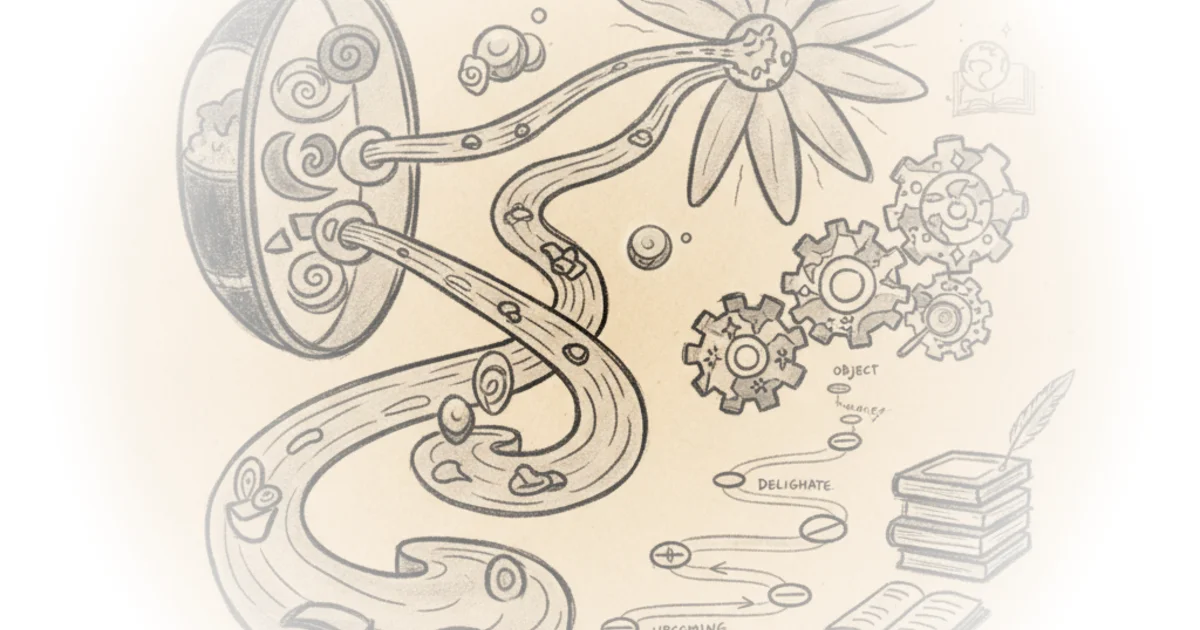
This framing is crucial because it grounds the abstract concept of "focus" in the visceral reality of the human body. By admitting that his work is often an escape mechanism, Doctorow strips away the moral judgment often attached to productivity. However, he quickly identifies the trap: "if I get too distracted, then I start ignoring the pain I need to be paying attention to, and that's at least as bad as paying attention to the pain I should be ignoring." The balance is precarious. The author suggests that in times of crisis, the ability to disconnect is a shield, but it becomes a weapon against oneself when it prevents necessary care for the body or loved ones.
The Anatomy of Anxiety
The commentary shifts sharply from the personal to the geopolitical, anchoring the reader's anxiety in tangible, escalating threats. Doctorow notes, "These are anxious times. I don't know anyone who feels good right now." He points to the cascading failures of the global energy system, citing Australia's last fossil fuel shipment and gas rationing in India as harbingers of a coming catastrophe. The text captures the specific dread of the present moment, comparing it to the early days of the pandemic but with a terrifying clarity: "now I know" what is coming.
"I can't do anything about the impending energy catastrophe, apart from being part of a network of mutual aid and political organizing, so it makes sense not to fixate on it."
This is the core of Doctorow's argument for compartmentalization: it is a strategic withdrawal to preserve the mental energy required for action. He argues that fixating on problems one cannot solve individually is a form of paralysis. Yet, he draws a hard line at emotional neglect. "It's one thing to lose myself in work until the heat of emotion cools... and another to use work as a way to neglect a loved one who needs attention." The distinction is vital. The author admits that during the lockdown years, he transformed into a "machine" of output, a defense mechanism that, in retrospect, may have come at the cost of deeper human connection. Critics might argue that this defense of compartmentalization risks normalizing emotional avoidance, but Doctorow's insistence on the need to eventually "confront" the pain suggests a cyclical, not permanent, state of withdrawal.
Zombie Flow vs. Achievable Challenge
The piece then dissects the cultural machinery that exploits our need for distraction. Doctorow introduces the concept of "flow," citing psychologist Mihaly Csikszentmihalyi, who defined it as a state where "your body or mind is stretched to its limits in a voluntary effort to accomplish something difficult and worthwhile." This is the ideal state of engagement, characterized by effort and purpose. However, Doctorow contrasts this with the algorithmic reality of modern media, which he terms "zombie flow."
Drawing on Derek Thompson's work, Doctorow explains that "zombie flow" is "progress without pleasure." It is a frictionless state where users lose self-awareness and track of time, but without the productive residue of genuine flow. He writes, "AI slop is the epitome of familiarity, since by definition, AI tries to make a future that is similar to the past, because all it can do is extrapolate from previous data." This is a damning indictment of the current media landscape. The author argues that monopolies, fearing risk, flood the market with "familiar surprises"—sequels, reboots, and algorithmic recommendations that are safe, predictable, and ultimately soul-crushing.
"Zombie flow is 'progress without pleasure' — it's frictionless, and so it gives us nothing except that sense of the world going away, and when it stops, the world is still there."
This distinction is the piece's most powerful analytical tool. It moves the blame from the individual user's "addiction" to the structural design of the platforms. Doctorow notes that while teens scrolling social media are often blamed for a lack of self-control, they are actually falling into "passive flow," a condition engineered by engagement metrics that prioritize time-on-site over user well-being. The argument holds up well against the backdrop of the attention economy, though it perhaps underestimates the sheer difficulty of escaping these engineered loops without significant structural change.
The Path Forward
Doctorow concludes not with a solution to the world's problems, but with a strategy for living within them. He admits, "I wouldn't call myself a happy person... But I'm an extremely hopeful person." This hope is not blind optimism; it is a disciplined orientation toward action. He has learned to "harness my unhappiness to the pursuit of things that might make the world better." The ultimate lesson is about timing: knowing when to retreat into work to manage pain and anxiety, and knowing when to step back and engage with the difficult emotional labor of the real world.
The piece serves as a reminder that in a world of escalating crises, the ability to compartmentalize is a double-edged sword. It is the only way to function, but it must be wielded with care to avoid becoming a prison of isolation. As Doctorow puts it, the goal is to find a way of compartmentalization that "rewards attention with some kind of productive residue that you can look back on with pride and pleasure."
Bottom Line
Doctorow's strongest contribution is his redefinition of "flow" as a battleground between human agency and algorithmic manipulation, exposing how modern media has engineered a state of "zombie flow" that drains rather than replenishes. The argument's vulnerability lies in its reliance on individual discipline to navigate structural traps; while the call to balance work and emotional presence is sound, the systemic forces driving "zombie flow" are far more powerful than any single person's ability to compartmentalize. Readers should watch for how this tension between necessary retreat and necessary engagement plays out as the energy and political crises he describes continue to intensify.