This piece cuts through the hype cycle to reveal a startling truth: the most sophisticated artificial intelligence isn't just generating text; it is silently deciding what you buy, and the hardware required to do so is fundamentally different from what powers chatbots. Chipstrat's interview with Meta's Matt Steiner exposes how the company is rewriting the rules of silicon design to serve a trillion-parameter model in under a second, a feat that demands a complete rethinking of memory and compute economics.
The Hardware Reality Check
The article's most significant revelation is that the industry's obsession with Large Language Models (LLMs) has obscured a more complex reality: recommender systems operate on entirely different physical constraints. Chipstrat reports, "Recommender workloads have a different compute-to-memory ratio than a standard LLM GPU, and this difference gave rise to MTIA custom silicon." This is a critical distinction. While the world watches generative AI race for more parameters, Meta has been quietly engineering specialized chips to handle the massive memory bandwidth required to sift through billions of user interactions.
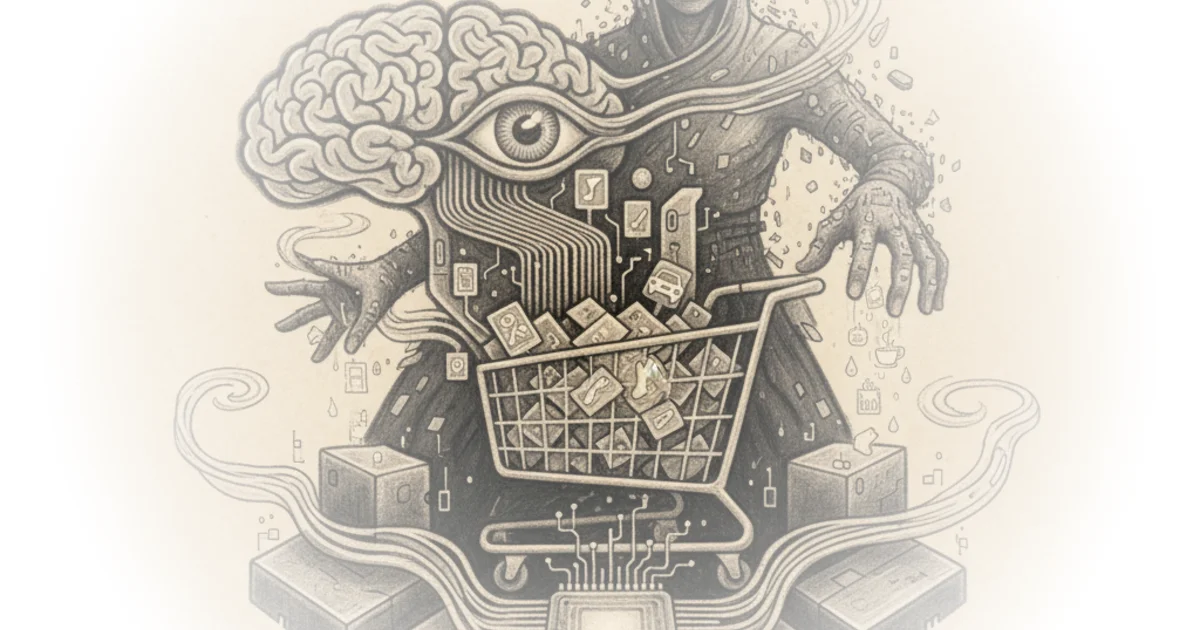
The piece argues that this memory bottleneck is so severe that standard hardware solutions are insufficient. "Retrieval isn't a generic workload either," the editors note, highlighting how Meta's scale forces them to co-design hardware with partners like NVIDIA. The result is the Andromeda system, a custom SKU designed specifically to handle the "extremely long" list of potential ads for any single user. This moves beyond the generic cloud computing narrative; it is a story of vertical integration where the software's needs dictate the physical architecture of the data center.
"We worked with our hardware partners at NVIDIA and designed a custom hardware SKU with some GPUs in it, and we co-designed a machine learning model that runs specifically on that hardware SKU."
This approach mirrors the industry's shift toward specialized accelerators, reminiscent of how Broadcom's custom ASICs revolutionized networking efficiency years ago. However, the stakes here are higher because the latency budget is measured in milliseconds, not seconds. If the hardware lags, the user experience degrades, and the revenue stream dries up. Critics might argue that this level of custom silicon creates vendor lock-in and massive capital expenditure risks, but the piece suggests that for a company serving three billion daily users, the alternative—running inefficient models on generic hardware—is economically impossible.
The Economics of Consolidation
The interview pivots to a counter-intuitive finding: consolidating multiple specialized models into one massive model actually improves performance, not just costs. Chipstrat details the "Lattice" initiative, where Meta merged disparate ad ranking models into a single entity. "A single model trained across varied objectives outperformed the specialized ones," the piece asserts. This challenges the traditional engineering heuristic that smaller, focused tools are more efficient. Instead, the argument is that a unified model can leverage shared data signals to make better predictions.
The editors explain that this consolidation reduces memory pressure by storing a user's interests only once, rather than duplicating that data across N different models. "You don't have to keep N copies of user interests in each machine learning model," Steiner is quoted as saying. This efficiency gain is crucial when dealing with the sheer volume of data generated by three billion daily active users. The logic holds up: by training on a broader dataset, the model captures nuances that isolated models miss, turning data variety into a performance advantage.
The Adaptive Future
Perhaps the most forward-looking insight concerns how Meta handles users with long interaction histories. The piece describes an "adaptive ranking model" that dynamically allocates compute power based on how much data is available for a specific user. "It scales compute per user based on interaction history length," Chipstrat reports. This means that for a user with a decade of purchase history, the system deploys significantly more processing power to analyze that context, whereas a new user receives a lighter, faster inference.
This strategy draws a parallel to knowledge distillation, where a massive "teacher" model (GEM, Meta's Generative Ads Recommendation foundation model) trains smaller, servable models. The article notes that GEM is so large it cannot be served directly, so its learnings are "distilled into smaller models that we could serve for specific purposes." This allows Meta to maintain the intelligence of a trillion-parameter model while adhering to the strict sub-second latency requirements of a social media feed.
"We are matching the person who wants to purchase a thing with an advertiser who has the thing to purchase."
The implication is profound: the future of AI infrastructure is not about one-size-fits-all processing, but about fluid, adaptive compute that scales with the complexity of the user's data. This aligns with the trend seen in Grace Hopper architectures, where memory and processing are tightly coupled to handle massive datasets without the latency penalties of traditional separation. However, a counterargument worth considering is the privacy implication of such deep, long-term profiling. While the piece frames this as a better user experience, the ability to predict behavior based on years of data raises questions about the extent of algorithmic influence over consumer choices.
Bottom Line
The strongest element of this coverage is its technical specificity, moving beyond vague AI promises to explain exactly how memory constraints drive hardware innovation. The piece's vulnerability lies in its lack of critical distance on the societal impact of such hyper-efficient profiling, treating the optimization of ad conversion as an unalloyed good. Readers should watch for how this adaptive compute model spreads to other industries, as the economics of right-sizing inference will likely redefine the next generation of cloud infrastructure.