Kamil Galeev cuts through the noise of current political punditry by rejecting the standard narrative of a simple left-right pendulum. Instead, he argues that the true driver of American politics is a generational shift where the very definition of "left" and "right" is being rewritten from the ground up. For busy observers trying to make sense of why the political landscape feels so fractured, Galeev offers a startling thesis: the most successful political movement of the coming decade will likely be economically left-wing but culturally distinct from the identity politics of the 2010s.
The Generational Fault Line
Galeev begins by dismantling the idea that political polarization is static. He observes that while every generation has its own "X vs. anti-X" conflict, the subject of that conflict changes entirely as older cohorts pass away. He illustrates this with a sharp observation on Russian politics: "The principles of political polarisation vary from one generation another... The only people who care are really, really old, and they are going to die soon and be replaced by the next generations who were formed by the different formative experiences." This framing is crucial because it suggests that current political battles are often fought over ghosts of the past, while the real energy is building around issues that older leaders simply do not comprehend.
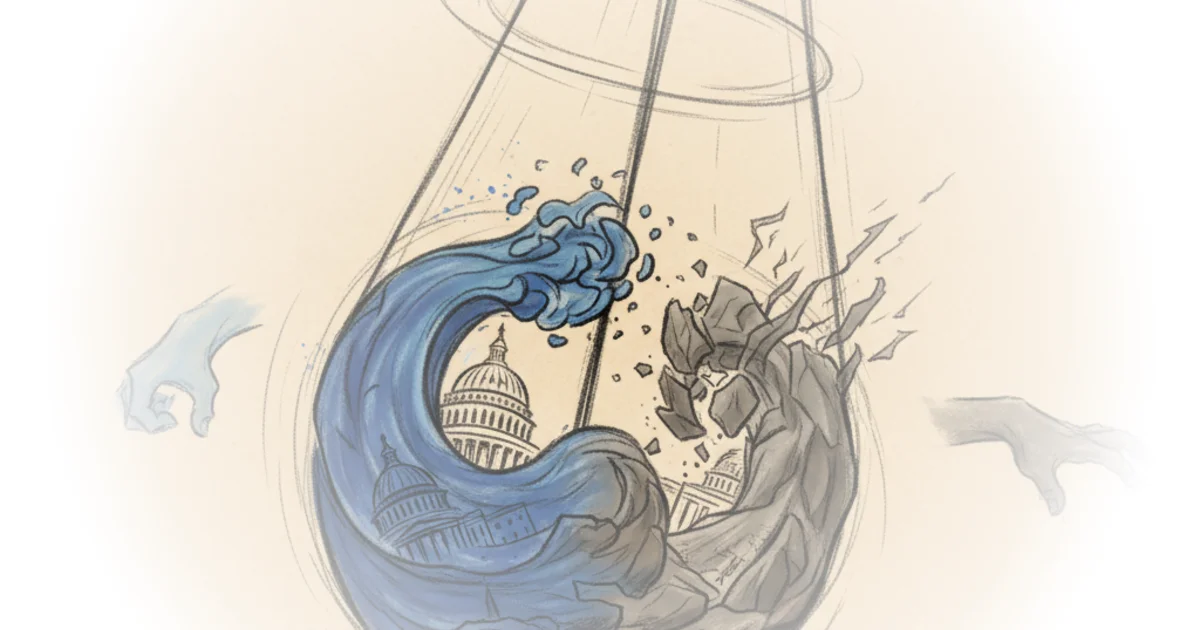
The author argues that we are witnessing a massive rehabilitation of socialism among the American youth, a shift that defies the traditional conservative playbook. He notes that "an accusation of 'socialism' used to be a stone, dragging your down. It used to be scary to be called a socialist. Until now." This is not a fringe phenomenon, Galeev insists, but a mainstream consensus among the most capable young professionals. He cites an anecdote from a top-tier business school where a student was the sole defender of capitalism in a room full of peers, stating, "He, personally, was shocked by that. Was amazed to find himself in a minority." This evidence suggests that the economic left is becoming the new center of gravity, particularly among high-human-capital demographics.
The old shibboleths, the old rallying cries, and by the way, the old taboos, are all stopping to work, as the old generation is gradually passing away.
Critics might argue that anecdotal evidence from elite universities does not represent the broader electorate, particularly the working class that has traditionally driven populist movements. However, Galeev counters this by pointing to voting patterns in New York City, where the data shows that "Both the right-wing, and centrist liberal folk loves to post this map as a kind of 'own'... It is the riiiiiiich." He interprets this to mean that the propensity for socialist ideas correlates with quality of human capital, challenging the stereotype that economic radicalism is the domain of the unemployed or uneducated.
The Cultural Backlash
While the economic consensus is shifting left, Galeev warns that the cultural consensus is fracturing. He argues that the old model of identity politics, which relied on appealing to the "benevolent sexism" or altruism of dominant groups, has run out of fuel. The result is a mirror-image reaction where the right appropriates the language of oppression to claim victimhood. "The young right wings, increasingly, appear to be unwilling to play by the old rules," Galeev writes, noting that they are "appropriating the enemy language, the enemy line reasoning, and then reversing it." This dynamic explains why cultural arguments that once unified a coalition now serve as the primary wedge issue driving voters away.
The author suggests that the Democratic Party's recent struggles stem from a failure to recognize this divergence. They prioritized a cultural agenda that was "divisive, toxic" and alienated large swaths of the electorate, while ignoring the "left-coded economic platform" that enjoyed broad support. "The Democrats had been doing very little focus on it," Galeev notes, arguing that the party should have been "deepen[ing] and radicalis[ing] their economic agenda, once again becoming the party of change rather than of status quo." The core of his argument is that the path to victory lies in embracing universal economic demands like healthcare while abandoning the identity-based framing that has become a liability.
Identity politics are divisive, and have always been, and that they did not generate a mass resistance on the other side was but a temporary situation.
A counterargument worth considering is whether the "left-coded economy" is truly as universally popular as Galeev claims, or if it is simply popular among the specific demographic he is observing. Furthermore, the assumption that the pendulum will swing back left assumes a stable institutional framework, which Galeev himself questions by noting the US may be transitioning from a republic to an empire. However, his analysis of the generational disconnect remains a powerful lens for understanding current political volatility.
Bottom Line
Galeev's most compelling insight is that the political future will not be a repeat of the past, but a new synthesis where economic leftism and cultural pragmatism converge. His biggest vulnerability is the assumption that the institutional pendulum will swing naturally without external shocks or authoritarian overreach. Readers should watch to see if the next election cycle validates his prediction that the winning coalition will be built on economic solidarity rather than cultural signaling.