This piece cuts through decades of sanitized official narratives to reveal a chilling truth: the intelligence failure that justified a devastating war wasn't just a mistake, but a systemic cover-up of incompetence that punished the very people trying to stop it. Jeff Stein's reporting on Jerry Watson, a veteran officer who spent his career trying to force a reckoning, exposes how the intelligence community prioritized political utility over truth, with catastrophic human consequences.
The Cost of Silence
Stein introduces us to Jerry Watson not as a whistleblower in the traditional sense, but as a man whose career was destroyed for refusing to let the truth die. Stein writes, "They treated him like shit... The problem was, Jerry was very good, and very tenacious. He didn't give up. And he pissed them off." This framing is crucial; it shifts the focus from abstract policy errors to the human toll of institutional self-preservation. Watson, a 31-year veteran who earned accolades for his service, was banished to a storage room filled with cardboard boxes simply for demanding accountability regarding the "Curveball" source.
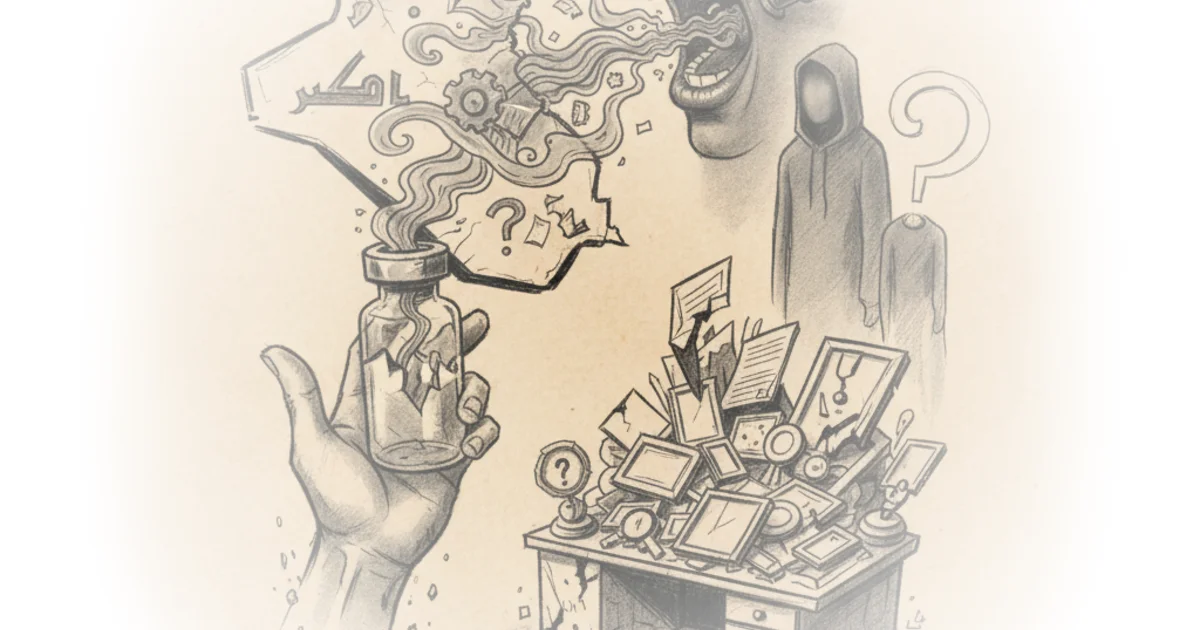
The article details how the intelligence community swallowed the tale of an Iraqi refugee who claimed Saddam Hussein had mobile biological warfare labs, despite glaring red flags. Stein notes that the source, codenamed Curveball, was working at a Burger King when his fabricated reports became the linchpin of the case for war. "So policymakers think he's still a credible source and nothing could be further from the truth," Watson told Stein. "This guy is the centerpiece of the WMD assessment on Iraq and he's working at Burger King. I'm still amazed when I think about it."
This revelation is staggering not just for its absurdity, but for what it implies about the vetting process. The German intelligence service (BND) had cut ties with the source due to credibility issues, yet the CIA and other agencies continued to rely on his unverified claims. Stein highlights the sheer negligence: the BND did not vet the source's background or confirm his information, yet these reports were funneled directly into the highest levels of US intelligence.
"I agreed to 'protect sources and methods,' not help hide incriminating intelligence of the agency's incompetence, fraud and mismanagement."
The Anatomy of a Failure
Stein meticulously reconstructs the timeline, showing how doubts were raised internally but systematically ignored. He describes how Watson, initially a believer in the source, began to question the intelligence after realizing that other reports, such as those about unmanned aerial vehicles, were also flawed. "I was furious," Watson said of being overruled when he tried to pull false reports from a presidential speech. The article suggests a culture where dissent was not just discouraged but actively suppressed.
The narrative connects this failure to the broader context of the post-9/11 era, where the pressure to find a link between Iraq and terrorism was immense. Stein points out that while the CIA refuted claims that Saddam backed Osama bin Laden, it simultaneously issued dire reports on WMDs based on Curveball. The stakes were incredibly high, and the cost of getting it wrong was measured in lives lost in the subsequent invasion. The article reminds us that the 1991 Gulf War had already left the intelligence community "basically blind" when inspectors were kicked out of Iraq, creating a vacuum that Curveball's fabrications eagerly filled.
Critics might argue that Watson himself was complicit, noting that he initially supported the flawed intelligence and only recanted after the war. As one former officer told Stein, "He never stood up when it counted... He got it completely wrong when it mattered." This counterpoint adds necessary nuance, suggesting that the failure was not just top-down but a collective collapse of professional judgment. However, Stein's focus remains on the institutional mechanisms that prevented correction, arguing that the system punished those who tried to fix it.
The Legacy of Deception
The piece concludes by examining the ongoing struggle for transparency. Watson is currently suing the CIA to publish his 850-page manuscript, arguing that the agency is still hiding details of its incompetence. Stein writes, "More than two decades later, Watson still hasn't given up... Because the CIA is still hiding details from one of the worst failures in its history." This ongoing battle underscores that the issue is not merely historical; it is a living wound in the intelligence community's credibility.
The article's power lies in its refusal to let the story end with the invasion. It forces the reader to confront the reality that the decision to go to war was based on a lie that was known to be shaky by insiders, yet was pushed forward with full force. Stein's reporting serves as a stark reminder of the human cost of intelligence failures, where the lives of soldiers and civilians became collateral damage in a game of bureaucratic cover-ups.
Bottom Line
Jeff Stein's article is a vital correction to the historical record, exposing how the intelligence community's failure to vet a single source led to a war of immense human suffering. While the argument that Watson was a reluctant participant initially adds complexity, the core indictment of an agency that punished truth-tellers remains unassailable. The reader must watch for the outcome of Watson's lawsuit, as it may finally force the declassification of details that have been hidden for too long.