In a political moment defined by rapid shifts, Kahlil Greene offers a piercing critique of how the Democratic Party is rewriting its own recent history. Rather than accepting the narrative that a period of intense racial education was merely a temporary "mood," Greene argues that labeling it "Woke 1" is a strategic surrender that erases the hard-won progress of millions. This piece is essential listening because it challenges the very mechanism by which political actors discard uncomfortable truths: the invention of version numbers to declare ideas obsolete.
The Trap of Versioning
Greene opens by dissecting a specific moment in August 2026, where Representative Alexandria Ocasio-Cortez described a past era of political thought with the phrase, "Woke 1 was crazy." Greene notes that this was not just a throwaway line; it was a calculated retreat. "The phrase does two things at once," Greene writes. "It converts an important period of political education into a product cycle with a version number, and it adopts the framing of the people who spent six years attacking that education." By accepting the terminology of their opponents, Greene argues, Democrats are implicitly agreeing that their previous stance on racial justice was a glitch rather than a principle.
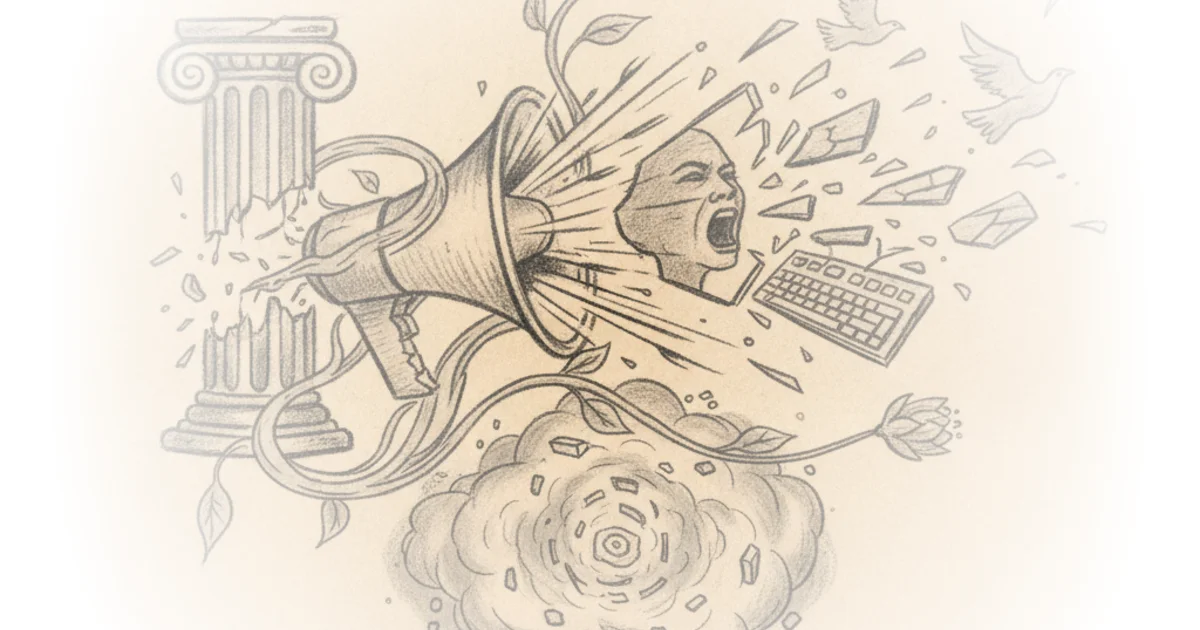
The author traces the etymology of the word "woke" to its origins as a survival mechanism for Black Americans, citing blues musician Lead Belly's 1938 warning to "stay woke" against the Scottsboro Boys. Greene points out that for decades, the term described a condition of awareness, not a timeline. "The word described a condition rather than a period," Greene explains. "A person paid attention to what the country did to Black Americans, or a person did not." This historical context is crucial because it highlights the absurdity of assigning an expiration date to the demand for civil rights.
A version number implies obsolescence, and obsolescence settles the argument without anyone having to make one.
Critics might argue that political language must evolve to remain electable, and that clinging to 2020 rhetoric guarantees defeat. Greene anticipates this, noting that Ocasio-Cortez could have simply explained which specific policies, like defunding the police, lacked majority support. Instead, she chose a joke that validated the idea that the entire movement was a phase. "Calling 2020 crazy answers a question nobody asked about timing and leaves the actual question unanswered," Greene observes. This framing allows the party to avoid the harder work of defending specific policies on their merits.
The Great Awokening and the Backlash
The commentary then shifts to the scale of the movement that preceded this retreat. Greene references Matthew Yglesias's 2019 concept of "The Great Awokening," noting that white liberals did indeed shift left after 2014, often further than Black voters on racial issues. This shift was fueled by a massive educational effort following the death of Michael Brown. Greene details how organizers moved beyond protests, utilizing reading lists and public argument to teach concepts like redlining and qualified immunity. "Millions of people learned the words redlining, convict leasing, and qualified immunity within the same year," Greene writes, emphasizing that this was a deliberate, collective project, not a spontaneous trend.
However, Greene also documents the ferocity of the counter-movement. He notes that by 2025, the Justice Department moved to dismiss consent decrees negotiated after the killings of George Floyd and Breonna Taylor, and corporations began rolling back diversity initiatives. "The backlash arrived on the same scale," Greene states, drawing a direct line between the surge in education and the organized political reaction against it. The author draws a parallel to the Dunning School of history, which spent decades framing Reconstruction as a failure to justify the rollback of Black political power. "Historian William Dunning taught at Columbia University... and his doctoral students wrote state-by-state histories arguing that those governments failed through incompetence," Greene explains, warning that the current dismissal of "woke" politics serves a similar function: delegitimizing the gains of the marginalized.
The people best positioned to hold the range of acceptable debate in place are apologizing instead of explaining.
Greene's analysis of the historical parallel is particularly sharp. He notes that just as W.E.B. Du Bois was ostracized for correcting the historical record of Reconstruction, modern organizers who push for racial justice are now being asked to apologize for their own education. The author suggests that by folding, the party is repeating the mistakes of the 1980s and 1990s, when Democrats abandoned the label "liberal" and later "progressive" in favor of more palatable, but less substantive, identities.
Bottom Line
Kahlil Greene's strongest contribution is exposing how the language of version control is being weaponized to erase political history, turning a decade of civil rights advocacy into a disposable product cycle. The argument's vulnerability lies in its assumption that honesty is always the most viable political strategy, even when the political landscape has shifted against the very issues being defended. The reader should watch to see if the party's attempt to distance itself from this era actually secures votes, or if it merely cedes the ground of racial justice to the opposition permanently.