Django Ellenhorn dismantles the comforting myth that suicide is a sudden, inexplicable tragedy, replacing it with a chillingly logical account of failure, method, and the cruel binary of survival. In a landscape saturated with sentimental mental health narratives, this memoir stands out for its refusal to offer redemption, instead tracing the "actual shape and logic of suicidal thinking" with unflinching literary rigor. It forces the reader to confront the uncomfortable reality that for some, the drive to end life is not a moment of weakness, but a sustained, intellectual pursuit.
The Binary of Failure
Ellenhorn's central thesis challenges the social instinct to reassure those who struggle by insisting they are "judging yourself too harshly." Instead, he posits a brutal clarity where the only metric of success is the finality of the act. He writes, "when it came to suicide, if you were still here then you could absolutely be considered a flop." This framing strips away the usual moralizing and replaces it with a stark, almost mathematical assessment of one's own efficacy. The author describes a "morbid embarrassment" shared with others who have attempted to leave, a wince at having "under-researched and gone the wrong, ineffective route."
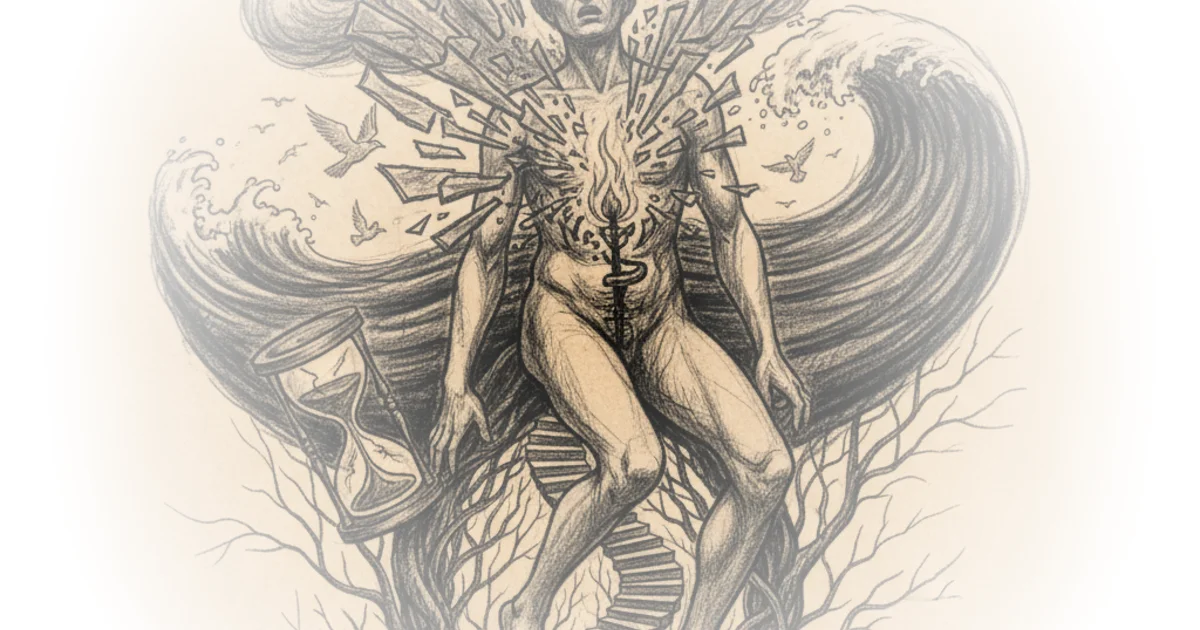
This perspective is jarring because it inverts the typical narrative of survival as a victory. For Ellenhorn, surviving is evidence of a lack of talent or conviction. He notes, "He found something almost nice in the brutal clarity of that binary: you were either good at suicide and gone, or you were bad at it and remained." This logic is effective in exposing the internal shame that often accompanies failed attempts, yet it risks romanticizing the competence required for death. Critics might argue that framing suicide as a skill set to be mastered obscures the role of treatable mental illness and the chaotic nature of human despair.
He found something almost nice in the brutal clarity of that binary: you were either good at suicide and gone, or you were bad at it and remained.
The Mechanics of Departure
The memoir does not shy away from the visceral details of method, grounding the abstract desire for death in physical reality. Ellenhorn recounts his early experiments, from researching medical videos of stomach pumping to fashioning a noose from "dead scabrous vines" behind a school building. He describes the absurdity of these efforts, noting that "some of his attempts had been jokey, others more serious, and others still mere mental swerves on late nights." The narrative moves from the theoretical to the practical, illustrating how the internet has democratized access to lethal information, turning the search for an exit into a research project.
This section draws a dark parallel to historical shifts in suicide methods, much like the transition to coal gas in the 19th century, which made suicide more accessible and, tragically, more common due to the ease of inhalation. Ellenhorn's experience mirrors this historical trend: the availability of information and means transforms the impulse into a plan. He describes the process of "sleuthing out a video" of a man mixing booze and meds, observing how even the "allegedly real thing seemed fake" when viewed through a screen. This detachment highlights the strange dissociation that can accompany the planning of one's own end.
The author's willingness to describe the physical failure of these attempts—the vines breaking, the stone feeling too heavy—underscores the difficulty of the act. He writes, "He thought about striking himself over the head with it, but he didn't think he'd be able to get an effective angle." This admission of physical limitation serves as a counterpoint to the intellectual certainty of the desire. It is a reminder that the body often resists the mind's most destructive commands.
The Aesthetics of Oblivion
As the narrative progresses into university life, Ellenhorn explores the philosophical allure of non-existence. He describes the feeling of suicide as a "coming up for air" in contrast to the "strenuous submergence" of living. The author captures the seductive nature of the void, writing that "even thinking about permanently bolting was lovely." This sentiment is reinforced by the absurdity of life's brevity and the "incomprehensibility of oblivion." He questions the very structure of existence, asking, "What kind of sicko had come up with this?"
The memoir touches on the isolation of this thinking, where the narrator feels like a "coward" for failing to follow through. He reflects on the panic attacks that accompany the fear of death, noting that "Death had come to frighten him so much that he had panic attacks about once a month." This contradiction—the simultaneous desire for and terror of death—is a crucial insight. It suggests that the drive to suicide is not a simple rejection of life, but a complex negotiation with the unknown.
Ellenhorn's encounter with a date who casually warns him, "Don't kill yourself," serves as a pivot point. The comment, made "seemingly out of nowhere," jolts him and forces a confrontation with his own hidden state. He realizes that his internal struggle is not as invisible as he thought, yet the interaction remains fraught with the awkwardness of unspoken pain. The girl's warning acts as a prophetic moment, signaling that the "sickening undertow" was returning.
He thought that was about right. Why aren't they screaming?
Bottom Line
Django Ellenhorn's memoir is a harrowing, essential read that refuses to sanitize the reality of suicidal ideation, offering a rare glimpse into the "logic" of self-destruction without offering a facile cure. Its greatest strength lies in its unflinching honesty about the shame of failure and the seductive clarity of the void, though it occasionally risks framing the act as a matter of competence rather than crisis. Readers should approach this not as a story of recovery, but as a stark documentation of the human mind's capacity to rationalize its own end.