Brad DeLong identifies a chilling new normal in American governance: the deliberate dismantling of life-saving institutions not as a calculated policy choice, but as an act of performative cruelty designed to inflict pain on political opponents. While most analysis focuses on budgetary line items or diplomatic fallout, this piece forces us to confront the human toll of an administration that treats foreign aid as a weapon rather than a tool of soft power.
The Anatomy of Casual Destruction
DeLong opens by framing the elimination of the United States Agency for International Development (USAID) not as incompetence, but as a calculated strategy rooted in grievance. He argues that the driving force behind these cuts was a singular, cynical motivation: "It is something we can do that will make liberals really sad!" This reframing is crucial because it shifts the narrative from bureaucratic failure to moral hazard. The administration and its key architects did not miscalculate; they succeeded in their goal of causing harm, viewing the suffering of distant populations as a feature rather than a bug.
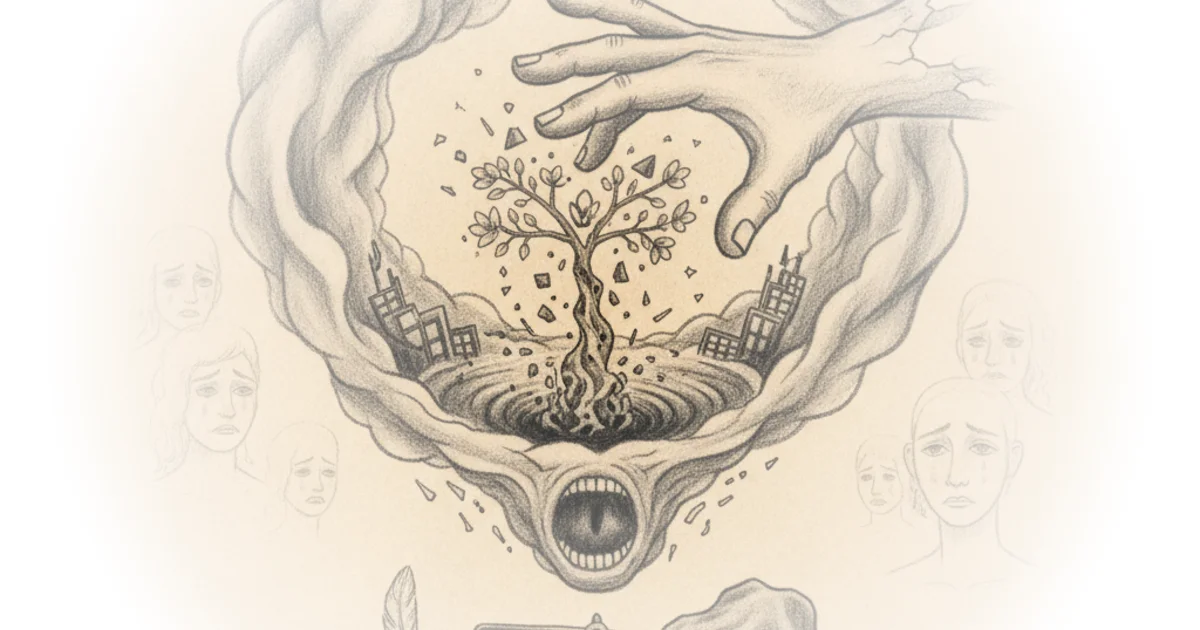
The evidence presented is stark. DeLong highlights that independent analyses now estimate that the rapid dismantling of these programs has already resulted in at least 700,000 deaths. He contrasts this grim reality with the denialism from key figures like Elon Musk, who claimed, "There is not even a single dead child! If there were, it would be worldwide headline news!" This quote exposes a dangerous disconnect between the rhetoric of efficiency and the lived reality on the ground.
When you give the world's richest man sweeping authority to 'reform' the federal government via a bespoke agency called the Department of Government Efficiency, you are not designing an institution to maximize social welfare. You are designing an arena for displays of personal dominance.
DeLong's analysis suggests that the transfer of aid functions to other agencies was not a seamless handover but a deliberate disruption. He points to specific tragedies: Jane, 15 months old, dying of malnutrition in Kakuma Refugee Camp after food rations were slashed; and infants in South Sudan and Cameroon perishing from cholera and malaria due to clinic closures and drug shortages. These are not abstract statistics; they are the direct result of a policy that prioritized ideological purity over human survival.
The Ideology Behind the Wood Chipper
The commentary delves deep into the psychological and political drivers behind this destruction. DeLong identifies five overlapping motives, ranging from libertarian ideology to conspiratorial fantasies. He notes that for this coalition, USAID is viewed not as a pillar of global stability but as a "node in a global conspiracy" involving woke bureaucrats and foreign enemies.
This narrative has been weaponized effectively. DeLong writes, "Ideological hostility to foreign aid provided the vocabulary. Culture-war resentment supplied the emotional energy." The result is a policy that ignores the fact that USAID disbursed roughly $40 billion annually—a tiny fraction of the federal budget—yet delivered massive returns in global health and stability. By feeding this agency into the "wood chipper," as Musk bragged about doing, the administration sacrificed decades of progress in eradicating smallpox and managing HIV/AIDS under programs like PEPFAR.
Critics might argue that some bureaucratic inefficiencies in foreign aid are real and warrant scrutiny. However, DeLong counters this by showing that the response was not reform but total annihilation. The approach ignored the nuance of Goodhart's law—where a measure becomes a target and ceases to be a good measure—by treating all funding as suspect fraud rather than investigating specific instances. This blanket destruction suggests the goal was never efficiency, but erasure.
Oligarchy plus grievance politics yields policy that is both morally catastrophic and instrumentally stupid.
The piece also touches on the role of conspiracy theories, noting how claims that USAID funds bioweapons or protests have been amplified to justify the cuts. DeLong points out that when a leader ties their political identity to such falsehoods, admitting error becomes impossible. The destruction of aid programs becomes proof of their "courage" in fighting a corrupt system, even as children die from preventable diseases.
Bottom Line
Brad DeLong's most powerful contribution is his refusal to let the administration off the hook with excuses of incompetence; he exposes the casual cruelty at the heart of these decisions. The argument's greatest strength is its unflinching focus on the human cost, grounding abstract policy debates in the deaths of infants and families. The biggest vulnerability lies in the political reality that this strategy appears to be working for its proponents, as public indifference allows such devastation to proceed without immediate electoral consequence.