Alberto Romero delivers a startling thesis: the era of open, commercial artificial intelligence has ended not because the technology failed, but because it succeeded too well for the state to tolerate public access. This piece does not merely report on a new release delay; it argues that the US government has effectively seized control of frontier models, transforming the industry into a national security asset and leaving global competitors and open-source developers in the dust.
The End of the Open Era
Romero frames the recent decision to restrict access to the latest model releases as a fundamental rupture in the industry's trajectory. He writes, "today was the last normal day in the AI industry," asserting that the shift is not driven by technical singularity but by political containment. The author points to reports that the executive branch requested a staggered release of new models, limiting access to trusted partners before any public rollout.
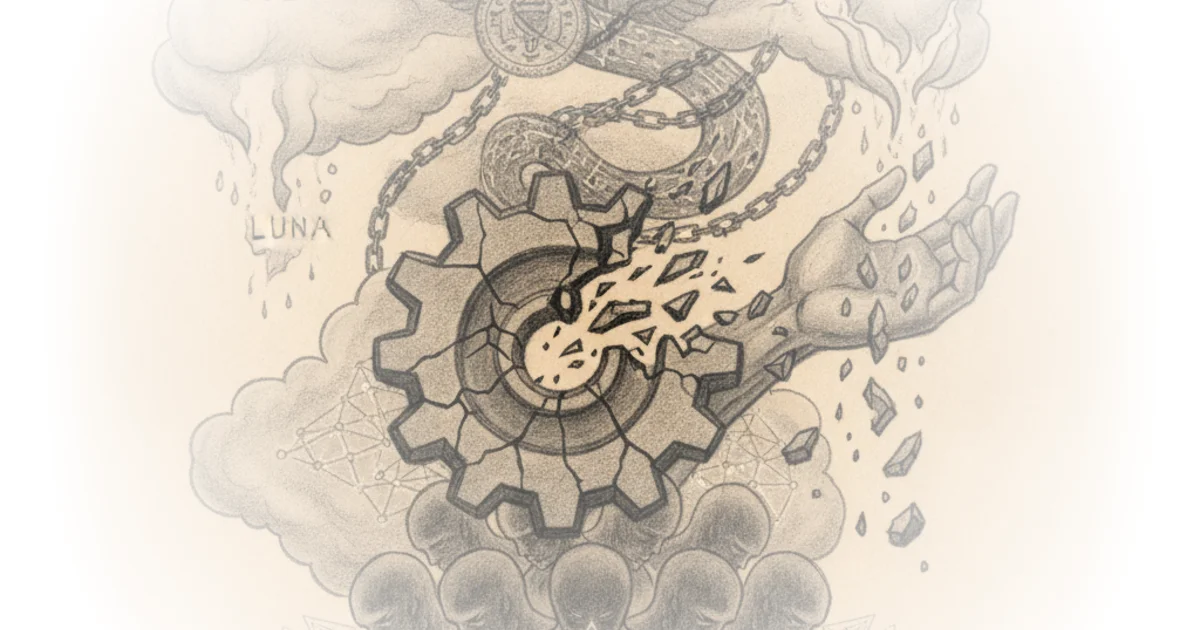
This move signals a departure from the market-driven distribution that has defined the sector since 2022. Romero argues that "the best AI models ever built are under chains," suggesting that safety concerns have become a pretext for centralization. The core of his argument is that this restriction creates a two-tier system where only government-sanctioned entities can utilize the most powerful tools, effectively ending the democratization of artificial intelligence.
"AI has stepped with both feet into undemocratic terrain."
Critics might argue that Romero's characterization overlooks the legitimate necessity of managing dual-use technologies that could destabilize global security or spread disinformation at scale. However, his framing forces a difficult question: when does precaution become exclusion?
The Manhattan Project Parallel
The commentary leans heavily on historical analogies to explain the current consolidation of power. Romero traces a direct line from recent policy shifts to long-standing ambitions within the industry's leadership. He notes that both major players have historically compared their work to the development of nuclear weapons, citing Sam Altman's past references to a "Manhattan Project for AI" and Dario Amodei's belief that artificial intelligence requires control similar to atomic arms.
Romero highlights how these internal corporate philosophies have now aligned with state interests. He writes, "Anthropic wanted safety to be put above everything and now it is above us," suggesting that the company successfully lobbied for a regulatory environment that mirrors its own desire for exclusivity. The author posits that this alignment was not accidental but a strategic victory for those who view AI as too dangerous for public hands.
"Anthropic's ultimate goal is not to build AGI, but to own it. To control it."
The argument here is compelling because it connects disparate statements from industry leaders into a coherent strategy of containment. Yet, it risks oversimplifying the motivations of OpenAI, which has publicly championed broad access even as it complies with government restrictions.
The Global Consequence and the Open Source Trap
Perhaps the most sobering part of Romero's analysis is the geopolitical fallout. He warns that by hoarding capabilities, the US administration is inadvertently handing the advantage to China, where companies like Z.ai and DeepSeek are rapidly closing the gap. "China is rushing ahead," he observes, noting that while American models are held back, foreign competitors face no such constraints.
Furthermore, Romero argues that the open-source community, often seen as a counterbalance to corporate monopolies, will be crushed by this new reality. He writes, "open source is the invisible infrastructure of the world... people won't use open source models" if they are held to the same safety standards without the benefits of government partnership. This creates a scenario where the most capable models are locked away, and the alternative infrastructure is rendered obsolete.
"You only do such a self-own if you are scared to death or if you don't need the world anymore."
This section highlights a critical vulnerability in the US strategy: the potential for regulatory capture to stifle innovation while empowering foreign rivals who operate without similar constraints. Romero suggests that the industry is moving toward a state where "the US government transforms the industry into a national AI initiative akin to the Manhattan Project," rendering commercial incentives irrelevant.
Bottom Line
Romero's strongest asset is his ability to synthesize corporate rhetoric with recent regulatory actions to reveal a consistent pattern of centralization, warning that the push for safety has become a vehicle for monopoly. However, his argument assumes a level of coordination and intent between private firms and the government that may be more emergent than premeditated. The reader must now watch closely to see if this new "national initiative" truly secures American leadership or merely cedes the future of AI to those willing to move faster without restraint.