In a year defined by rapid digital consumption and fragmented attention spans, Scot McKnight offers a rare, grounding counter-narrative: the profound necessity of slowness, depth, and the messy, unpolished reality of human connection. This collection of observations, ranging from the accidental genius of a 1965 children's choir to the stark statistics of gender disparity in 2025, argues that our obsession with efficiency is eroding our capacity to understand the world and each other.
The Unlikely Architects of Joy
McKnight begins by dismantling the myth of the perfectly executed cultural moment, turning his gaze to the recording of "Christmas Time Is Here." He highlights the chaotic, unscripted nature of the session where 11-year-old Dave Willat and his peers were rushed across the Golden Gate Bridge. "We walked in and they handed us the lyrics to 'Christmas Time Is Here,'" Willat recalls, noting the sheer improvisation of the moment. The producer, Lee Mendelson, famously scribbled the lyrics on an envelope, a detail McKnight uses to illustrate that enduring art often emerges from disorder rather than rigid planning.
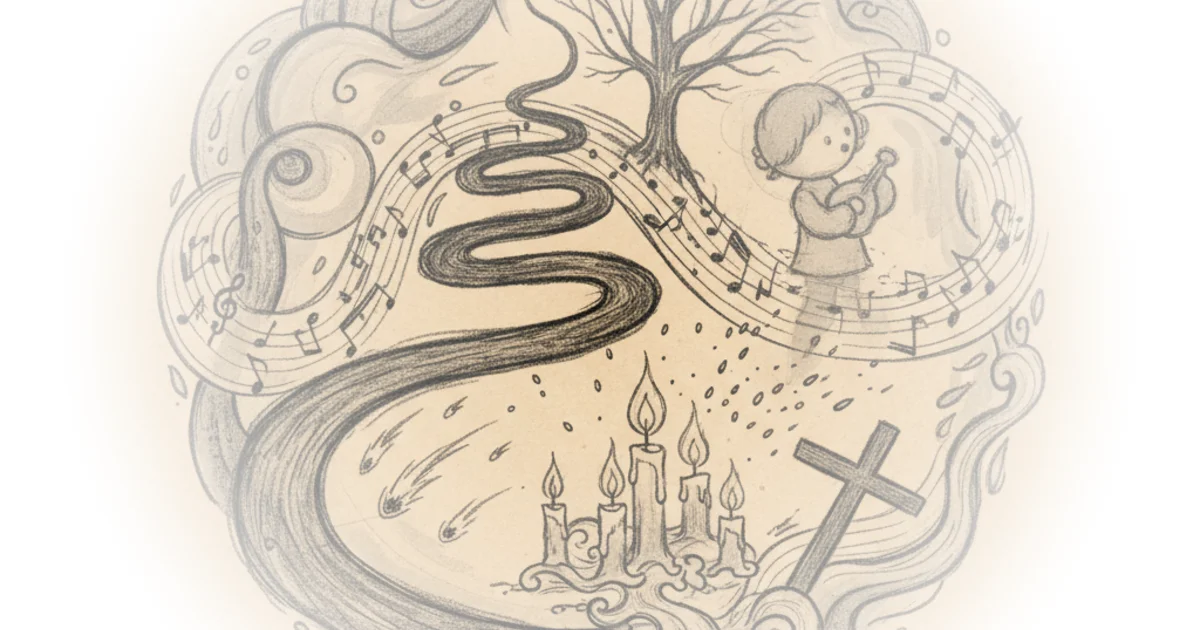
The author emphasizes the human cost of this perfectionism, noting that the initial recording session was scrapped because parents were unaware of their children's whereabouts. "They get there. The church is dark, no kids," Willat says, a scene McKnight notes would be unthinkable in today's hyper-vigilant climate. This anecdote serves as a metaphor for the piece's broader theme: the friction between institutional control and the organic flow of life. Just as the Peanuts special required multiple takes and the children's giggles to find its soul, McKnight suggests that our cultural and spiritual lives cannot be rushed without losing their essence.
The success of a ministry is always more a picture of who God is than a statement about who the people are that He is using for His purpose.
The Architecture of Goodness
Shifting from cultural history to organizational ethics, McKnight engages with Jeff Dalrymple's concept of a "goodness culture." He argues that true spiritual integrity is not found in grand sermons but in the mundane, often unglamorous details of administration and human resources. McKnight writes, "We each must pursue goodness in every aspect of our lives and our ministry," extending this mandate to insurance coverage and child safety protocols. He posits that these administrative choices are not merely bureaucratic hurdles but are, in fact, theological statements that reflect a community's character.
This framing is particularly potent because it refuses to separate the "spiritual" from the "practical." McKnight suggests that "overbearing leadership" is often a symptom of a failure to implement robust boundaries and safety nets. While critics might argue that focusing on insurance and HR dilutes the spiritual mission of an organization, McKnight counters that these safeguards are the very mechanisms that prevent abuse and protect the vulnerable. The argument implies that a culture of goodness is built on the bedrock of accountability, not just intention.
The Tyranny of Speed in Education
Perhaps the most urgent section of McKnight's commentary addresses the degradation of deep reading in modern education. He critiques the Common Core's approach, which treats reading as a set of discrete skills detached from content. "The Core imagined reading as a means of building those skills, and imagined in that context that it doesn't matter what or how much you read," McKnight observes. He draws a sharp distinction between the efficiency demanded by standardized tests and the reflection required to understand complex human experiences.
McKnight uses his own experience teaching Nickel and Dimed to illustrate this point. He notes that while a single chapter could be excerpted for a test on "Drawing Inferences," the book's true power lies in the cumulative weight of its chapters. "The many chapters taken together add up to more than the sum of their parts," he writes. This is a direct challenge to the "treadmill" mentality of modern schooling, where the pressure to cover material often sacrifices the opportunity to grapple with it. He reminds readers that the novel itself is a relatively recent invention, once feared for corrupting the youth, yet it remains a vital tool for developing empathy and understanding complexity.
The most rewarding relationships of your life will probably not be the ones that be fast and superficial.
The Reality of Power and Suffering
McKnight does not shy away from the harsh realities of power dynamics and human suffering. He presents a sobering statistical portrait of the 119th Congress and the corporate world, noting that women account for only 28% of lawmakers and 11% of Fortune 500 CEOs. "Girls Are Smart. But Aside From Venture Capital, What Other Evidence Disputes Patriarchy's Claim that 'Feminists Are Taking Over'?" he asks, using hard data to dismantle the notion that gender equality has been achieved. He extends this analysis to the medical field, where women remain a distinct minority in high-stakes specialties like orthopedic surgery.
Furthermore, McKnight tackles the dangerous spiritualization of mental health, specifically regarding Obsessive-Compulsive Disorder (OCD). He rebukes the notion that prayer alone is a cure, arguing instead that God works through secular medicine and psychology. "God works through those medications and secular methodologies to bring healing and restoration to people," he asserts, challenging a worldview that views medical intervention as a lack of faith. This section serves as a crucial corrective to the tendency to ignore biological realities in favor of purely spiritual explanations.
Finally, McKnight reflects on the nature of evil through the lens of Jeffrey Epstein, describing him as a "hungry ghost" whose life was defined by a profound isolation. "Evil often presents a front of sophistication and implies a great deal of depth, when in fact it is almost always pathetic, stupid, and meaningless," he writes. This observation strips away the glamour often associated with power and exposes the hollow core of those who exploit others without ever forming genuine human bonds.
Bottom Line
Scot McKnight's commentary is a masterful defense of depth in an age of superficiality, arguing that whether in education, ministry, or our understanding of power, the shortcuts we take ultimately cost us our humanity. While the piece occasionally risks becoming a laundry list of disparate topics, the through-line of "slowness" and "authenticity" binds the arguments together with surprising coherence. The strongest takeaway is the urgent reminder that true understanding—of a text, a person, or a crisis—requires the time and courage to engage with complexity, not just the speed to answer a test question.