Richard Hanania delivers a jarring, unconventional thesis: the Arizona Republican Party's electoral decline isn't driven by policy disagreements, but by a "MAGA-fication" that has purged competent leaders in favor of figures defined by conspiracy theories and personal scandals. He argues that the movement's obsession with loyalty to a single leader has created a vacuum of governance, replacing the state's previous economic success with a culture of paranoia and moral decay.
The Hollowing of a Conservative Success Story
Hanania begins by contrasting Arizona's robust economic performance under decades of Republican governance with its recent political volatility. He notes that between 1991 and 2023, the state had a Republican governor for 26 out of 32 years, a period that saw Arizona outpace neighboring New Mexico in both population and personal income growth. Yet, despite controlling the legislature for decades, the party has begun losing statewide elections. Hanania attributes this shift directly to the "MAGA takeover," specifically pointing to the 2019 selection of Kelli Ward as party chair. He writes, "Her platform was that other Arizona Republicans were not Trumpy enough, and in her efforts to make the party more of a cult of personality, she reached out to right-wing conspiracy theorists as part of a conscious effort to change the type of people it was trying to reach."
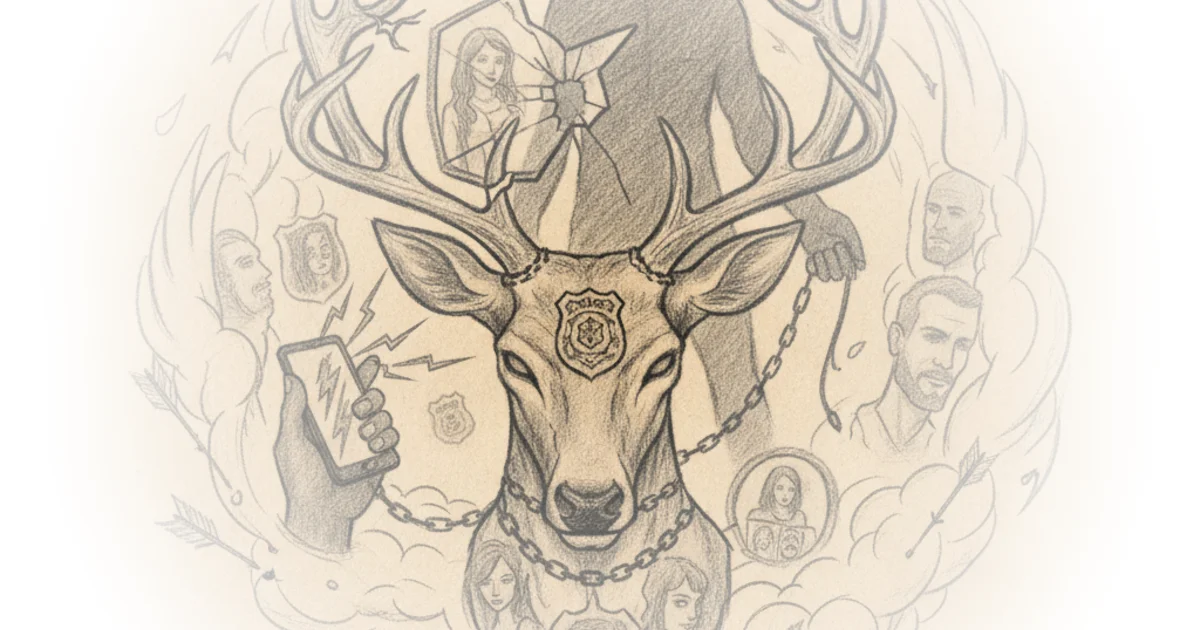
This reframing is crucial. Hanania suggests that the party's decline is not an ideological correction but a personnel crisis driven by a specific, personality-based litmus test. The argument gains weight when he connects this shift to the 2020 election aftermath. He details how the administration and its allies pressured Arizona officials to overturn certified results, noting that "Trump and Giuliani put more pressure on Bowers to hold hearings on the topic, and MAGAs went to his house with bullhorns while accusing him of being a pedophile." The result, Hanania argues, was the elevation of candidates who prioritize loyalty over constitutional duty.
The bad recent luck can be directly traced to poor candidate selection, caused by a MAGA takeover.
Critics might argue that demographic shifts in Arizona, such as the influx of new residents from California, are the primary driver of these electoral losses, rather than candidate quality. However, Hanania counters this by pointing out that the party's internal dynamics have actively alienated the very moderate voters needed to win statewide races, creating a self-inflicted wound that demographics alone cannot explain.
The Rise of the "Based" Candidate
The commentary then shifts to the specific individuals who have risen through this new hierarchy, painting a picture of a party increasingly detached from reality. Hanania highlights the campaigns of Kari Lake and Blake Masters, describing Masters as a "walking personification of the Based Ritual." He recounts Masters's campaign rhetoric, which included praising the Unabomber and declaring abortion providers "demonic." Hanania observes that this "Tech Bro/MAGA mind meld" has become a dominant force, noting that Masters later ran for Congress and "called his opponent Abe Hamadeh — who is of Syrian descent — an 'anchor baby,' and circulated pictures of him in Mecca."
The author uses these examples to illustrate a broader trend where policy substance is replaced by performative extremism. He describes a recent meet-and-greet where candidates engaged in call-and-response chants about deporting all undocumented immigrants and labeling the President of the United States a traitor. Hanania writes, "Such talk is designed to appeal to an electorate that is driven by nothing but self-pitying hate." This characterization of the base is stark, suggesting that the movement is fueled less by policy preferences and more by a sense of grievance and identity.
The vibes of the most energized portion of the American right are truly poisonous at this moment.
A counterargument worth considering is that these candidates are simply reflecting the genuine frustrations of a segment of the electorate that feels ignored by the establishment. Hanania acknowledges this energy but argues that the specific content of their grievances—ranging from election denialism to conspiracy theories—demonstrates a movement that has lost its way, prioritizing "worship of one man" over the practicalities of governing.
The Irony of the "Cuck" Label
Perhaps the most provocative element of Hanania's piece is his exploration of the term "cuck," originally used by MAGA supporters to mock establishment conservatives as weak. He notes the irony that the movement has now elected Mark Lamb, a candidate accused of facilitating his wife's sexual encounters with other men. Hanania writes, "It's ironic that, a decade later, MAGA has elected a literal cuck." He expands this observation to a broader pattern, linking the behavior of figures like Roger Stone and Jerry Falwell Jr. to a "peculiarly MAGA taste for cuckoldry," which he theorizes might be related to the movement's "submission to a leader."
While Hanania admits the sample size for this psychological theory is small, he uses it to argue that populism selects for a specific type of character flaw. He posits that "populism is associated with lower moral standards more generally" and that the movement's selection mechanisms naturally draw in individuals who are "corrupt, authoritarian, sexually perverted, conspiratorial, racist, and anti-science." This is a bold claim, suggesting that the personality traits of the movement's leaders are not incidental but intrinsic to its structure.
This indicates there is a peculiarly MAGA taste for cuckoldry, which might be related to the main feature of the movement being submission to a leader.
Critics might note that focusing on the private sexual lives of politicians is a distraction from substantive policy debates and risks devolving into ad hominem attacks. Hanania anticipates this, framing the issue not as gossip but as evidence of a "kakistocracy"—a government by the worst people—where character flaws are correlated and amplified by the movement's internal dynamics.
Bottom Line
Hanania's strongest argument is that the Arizona Republican Party's decline is a self-inflicted wound caused by prioritizing loyalty to a single figure over institutional integrity and candidate competence. His biggest vulnerability lies in his speculative psychological analysis of the movement's leaders, which, while provocative, relies on a small and anecdotal sample size. Readers should watch to see if the state's economic success can withstand the political instability generated by this new, personality-driven leadership class.