Then & Now delivers a provocative historical autopsy on the modern obsession with "individual responsibility," arguing that what we treat as timeless moral truth is actually a recent political invention designed to dismantle social safety nets. This piece is notable not for its moralizing, but for its forensic tracing of how the definition of poverty shifted from a shared societal obligation to a personal character flaw over the last three centuries. For listeners navigating today's complex economic landscape, understanding this genealogy is crucial: it reveals that the pressure to be "100% responsible" is less about personal growth and more about justifying the withdrawal of public support.
The Invention of the Excuse-Free Life
The piece opens by dismantling the comforting notion that self-reliance is a natural human constant. Then & Now writes, "the idea of individual responsibility is often invoked in discussions about welfare poverty and enterprise that we have a tendency to find some other party or entity or institution or force in the universe to blame for our problems instead of looking within." This framing is sharp because it immediately identifies the political utility of the concept: it redirects anger away from systems and toward the individual. The author highlights how modern self-help gurus have codified this, noting that in his 2012 book, Dr. John Izzo promises that "taking responsibility changes everything," while Jordan Peterson argues we must "adopt as much responsibility as possible for individual life society and the world."
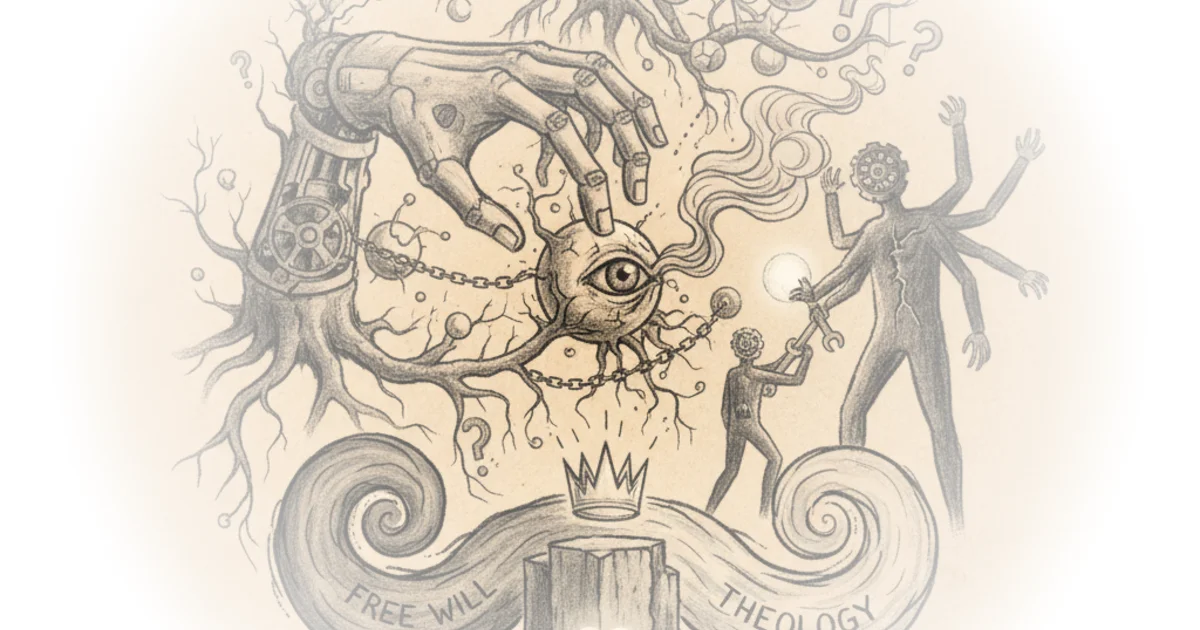
The commentary here is effective because it exposes the narrowing of the term "responsibility." Then & Now points out that this focus is "often on a responsibility for oneself atomized isolated entrepreneurial maybe but rather than on obligations to others or duties to our communities." This distinction is vital. It suggests that the modern imperative to "stand up on our own two feet" is a cultural construct that actively erodes the social bonds necessary for a functioning society. Critics might argue that emphasizing personal agency is essential for dignity, but the piece convincingly demonstrates how this rhetoric is weaponized to dismiss structural barriers.
The rising emphasis on this type of responsibility has weakened social bonds justified the dismantling of welfare programmes encourages inwardness and blame and sidelines other interpretations of responsibility that we've seen historically.
From Shared Duty to Moral Stigma
The historical pivot in the piece is its most compelling section, where Then & Now contrasts the modern view with pre-capitalist and early capitalist eras. The author notes that for most of history, poverty was viewed as a fact of life where the question was not "who was responsible for their own poverty but who was responsible for care." Then & Now cites the 13th-century philosopher Thomas Aquinas, who wrote extensively about "the christians obligations to provide support for the poor," and details how English Poor Laws made local officials "duty-bound by the crown to provide poor relief."
This historical evidence lands with force because it shatters the myth that the community's role in supporting the vulnerable is a modern liberal invention. Instead, the piece argues that the shift occurred as capitalism destabilized traditional livelihoods. Then & Now writes, "It took the creation of wealth for poverty to become unpredictable and more widespread the idea of poverty increasingly became a moral one in the 19th century being labelled a pauper someone in receipt of poor relief became a stigma a sign of moral failure a sin." The author illustrates this by quoting 19th-century officials who claimed that "the poor in consequence of vice constitute here and everywhere by far the greatest part of the poor."
The narrative effectively traces how the definition of the "deserving poor" narrowed, eventually merging with the dark era of eugenics. Then & Now describes how the Massachusetts Board of State Charities in 1866 blamed poverty on "the inherited organic imperfection vitiated constitution of poor stock." This is a chilling reminder of how the concept of individual responsibility was twisted to justify biological determinism. The piece notes that eugenicists like Charles Davenport wanted to "purify our body politics of the feeble-minded and the criminalistic," leading to sterilization laws in 24 states. This historical context is essential; it shows that the current rhetoric of "personal failure" has roots in dangerous, pseudoscientific ideologies that sought to eliminate the poor rather than help them.
The Culture of Poverty and the Blame Game
As the piece moves into the 20th century, Then & Now examines how the focus shifted from biology to "culture." The author explains that during the Cold War, Western academics, hesitant to criticize structural factors, blamed poverty on a "culture of poverty." Then & Now describes how political scientist Edward Banfield, studying an Italian village, identified a pattern of "amoral familialism" to explain why poverty persisted. The author argues that these theories took one of two roots: "the culture was a problem of people that the cause for their poverty came from inside them in their psychologies or that culture was a response to outside causes that they often had little to no control over."
This analysis is crucial for understanding modern political discourse. Then & Now writes, "if someone is to blame for their own behavior their own actions and their own condition then only they can be responsible for their own poverty interventions are useless." This logic creates a self-fulfilling prophecy where policy intervention is deemed unnecessary because the problem is framed as internal to the individual. The piece contrasts this with earlier sociological understandings that recognized crime and poverty as linked to "hunger poverty and unemployment," noting that a 1904 Scotland Yard report concluded that the appearance of the unemployed was due more to "thriftlessness and temperate habits than to absolute poverty."
The author's critique of this shift is that it ignores the reality of systemic exclusion. Then & Now points out that despite the focus on personal vice, "the majority of crime was linked to hunger poverty and unemployment." By framing the issue as a cultural or psychological deficit, the narrative absolves the state of its duty to provide economic security. A counterargument worth considering is that cultural factors do play a role in intergenerational poverty, but the piece rightly emphasizes that these factors are often symptoms of, rather than causes for, systemic neglect.
The focus is often on a responsibility for oneself atomized isolated entrepreneurial maybe but rather than on obligations to others or duties to our communities.
Bottom Line
Then & Now's strongest asset is its ability to reframe a moral imperative as a political tool, revealing that the demand for "100% responsibility" is a relatively new invention used to justify the dismantling of the welfare state. The piece's biggest vulnerability is its dense historical scope, which risks overwhelming the listener with the sheer volume of past ideologies, but the core argument remains clear: we have traded a system of shared obligation for one of isolated blame. Readers should watch for how this "invention of individual responsibility" continues to shape current debates on social safety nets, where the narrative of personal failure is increasingly used to block policy solutions. The ultimate takeaway is that responsibility is not a fixed truth, but a fluid concept that changes depending on who holds the power to define it.