Kings and Generals peels back the myth of the Soviet state as a monolith of total control to reveal a dark, symbiotic relationship between the Gulag administration and its most hardened criminals. The most startling claim here is not that crime existed behind the Iron Curtain, but that the Soviet security apparatus may have inadvertently, or perhaps deliberately, engineered the very criminal hierarchy it claimed to fight. This is a story of how a totalitarian regime, overwhelmed by its own mass incarceration, outsourced its prison management to the very people it despised.
The Origins of the Thieves-in-Law
The narrative begins by dismantling the romanticized view of the Russian Revolution, noting that "the fall of a societal and political order is commonly accompanied by chaos and lawlessness." Kings and Generals explains how the early Bolsheviks initially tolerated thieves who targeted the old nobility, but the dynamic shifted violently once the state became the primary property owner. The author highlights a grim reality: millions of orphans and disenfranchised White Army veterans were forced into a life of crime simply to survive, creating a volatile mix of desperation and ideological hatred.
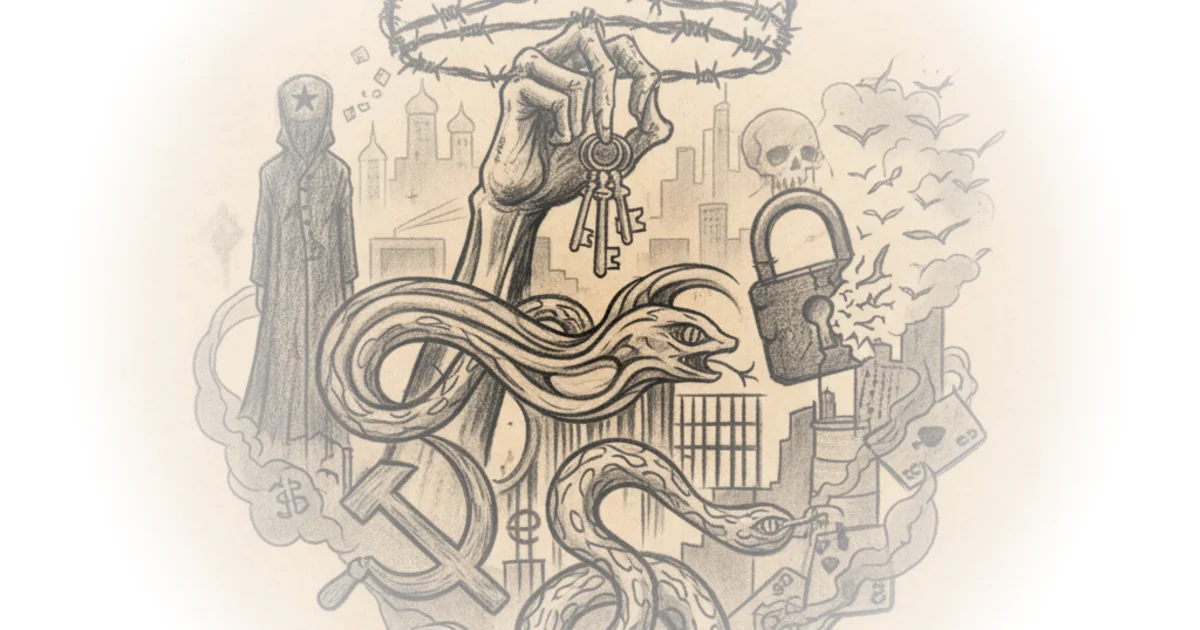
The core of the argument shifts to the 1930s, where the explosion of the Gulag population created a logistical nightmare for the state. Kings and Generals writes, "The sheer size of the prison system created a challenge for the Soviet government. For all the vastness of the security apparatus of the Stalinist regime, controlling such a large prison population was no easy feat." This sets the stage for a controversial theory: that the state recruited traditional criminals, known as urkas, to police the camps. The author cites scholar Shakiranov, who claims "it was recommended to create OGPU control groups headed by a recruited criminal Aftoat, a crime boss who with the help of his associates could ensure the necessary discipline."
This theory suggests a Faustian bargain where the state granted criminals privileges and freedom of movement in exchange for controlling political prisoners. However, Kings and Generals immediately pivots to the fatal flaw in this logic. "One of their cornerstone rules was that the thieves were not supposed to collaborate or have any sort of meaningful relationship with the agents of the state and the police," the author notes. "It wasn't just frowned upon, it was viewed as the equivalent of high treason, the punishment for which was execution." This contradiction is crucial; the very code that defined the thieves-in-law made state sponsorship logically impossible, a point the author handles with commendable skepticism.
The very nature of the thief law goes against the logic of this theory of government creation.
The Code and the War
Moving beyond the origins, the commentary details the Vory v Zakone (thieves-in-law) code, an unwritten constitution that demanded total separation from society. Kings and Generals outlines the rigid prohibitions: members could not work, marry, serve in the military, or inform on others. "Members of the network were supposed to donate into a common pool, the Obsak, which was used to finance its operation, bribe prison guards, give food to inmates, and so on." This section effectively illustrates how the thieves created a parallel society with its own economy and justice system, governed by the Sobaka, a council of elders.
The narrative takes a harrowing turn with the Second World War. The author explains that while the code forbade military service, the Nazi invasion forced a schism. Many inmates joined penal battalions to fight for freedom, a move that the traditionalists viewed as a betrayal. Kings and Generals writes, "This gave rise to the biggest period of bloodshed in the history of the Soviet criminal world known as the war." The term suka (bitch) was applied to those who served, marking them as outcasts.
Here, the author introduces a chilling possibility regarding state intervention. Citing the writer Varlam Shalamov, Kings and Generals notes that "former soldier inmates offered to prison authorities that they would restore order in penal institutions and weaken the authority of rival thieves in order to increase the productivity of the camps. Apparently, the authorities agreed to this proposition and gave their support to former soldier thieves." The result was a brutal civil war within the camps, where the state seemingly turned a blind eye as armed veterans slaughtered the old guard. Critics might note that while Shalamov's account is powerful, it remains anecdotal, and the extent of official state orchestration versus opportunistic exploitation remains a subject of historical debate.
The Aftermath and the Verdict
The violence of the 1940s and 50s decimated the old formation of thieves, forcing many to hide their identities or convert to survive. By the mid-1950s, the Soviet government, perhaps realizing the limits of this internal chaos, intensified its crackdown, establishing special prisons like the "White Swan" to isolate the thieves entirely. Kings and Generals concludes that despite the state's attempts to manipulate or crush the group, "the ultimate result was more or less the same for them. They still had a powerful criminal group to deal with."
The piece succeeds in humanizing a shadow world that is often reduced to caricature, showing how the thieves-in-law were not just criminals but a reaction to the absurdity of the Soviet system. The author's refusal to accept the simplest explanation—that the state created the thieves—adds necessary nuance to the historical record.
Bottom Line
Kings and Generals delivers a compelling, if unsettling, portrait of how the Soviet Gulag inadvertently birthed a sophisticated criminal aristocracy that outlived the regime itself. The argument's greatest strength lies in its rigorous debunking of the "state creation" myth through the internal logic of the thieves' code, though it leaves the reader wondering how much of the subsequent violence was truly state-manufactured versus criminal opportunism. This is essential listening for anyone seeking to understand the chaotic, human reality beneath the cold steel of Soviet totalitarianism.