In a landscape often dominated by abstract geopolitical theories, Chris Chappell offers a rare, ground-level view of democracy in action, arguing that Taiwan's electoral process is not just functional but a vibrant, transparent spectacle that stands in stark contrast to the dysfunction often seen elsewhere. Chappell's coverage moves beyond the typical "China threat" narrative to focus on the mechanics of voting, the cultural fusion of politics and pop culture, and the deep-seated public appreciation for a system that was hard-won.
The Mechanics of Transparency
Chappell begins by dismantling the mystique of the ballot count, describing a system where the public can physically witness the tallying process. "The way they do it is they like you stamp a paper in... it's all very low-tech but very efficient get results quick and very transparent," he observes. This emphasis on manual counting and immediate public verification serves as a powerful counter-narrative to modern anxieties about election integrity. The author notes that after counting, officials show the empty boxes to the crowd to prove no ballots remain, a ritual Chappell finds deeply reassuring: "I wish they were doing the US before voting if you could go like what some counties we have a low voter turnout rate more you better than like the best turnout in the u.s."
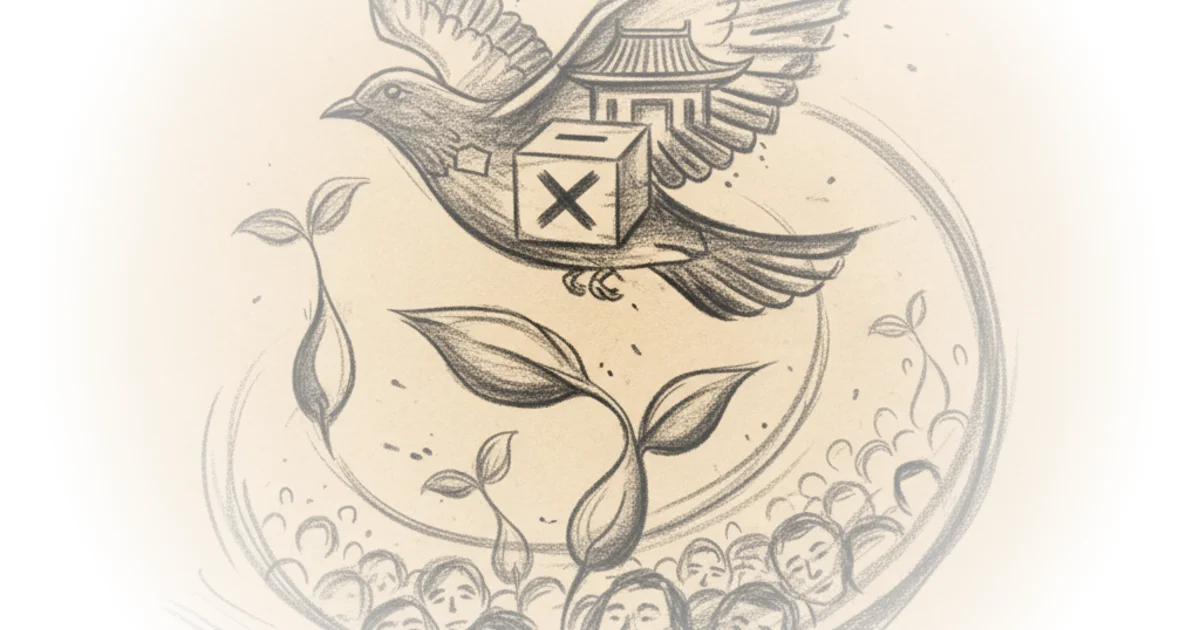
This framing is effective because it shifts the focus from partisan outcomes to institutional trust. By highlighting that "if somebody makes a mistake it can be corrected right away," Chappell underscores a system designed for error correction rather than obfuscation. Critics might argue that low-tech systems are susceptible to human error or coercion in ways that digital systems might mitigate, but the sheer volume of public observation described here suggests a robust social safeguard.
The Battle for Identity and Youth
The piece then pivots to the ideological stakes, explaining the complex positioning of the two major parties. Chappell clarifies a common misconception for international audiences: "a lot of people were really surprised that the KMT is the pro China party right now in Taiwan... but that that is what's happened." He contrasts the Kuomintang (KMT), which favors closer economic ties and a shared heritage with the mainland, against the Democratic Progressive Party (DPP), which champions sovereignty. "The DPP the Green Party they're more like pro-independence Pro sovereignty just like Taiwan is a country functionally right now," Chappell writes, noting that the KMT's stance is rooted in the idea that "we're all Chinese people just like in China."
What makes this analysis particularly sharp is Chappell's observation of how the DPP successfully rebranded itself to capture the youth vote, moving away from a purely ideological stance to one that resonates culturally. He points to the use of "anime drawings of tangle" and the creation of cat-ear versions of the candidate as evidence of a political machine that understands modern engagement. "She owns like a couple of cats and then they're like the big main hamp I made versions of her and they give her cat ears... they were people like withdraw had here," he notes, illustrating how pop culture has become a vehicle for political mobilization.
This is democracy that they thought so hard to get actually they did fight really hard to get democracy here.
Chappell connects this cultural vibrancy to historical memory, reminding readers that Taiwan lived under martial law for 38 years until 1987. The current enthusiasm is not just about policy; it is a celebration of freedom. "You really get a sense of people still remember this and really cherish their democracy," he argues. This historical context is crucial; it explains why the turnout is so high and why the atmosphere feels so charged, even in traditionally opposition strongholds. A counterargument worth considering is whether this cultural fusion dilutes the seriousness of the policy debate regarding cross-strait relations, but Chappell suggests it actually broadens the coalition.
The Global Stakes
Finally, the commentary addresses the international implications, noting that the world is watching closely. Chappell highlights the unique support from global platforms, mentioning that "Twitter even made a special election emotive emoji for those who do not know it's it's like a little like Taiwanese ballot." This digital recognition serves as a form of soft power, reinforcing Taiwan's distinct identity on the global stage. Chappell warns that the outcome will have "big global impact," particularly regarding how the island navigates its relationship with the mainland and the United States. "Will there be steak this tigress in the asia-pacific region join in on these would all be unprecedented changes that would piss off the Chinese Communist Party so I hope it happens," he says, framing the election as a potential flashpoint for broader regional shifts.
Bottom Line
Chappell's greatest strength lies in his ability to humanize a complex geopolitical standoff through the lens of civic engagement, proving that the most compelling story of the election is not just who won, but how the people voted. The piece's vulnerability is its reliance on the assumption that high turnout and cultural enthusiasm automatically translate to a unified national strategy, potentially underestimating the deep fractures that still exist regarding unification. Readers should watch for how the administration in Washington responds to this mandate, as the local victory here could force a recalibration of global diplomatic protocols.