Mick Ryan delivers a sobering assessment of a war that has settled into a brutal rhythm of attrition, arguing that the most significant developments are not on the front lines, but in the logistical strangulation of Russia's supply chain and the desperate industrial race for air defense. This piece cuts through the diplomatic noise to reveal a stark reality: while leaders trade open letters, the war is being decided by drone swarms burning fuel trucks and interceptor missiles running dry across three global theaters.
The Diplomatic Theater vs. The Reality of Attrition
Ryan frames President Zelenskyy's recent open letter not as a genuine peace overture to Vladimir Putin, but as a strategic document aimed at the Russian elite and the international community. "The document was striking less for its proposal than for its tone, which was that of a man cataloguing his enemy's decline," Ryan observes. By highlighting that half of Putin's tenure has been consumed by this conflict and noting Russia's dependence on North Korean troops and Chinese support, Zelenskyy is attempting to isolate the Russian leadership.
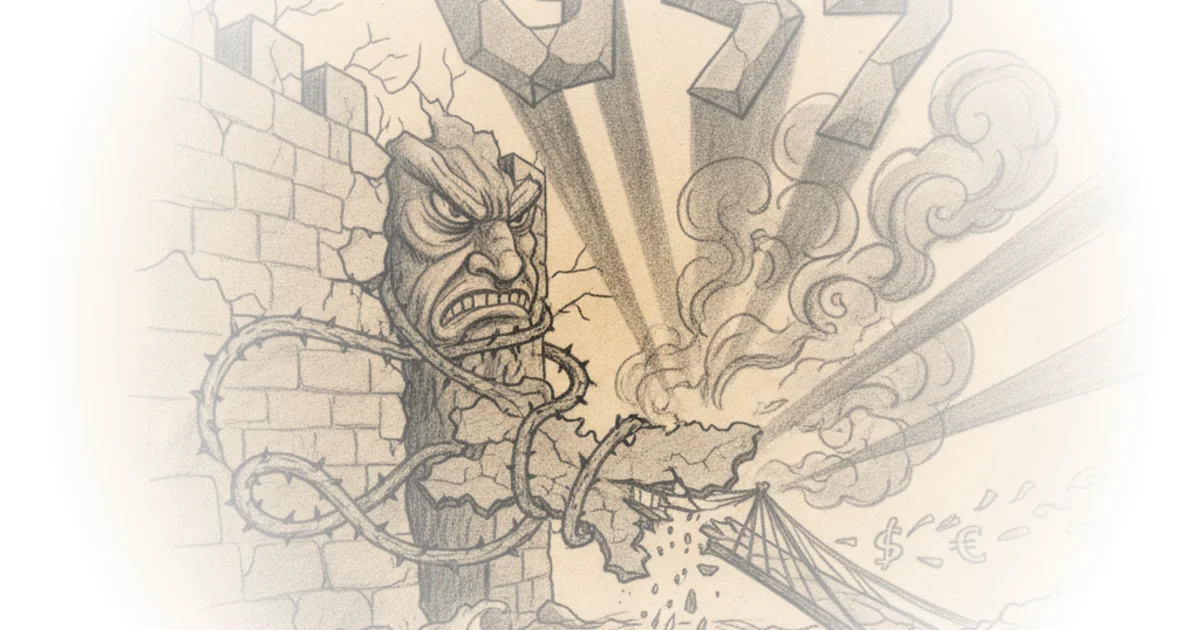
The author notes that Zelenskyy's invitation for talks was met with studied indifference from Moscow. "We are in no hurry," Putin told editors at a recent forum, dismissing the urgency of peace. Ryan argues this dismissal reveals a dangerous calculation by the Kremlin: they believe time favors them as Western attention drifts. However, this framing overlooks the internal pressure building within Russia's own economic circles, where the cost of prolonged war is becoming unsustainable regardless of military posturing.
"Do not be afraid to get out of the war. Enough of the war. Ukraine offers to end this war."
While the diplomatic door appears closed, Ryan points out that the real story lies in the violence unfolding beneath the rhetoric. The week saw some of the heaviest aerial bombardments of the conflict, with Russia firing hundreds of drones and missiles at Ukrainian cities. "Moscow continues to choose escalation over peace, and terror over diplomacy," Ukraine's Foreign Minister argued, a sentiment supported by the death toll in Dnipro and Kyiv where residential blocks collapsed. Ryan emphasizes that these attacks are not just tactical but psychological, designed to break civilian morale even as Russia tests new intermediate-range missiles like the Oreshnik on Ukrainian soil.
Choking the Land Bridge
The most compelling section of Ryan's analysis focuses on Ukraine's "middle strike" campaign, a systematic effort to sever the logistical artery connecting Russia to occupied Crimea. This is not merely about hitting targets; it is about operational art that degrades an army's ability to sustain itself. "Ukrainian drones have taken aerial control of the R-280, M-14 and N-20 highways... turning the corridor into what one analysis described as a road of burning fuel trucks," Ryan writes.
The evidence presented is stark: fuel rationing in Sevastopol and the destruction of over 125 trucks on key routes suggest that Russia's belief in a secure logistics network was a fatal miscalculation. Ryan cites military expert Viktor Kevliuk, who estimates that AI-guided systems have destroyed roughly seventy-five thousand general-purpose vehicles in the Russian rear. This technological edge allows Ukraine to strike deep behind enemy lines, complicating Moscow's ability to mass forces for its summer offensives in the Donbas.
Critics might argue that Russia will inevitably adapt with better electronic warfare and dispersal tactics, potentially neutralizing this advantage over time. Ryan acknowledges this, noting that "certainties don't last long in the Ukraine war," but insists that the current window is critical for Ukraine to inflict maximum damage before countermeasures take hold.
"With no single point of failure, the Kremlin believed its logistics network was more secure. But certainties don't last long in the Ukraine war."
The Global Interceptor Crisis
Perhaps the most alarming insight Ryan offers is the intersection of conflicts in Europe and the Middle East with the looming threat in the Indo-Pacific. The article details a structural deficit in air defense: Russia produces roughly one thousand ballistic missiles annually, while Ukraine has received only about six hundred Patriot interceptors over four years. "The arithmetic has forced Ukrainian crews to abandon the doctrinally sound practice of firing two to four interceptors per target and to engage with a single missile," Ryan explains.
This shortage is exacerbated by the war in Iran, where US and allied forces have expended thousands of interceptors, depleting global stockpiles needed for deterrence against China. "A single global magazine now serves three theatres, and it is running dry," Ryan warns. This creates a precarious situation where Ukraine's survival depends on domestic innovation, such as the "Project Freya" interceptor system, which aims to cut engagement costs by more than four times compared to Western systems.
The human cost of this industrial gap cannot be overstated. Every missed interception means another civilian building hit and another life lost. Ryan's focus on the "interceptor gap" serves as a grim reminder that the war is not just fought with soldiers, but with the availability of high-tech components that are increasingly scarce.
Bottom Line
Ryan's strongest argument lies in his identification of the "middle strike" campaign as the decisive factor in degrading Russia's operational capability, moving beyond the static front lines to attack the enemy's logistics. However, the piece's greatest vulnerability is the uncertainty surrounding Ukraine's ability to sustain this high-tempo drone warfare against a rapidly adapting Russian defense industry. The reader should watch closely for signs of Russia's countermeasures and whether domestic Ukrainian production can truly fill the void left by dwindling Western stockpiles.