Sand, Light, and the Myth of Inaccessibility
Animation Obsessive's latest newsletter takes on one of the most persistent arguments in the generative AI debate: the claim that art-making is fundamentally inaccessible, and that AI tools democratize creative expression. The newsletter dismantles this argument not through theoretical objection but through a parade of historical examples -- artists who made extraordinary animated films with almost nothing.
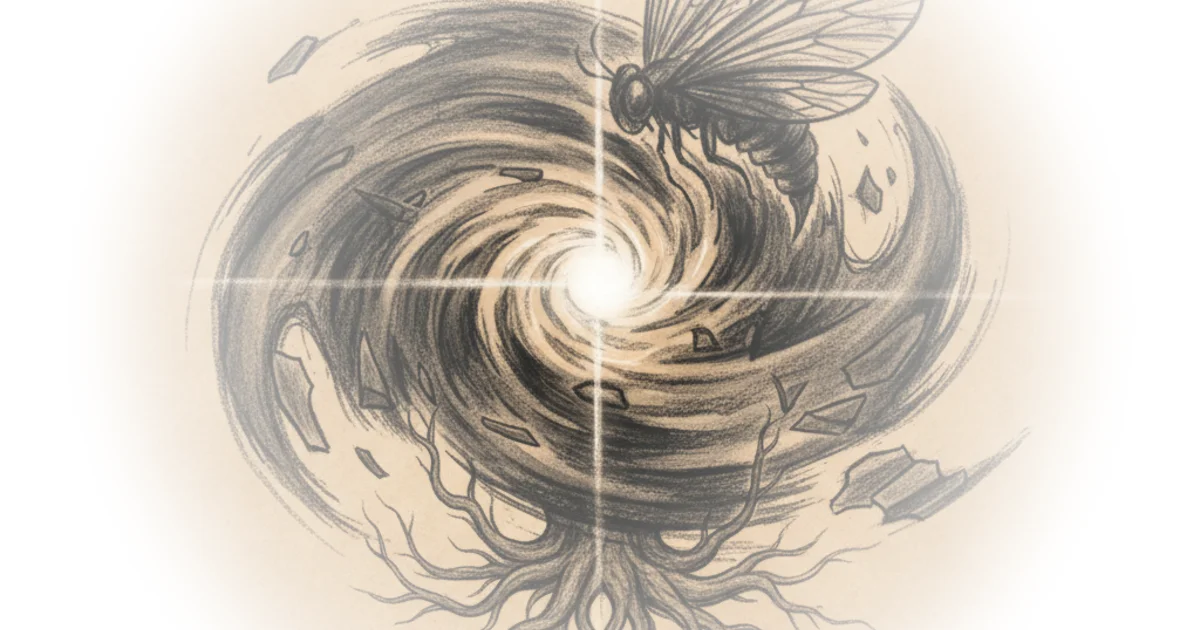
The centerpiece is Caroline Leaf, whose 1977 film The Metamorphosis of Mr. Samsa was animated entirely with sand on a sheet of milk glass, lit from below, and shot on a 16mm camera. Leaf made most of the film in her spare time, coming home from her day job to work into the night. A viral social media comment captured the absurdity of the accessibility complaint.
"I'll use AI cus drawing is inaccessible" Meanwhile people doing animation WITH SAND AND A SOURCE OF LIGHT
The point lands because it exposes a category error. The AI accessibility pitch conflates one particular tradition of animation -- the technically demanding Disney style -- with animation itself. And the newsletter is careful to trace how that conflation arose.
The Disney Standard as a Red Herring
The article opens with a genuine acknowledgment of Disney's formidable training infrastructure. In the 1930s, the studio functioned as something between a conservatory and a guild hall. One artist from the Snow White era described the environment in terms that sound almost utopian.
… was like a marvelous big Renaissance Craft Hall in that it had a terrific teaching program and a lot of training that went with it. Young people coming in got a terrific break, I believe, because they were given a chance to study drawing, composition, animation, action.
The newsletter concedes that this level of institutional training is unavailable to most people, and that the resulting sense of exclusion is real. Disney's perfectionism -- reportedly ordering a dozen or more retakes of individual shots -- produced Snow White, but it also produced an implicit standard that equated animation quality with technical mastery of classical drawing. That standard, the article argues, has been weaponized by AI companies pitching their tools as equalizers.
There is a counterpoint worth raising here. Disney's training pipeline was not purely elitist. It was, by the standards of its era, remarkably meritocratic -- the studio actively sought out talent and promoted quickly based on ability rather than credentials. The problem is not that the Disney standard existed but that it became, in popular imagination, the only standard.
The Iconoclastic Tradition
The newsletter's strongest move is demonstrating that animation has always contained a robust counter-tradition. Leaf did not simply work around her limitations -- she actively chose sand because its lack of tradition freed her from established conventions.
There was no tradition of drawing in sand, so I felt free to develop my own style.
Even more striking is Leaf's attitude toward drawing itself. She described herself as someone who could not really draw and never could. But rather than treating that as a deficit, she reframed it as a creative advantage.
I can't really draw; never could. But it is interesting, not being able to draw and trying to find solutions around it. If, for example, I knew how to draw a hand with all the correct shadings and perspective, there would be no problem. But that hand would come out looking like a conventional hand.
This is the crux of the article's argument and its most provocative claim. Leaf is not saying that technical limitation is merely tolerable. She is saying it is generative -- that the constraint itself produces originality. The hand that cannot be drawn conventionally must be drawn some other way, and that other way becomes a style.
A Wider Field Than You Think
The newsletter builds its case through accumulation. Beyond Leaf, there is Jan Lenica, the Polish director who made films from paper cutouts. There is Frank Mouris, who won the 1974 Oscar for Frank Film, a collage work made from six years of saved images by a man who admitted he could not draw well. The newsletter reports that Mouris collected his Oscar in borrowed clothes -- borrowed jacket, borrowed pants, borrowed scarf, borrowed sequined belt. Only the shirt was his own.
Then there is the Hungarian animator Sandor Reisenbuechler, whose masterpiece The Kidnapping of the Sun and Moon was made, by his own account, in conditions that make Leaf's home studio look lavish.
I made this film on a stool. I lived in the countryside, 30 km from Pest, in Felsogod, in dire poverty. [...] My son was born just then, and my wife joined in between breastfeeding to fill in the dragon with a grease pencil. It's actually a family short film.
The newsletter notes that when Reisenbuechler's film screened at the Annecy Festival, it overwhelmed them more than flashier, higher-budget works. The emotional force came not despite the humble means but through them -- the primordial energy of something made by hand, under constraint, with total commitment.
Collage animator Dave Merson Hess articulates the freedom that comes with working outside the canon.
There is no canon of required reading for cutout. Truly, the rules have not fully been codified. Yes, there are zines, there are book chapters, there are PDFs of assignments scattered across the internet, but there's no 500-page tome, no pack of devoted readers hellbent on enforcing the so-called rules.
The Problem-Solving Engine
The article's final and most important argument is that creative problem-solving -- the process of working around limitations -- is not an obstacle to art but its engine. Norman McLaren, one of Leaf's early champions, spent his career resisting Disney's approach. His philosophy was direct.
… my militant philosophy is this: to make with a brush on canvas is a simple and direct delight -- to make with a movie should be the same.
What generative AI promises, the newsletter argues, is a shortcut around that problem-solving. And that shortcut aims at the heart of creative growth. The observation is sharp: if Leaf had been able to generate a conventionally drawn hand, she would never have invented the sand technique that made her an original.
A fair counterpoint: not all creative work is about originality, and not all uses of AI tools eliminate problem-solving. A filmmaker using AI to handle tedious interpolation between hand-drawn keyframes is solving a different problem than one generating entire sequences from a text prompt. The newsletter's argument is strongest when applied to the latter case -- when AI replaces the struggle rather than augmenting it.
The article also makes a practical case that deserves emphasis. In 2026, the technical barriers that even iconoclasts like Leaf and McLaren navigated have largely disappeared. Free software like Blender and OpenToonz -- the same tool Studio Ghibli uses -- is available to anyone. A phone camera can shoot an animated film. Guides exist for building a multiplane shooting stand for under a hundred dollars. The accessibility problem, to the extent it ever existed for animation broadly, has already been solved by technology that preserves the artist's agency.
Bottom Line
Animation Obsessive makes a compelling case that the "art is inaccessible" argument for generative AI rests on a false premise -- that Disney-style technical mastery is the price of admission. The historical record shows otherwise. From Caroline Leaf's sand animations to Reisenbuechler's kitchen-table masterpiece, the medium's most powerful works have often come from artists working with almost nothing, whose limitations forced them into originality. The newsletter's implicit warning is worth heeding: a tool that eliminates creative struggle does not democratize art. It eliminates the process through which artists become artists.