Most histories of the personal computer begin with a vision of liberation—a device for the individual. Babbage upends this narrative, arguing that the true ancestor of the modern laptop is not a visionary mainframe, but a humble, programmable terminal designed to replace a noisy office printer. This piece reframes the entire lineage of computing, tracing the x86 architecture that powers today's servers back to a specific Thanksgiving weekend in 1969. It is a story not of a lone genius in a garage, but of pragmatic engineering constraints forcing an accidental revolution.
The Noise of Progress
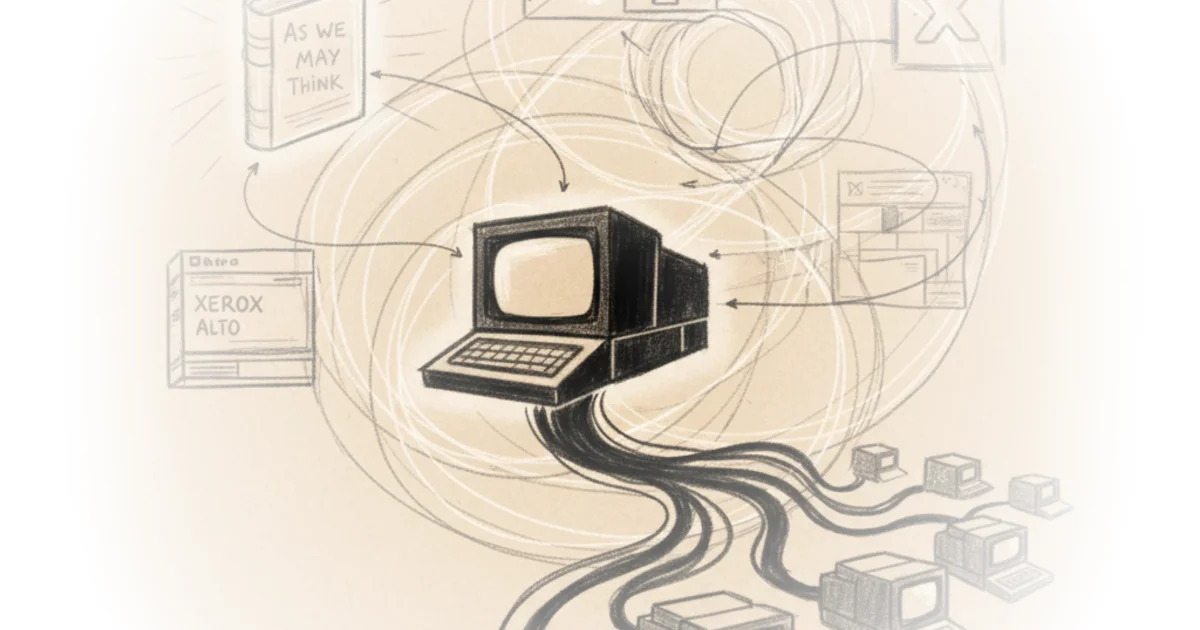
Babbage begins by dismantling the romanticized origins of personal computing. While the Xerox Alto and the Xerox Star are often cited as the spiritual forebears, Babbage writes, "They were not, however, the true antecedents of the first 'personal computers'." Instead, the lineage runs through the "humble computer terminal." This is a crucial distinction. The author argues that the terminal was the device users actually interacted with, and it was the physical and functional limitations of these devices that drove the next leap forward.
The article vividly contrasts the early CRT displays with the "loud and dumb" teleprinters that dominated the 1960s. Babbage notes that the Model 33 teleprinter, while historically significant, created an "intolerable working environment" due to its noise. The shift to visual display units was driven by a simple desire for silence and speed. Yet, early CRTs were expensive and required massive mainframes. The opportunity lay in a standalone device that could mimic the teleprinter's function without its physical bulk.
"They want a tube in front of them."
This quote, attributed to Victor D. Poor, captures the essence of the market demand. It wasn't about computing power; it was about user experience. The transition from paper to screen was the first step toward the personal computer, driven by the mundane need to stop banging on noisy machines in a quiet office.
The Architecture of Necessity
The core of Babbage's argument centers on the Datapoint 2200. The device was born from a desire to create a "glass Teletype" that could be reprogrammed to emulate various terminal standards. The original Datapoint 3300 was successful but limited by its dedicated hardware. To solve the problem of compatibility, the team needed a programmable computer inside the terminal.
Babbage details how Vic Poor and Harry Pyle mapped out the processor design over a single Thanksgiving weekend in 1969. The design was driven by strict physical constraints: the machine had to fit on a desk where a Selectric typewriter once stood. Babbage writes, "They said they wanted a machine that had the same footprint exactly as a Selectric typewriter... They didn't want it any taller than a Selectric typewriter." This constraint forced the engineers to innovate, leading to a custom architecture that would eventually become the industry standard.
The piece highlights a tragic irony: the documentation for this groundbreaking design was lost. Babbage notes that the paperwork disappeared into a lawyer's file during later litigation over the invention of the microprocessor. "Harry could never retrieve it and it disappeared into some lawyer's file or god knows where," Poor is quoted as saying. This loss of historical record adds a layer of mystery to the origin story, suggesting that the history of technology is often as much about what is forgotten as what is preserved.
Critics might note that the article focuses heavily on the hardware constraints and the specific personalities involved, potentially underplaying the broader ecosystem of minicomputers that existed at the time. However, the focus on the Datapoint 2200 remains compelling because it directly links the physical form factor of the terminal to the logical architecture of the modern PC.
"The only bounds to the effective use of the Datapoint 3300 are the imagination of the user."
This marketing slogan from the original brochure, cited by Babbage, serves as a poignant reminder of the gap between ambition and reality. The 3300 was not the revolutionary device the brochure claimed, but its successor, the 2200, would inadvertently create the architecture that would dominate the next fifty years.
The Accidental Standard
Babbage concludes by tracing the direct line from the Datapoint 2200 to the x86 architecture. When Intel was approached to build the chip for the Datapoint 2200, they initially declined, leading the company to build it themselves. Later, Intel repurposed the design for their 8008 microprocessor, which evolved into the 8080 and eventually the x86 family. Babbage writes, "In fact, we can trace the line of descent of that second architecture, now commonly known as x86... from that terminal, the Datapoint 2200."
This is the piece's most significant contribution. It shifts the credit for the modern computing standard from a deliberate corporate strategy to a series of pragmatic decisions made by a small team trying to solve a specific problem. The architecture that powers the world's most powerful laptops and servers was born from a desire to make a terminal that looked like a typewriter.
"Well, I'll give you an example. The Associated Press wants us to make an electronic teletype machine... They want a tube in front of them."
This quote encapsulates the accidental nature of the innovation. The goal was never to create a personal computer; it was to create a better terminal. The personal computer was a byproduct of solving a problem for the Associated Press.
Bottom Line
Babbage's analysis is a masterclass in historical reframing, proving that the most transformative technologies often emerge from the most mundane constraints. The strongest part of the argument is the direct lineage drawn from the Datapoint 2200's physical requirements to the x86 architecture, a connection often overlooked in favor of more romanticized origin stories. The biggest vulnerability is the reliance on anecdotal evidence for the lost documentation, but the technical tracing remains robust. For anyone interested in the hidden history of the devices they use every day, this piece is an essential correction to the narrative.
The story of the Datapoint 2200 is a reminder that innovation is rarely a straight line; it is a series of compromises, accidents, and pragmatic solutions that, over time, reshape the world.