Andrew Sullivan transforms a weekly geography puzzle into a profound meditation on how we find meaning in the built environment, arguing that the most elusive clues are often the ones hiding in plain sight. While the premise is a game of visual deduction, the piece reveals a deeper truth: that our cities are layered with history, from the scars of old rivalries to the ghosts of demolished soda ads, waiting for a curious eye to connect the dots. This isn't just about finding Durham, North Carolina; it's about understanding how a community rebrands itself from a tobacco capital to a biotech hub without erasing its gritty past.
The Architecture of Deduction
Sullivan frames the contest not as a test of trivia, but as an exercise in reading the subtle grammar of urban spaces. He highlights how participants often get distracted by "false-flag clues," such as out-of-state license plates or misleading satellite dishes, only to be tripped up by the obvious. "The first thing we all do when looking at a new contest photo is to scan for the obscure clues — from satellite dishes to garbage can colors to roofing materials to soil composition, etc," Sullivan notes, capturing the collective anxiety of the sleuth. This observation is astute; it mirrors how we often overthink complex problems, searching for hidden complexity when the solution lies in a straightforward observation.
The piece shines when it pivots from the puzzle mechanics to the specific history of the location. One contributor points out that the photo was taken from the Durham County Main Library, looking across tracks that once carried the tobacco that built the city. Sullivan weaves this into a narrative about place, noting that Durham is "North Carolina's scrappy middle child — too working-class for Raleigh, too ambitious for Chapel Hill, and perfectly happy being the Triangle's id." This characterization is powerful because it elevates a simple photo caption into a sociological profile. It suggests that the identity of a city is not just in its skyline, but in its contradictions.
"It's comforting to know that at least some laws are still being enforced!"
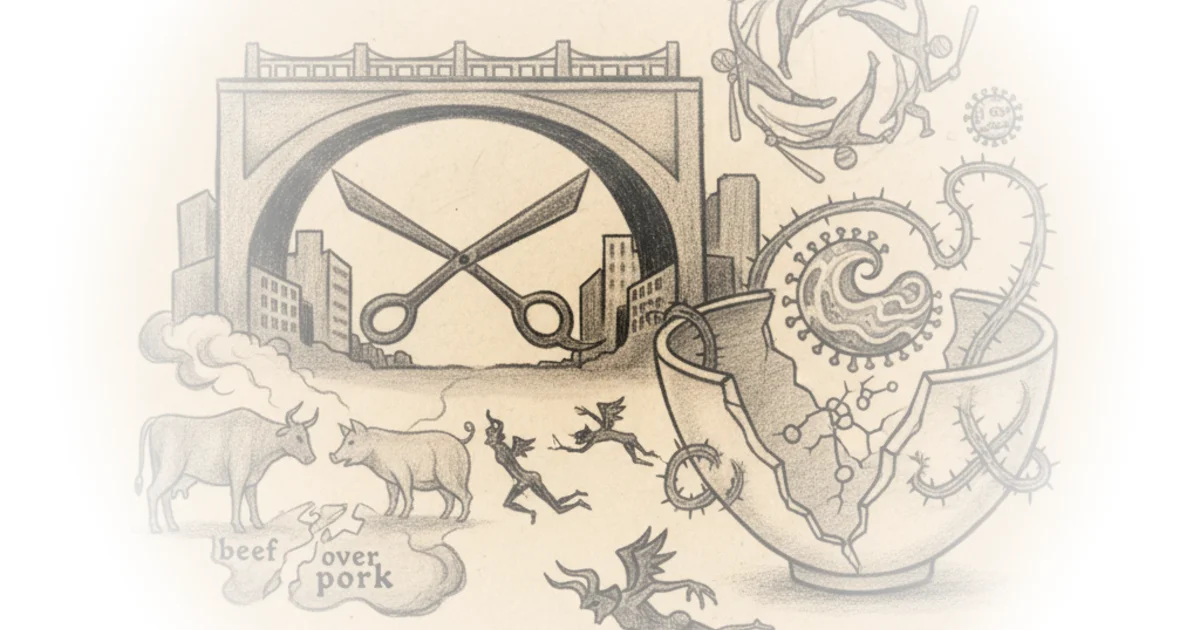
The commentary takes a humorous yet sharp turn when discussing the "Can Opener Bridge," a local trestle known for shearing the tops off over-height trucks. Sullivan quotes a contributor who describes the site as having an "unrelenting enforcement of the laws of physics." This moment of levity serves a serious purpose: it grounds the abstract concept of "urban order" in the brutal reality of physical constraints. In a world of digital ambiguity, the bridge offers a stark, undeniable truth. Critics might argue that focusing on a dangerous bridge trivializes the risks faced by truck drivers, but the piece uses the incident to underscore the resilience and sometimes reckless nature of the city's infrastructure.
Echoes of the Past
The most compelling section of Sullivan's analysis involves the layering of cultural history within the visual clues. He draws a fascinating parallel between the current contest and the long-standing Lehigh-Lafayette football rivalry, which began in 1884. Just as that rivalry has evolved from tearing down wooden goalposts to managing violent melees with tear gas, the clues in the photo reflect a city that has evolved from its industrial roots. Sullivan writes, "The garage that the gentleman took the picture from was the site of the original football stadium at Lehigh," using this historical footnote to illustrate how physical spaces retain the memory of events long after the structures change.
Similarly, the piece delves into the specific signage visible in the photo, revealing a "Drink Lemon Kola 5¢" ad that has been scrubbed away. Sullivan highlights a contributor's discovery that the building once housed a men's clothing store founded in 1890 and a local soda bottling company. "It used to include 'Drink Lemon Kola 5¢' — an ad for a local franchise... despite the fact that the base of the soda was apparently 'pure lemon juice,'" the contributor notes. This detail is crucial; it shows how commercial history is often erased by modern rebranding, yet the ghost of the past remains visible to those who know where to look. The erasure of the "Lemon Kola" sign mirrors the way cities often try to sanitize their histories, yet the underlying fabric remains.
The connection to the musical Kimberly Akimbo and the film Clue adds another layer of cultural texture. Sullivan notes that for many, Clue was a "shameless IP money grab recontextualized into pretty insightful social satire," drawing a parallel between the game's mystery and the city's own hidden stories. This framing suggests that solving the puzzle is akin to solving a mystery play, where the clues are scattered across time and space. The fact that a contributor recognized the Kimberly Akimbo poster because their wife owned the Broadway poster adds a deeply personal, human element to the intellectual exercise.
The Human Element of the Hunt
Ultimately, Sullivan argues that the value of the contest lies not in the victory, but in the shared experience of discovery. He quotes a former paid subscriber who admits, "I don't know how your experts do it. But it sure makes for fun reading!" This admission underscores the accessibility of the puzzle; it is not reserved for the elite, but is a communal activity that brings together people from diverse backgrounds. The piece captures the joy of the "a-ha" moment, where a chaotic collection of visual data suddenly coalesces into a coherent picture.
The commentary also touches on the emotional resonance of the contest. One participant describes the game as "a brief respite for the soul from all the horror of the world." Sullivan validates this sentiment, suggesting that in an era of overwhelming news cycles, the act of solving a small, solvable mystery provides a necessary sense of agency. "It's both an invigorating exercise for the mind and a brief respite for the soul," the contributor writes, and Sullivan lets this stand as the piece's emotional core. It is a reminder that even in a fragmented world, there are still shared puzzles that can bring people together.
"Durham exists because of geography and logistics, not plantation aristocracy."
This line, attributed to a contributor, encapsulates the piece's broader argument about the nature of American cities. It challenges the romanticized narratives of the South, focusing instead on the practical, often gritty realities of trade and transport that shaped these communities. Sullivan's inclusion of this perspective adds a necessary layer of historical honesty to the celebration of the city's transformation.
Bottom Line
Andrew Sullivan's commentary succeeds by treating a simple geography contest as a lens through which to view the complex interplay of history, culture, and urban identity. The strongest part of the argument is its ability to find the profound in the mundane, turning a mural and a train track into a story about resilience and reinvention. Its biggest vulnerability is the occasional reliance on niche references that may alienate readers unfamiliar with the specific cultural touchstones, but the overarching theme of shared discovery remains universally accessible. Readers should watch for how this approach to local history might reshape the way we look at our own cities, finding the hidden narratives in the everyday landscape.