Phillips P. O'Brien cuts through the noise of geopolitical posturing to reveal a stark reality: the current standoff is not a chess match of military might, but a desperate race against political and economic deadlines where the clock is ticking louder for the United States than for Iran. While official narratives promise imminent victory, O'Brien argues that the administration is ignoring the adaptive resilience of its adversary and the hard constraints of the American electoral calendar.
The Illusion of Inertia
The core of O'Brien's analysis challenges a recurring failure in Washington: the assumption that targeted nations will remain passive. "One of the most frustrating things of the last few months is watching with disbelief as the US government, time and again, assumes that the country it is attacking or threatening will simply sit there, inert, not adapting," O'Brien writes. This critique is not abstract; it is grounded in the observation that Iran has already begun shifting tactics, from attacking facilities in neighboring Gulf states to maneuvering within the Strait of Hormuz.
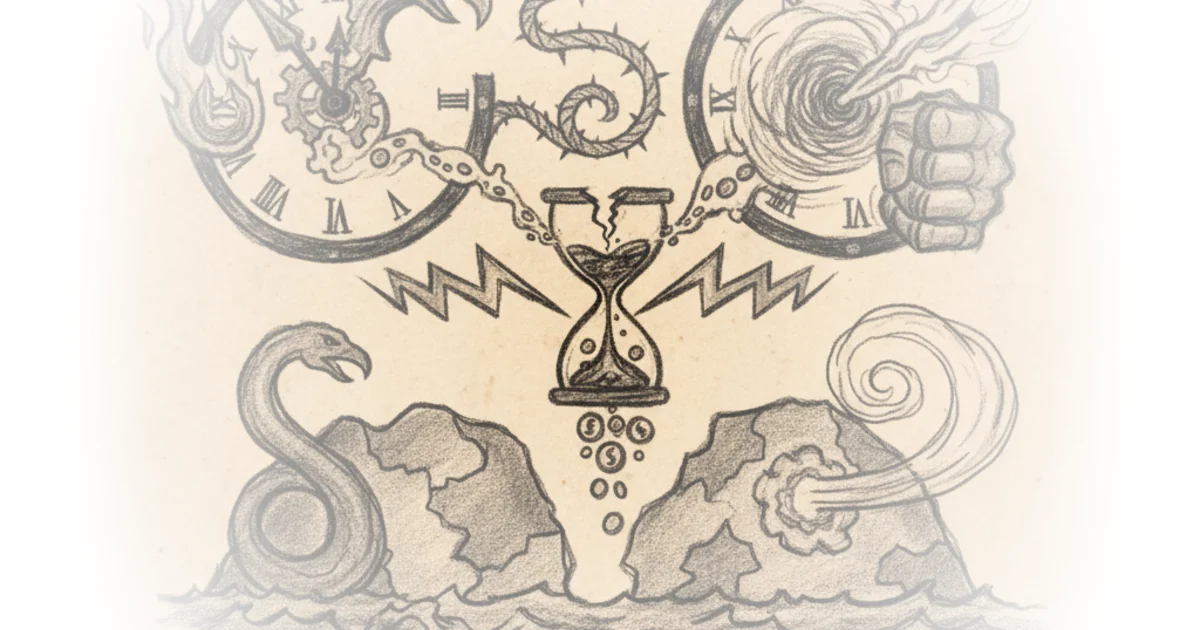
The author draws a sobering parallel to history to dismantle the expectation of a quick fix. "In both cases blockade took years to have a real strategic impact. That is the norm," O'Brien notes, referencing the prolonged blockades of World War I and II. This historical context is vital. Just as the economic strangulation of Germany and Japan required years to yield results, the current pressure on Iran is unlikely to produce a sudden collapse. Critics might argue that modern financial sanctions are more potent than historical naval blockades, but O'Brien counters that the fundamental mechanics of state survival remain unchanged.
"Military superiority will always be a slave to political necessity and time is a massive political consideration."
The Iranian Race Against Time
O'Brien breaks down the specific pressures facing Tehran, arguing that the administration has vastly underestimated Iran's financial cushion. The author points out that Iran entered this crisis with approximately $33.8 billion in cash reserves, representing roughly nine months of oil sales revenue. "The Iranian government went into this war with approximately $33.8 billion in cash reserves," O'Brien states, emphasizing that this buffer allows for significant adaptation.
Furthermore, the author highlights how Iran is leveraging high oil prices from earlier in the year and potential support from allies like Russia and China to delay a cash crunch. The argument extends to the physical limits of oil storage. While the administration hopes that capping oil wells will force a surrender, O'Brien suggests this is a dangerous gamble. "The Iranians can be both offensive and defensive in their reaction to this problem," O'Brien explains, noting that Tehran could escalate by threatening environmental disasters or forcing a confrontation with China. The human cost of this economic warfare is also implicit; O'Brien warns that prioritizing regime survival over public welfare means "greater suffering for the Iranian people."
The American Deadline
Perhaps the most striking element of O'Brien's commentary is the reframing of the US position not as one of strength, but of severe time constraints. The author identifies a hard deadline: the 2026 midterm elections. "The Trump administration cannot go into that election with massively high oil prices and the most unpopular war in US history still undecided," O'Brien writes. This deadline creates a paradox where the administration must declare victory before the economic and political costs become unsustainable.
The piece details how the administration is already fracturing under this pressure. While one narrative, attributed to the President, claims total dominance—"we have all the cards, they have none!"—a second, more skeptical narrative is emerging from figures close to Vice President JD Vance. O'Brien observes that administration officials are increasingly divided, with some warning that the blockade could cause long-term damage to Iran's energy industry without forcing a deal. This internal discord suggests that the "victory" being proclaimed may be a political necessity rather than a strategic reality.
"We seem to be in a race between the exploding fortunes of the Republican Party and exploding Iranian oil wells."
The Three Narratives
O'Brien concludes by dissecting the three competing stories shaping the conflict: the administration's optimistic claim of control, the global consensus that the US is stuck, and the growing skepticism within the White House itself. The author highlights a telling moment when global markets rejected the President's optimistic rhetoric, sending oil prices to new highs. "The market no longer believes that Trump understands what is happening or is speaking anything resembling the truth," O'Brien asserts.
This disconnect is further illustrated by the reaction of international leaders. O'Brien cites German Chancellor Friedrich Merz, who bluntly stated that the Iranians were "humiliating the Trump administration who had no easy way out." This external perspective reinforces O'Brien's central thesis: the administration's narrative is failing to match the on-the-ground reality. The author notes that while the President tries to project confidence, the underlying dynamics suggest a stalemate that the US cannot easily break without significant concessions.
Bottom Line
O'Brien's strongest contribution is the rigorous dismantling of the assumption that economic pressure will yield immediate political capitulation, replacing it with a sober analysis of time, adaptation, and electoral reality. The argument's vulnerability lies in its reliance on the assumption that Iran will continue to adapt successfully, potentially underestimating the internal fragility of the Iranian regime under sustained pressure. Readers should watch for the next shift in oil prices and any signs of internal fracture within the US administration as the 2026 election deadline approaches.