The Prince's Burden
Bari Weiss delivers a portrait of exile politics at its most precarious. Reza Pahlavi stands as Iran's crown prince in name, yet the machinery of transition remains unbuilt. The piece matters because it captures the moment when symbolic leadership must confront operational reality.
The Moment of Opportunity
January brought something different to Iran's streets. The bazaars closed. The merchant class moved en masse. The economy entered free fall rather than mere teetering. Bari Weiss writes, "The Iranian regime seemed to be near its end, and the crown prince looked like the only plausible answer to a pressing question: Who comes next?"
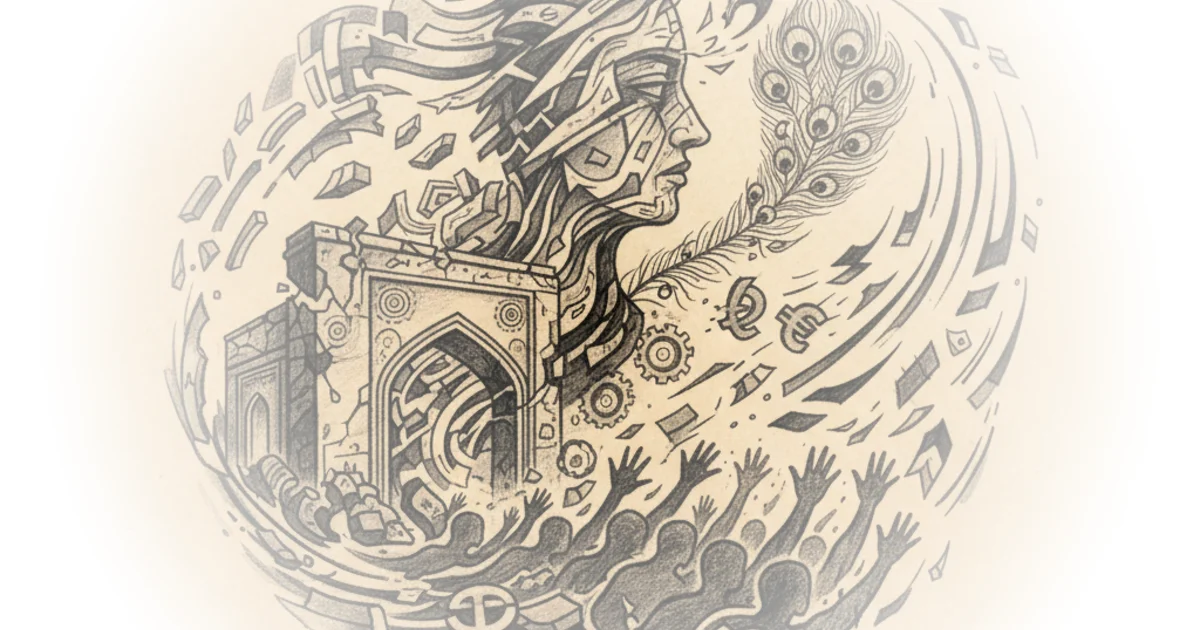
Pahlavi accepted the mantle. He called for demonstrations. Iranians responded in unprecedented numbers. At a Washington press conference, he declared: "The bond between me and the Iranian people is not new. It's been with me since birth and it cannot be broken. Even in exile, I've pledged my life to the service of the Iranian nation."
Bold words from a man who left Iran at seventeen. Now sixty-five, living in American suburbs, he carries the weight of a dynasty his grandfather founded a century ago.
"The bond between me and the Iranian people is not new. It's been with me since birth and it cannot be broken."
The Organizational Void
Here the argument fractures. As Bari Weiss puts it, "He has not established an organization capable of leading a transition and an organization capable of organizing Iranians from a political perspective." Yashar Ali, an Iranian American journalist, delivered this assessment without anti-monarchist bias.
Alireza Nader, former engagement director for Pahlavi's own National Union for Democracy in Iran, voiced similar concerns: "The people who are making decisions are poorly informed, including Pahlavi himself. He has surrounded himself with power-hungry people whose main aim is to make sure there are no other prominent opponents of the regime standing."
Multiple opposition figures told Weiss that Pahlavi's organization sought to marginalize them. Friends bullied rival political figures. The crown prince alienated those challenging the Islamic Republic on the ground.
Critics might note that thirty-one percent support among Iranians—far exceeding Khamenei's nine percent—suggests popularity alone could overcome organizational deficits. But popularity without structure collapses under pressure.
The Imperial Coalition
Mehrdad Marty Youssefiani, a close adviser for nearly twenty years, observed a shift. Pahlavi once committed to building a national coalition with wide-ranging voices. His new advisers built something else: an "imperial coalition" where "the king in exile is on top and everyone else is below him."
Youssefiani posed a question that cuts through the ambiguity: "If somebody like me, with loyalty and good wishes for him, can't make that distinction, how are the young people of Iran supposed to read it?"
Mariam Memarsadeghi of the Macdonald-Laurier Institute identified a wider disconnect: "There is a wide disconnect between Reza Pahlavi's discourse and professed values and how he runs his operation. His top advisers and associates regularly speak of revenge, retributive violence, and are extremely combative with other parts of the opposition."
The Defector Question
Pahlavi claimed fifty thousand government and security officials had joined the opposition. He established a QR code for defectors to submit Google forms. On CNN, he said the number reached over one hundred thousand.
Memarsadeghi questioned the logic: "Given the massacre, many feel that efforts to encourage defections are now out of step with reality. The QR code with a Google form allows the regime to flood the system with fake respondents."
Shahriar Ahi, one of Pahlavi's first tutors, applied counterintelligence mathematics: "There are classic ratios for how many counterintelligence officers you need in order to verify one person going to you is safe. It's more than two or three to one. When dealing with the other side being an intelligence organization, the math says it's impossible for you to play games with them."
Critics might note that Pahlavi exaggerated the regime's weakness in early January, telling Iranians that security forces were on the verge of collapse when they clearly were not. The crackdown killed as many as thirty thousand.
The Optics of Exile
On December thirty-first, while Iran's merchants protested for their third day, Pahlavi recorded a Farsi-language video. He addressed his compatriots with encouragement, ending with: "Victory belongs to us."
He recorded it during a vacation. Freshly tanned. White linen shirt. The message was revolution. The optics were resort.
This tension between private and public life defines Pahlavi's existence. As Bari Weiss notes, "He was born with the burden of being his father's son, so he has never been free to do what he wants to do." The trauma of exile scarred his siblings—Leila died of an overdose in 2001, Ali Reza shot himself in 2011. Pahlavi carried forward.
The American Position
The administration's stance remained cool. Officials expressed well-wishes but declined to choose Iran's next leader. One official told Weiss: "We wish the crown prince well. But we are not in the business of choosing Iran's next leader. This is not the president's policy."
Voice of America's Persian-language service discouraged coverage of Pahlavi during the uprising. The president himself said Pahlavi "seems very nice" but questioned whether his country would accept his leadership.
Saeed Ghasseminejad, an adviser, responded to criticism with absolute framing: "You're either with Prince Reza Pahlavi or with the Islamic Republic. If you're weakening the field commander for any reason whatsoever, you're an agent of the enemy."
Critics might note that this binary logic closes off coalition-building—the very thing Iran's opposition needs most.
Bottom Line
Reza Pahlavi holds thirty-one percent of Iranian sentiment but lacks the organizational architecture to convert popularity into governance. His advisers speak of revenge while he speaks of democracy. The QR code for defectors invites regime infiltration. The vacation videos project leisure while calling for revolution. The prince carries the burden of bloodline without the machinery of state. Iran's opposition needs coalition, not imperial hierarchy. Until Pahlavi builds that coalition, the question remains: who comes next?