The Israeli military says it hit an Iranian nuclear facility. But independent experts have found no evidence Iran was developing a weapon. This is the most important story here — not because of what Israel claims to have accomplished, but because of why it's being claimed at all.
The Claim on Parchin
The Israeli Air Force says its missiles struck Iran's Parchin military complex, located about 20 miles southeast of Tehran. The military claims Iran was using the site to advance an alleged nuclear weapons program. Satellite imagery released by the Israeli military appears to show three new holes at one location on the site, though it's impossible to verify what impact the strikes have had. This facility was last hit in October 2024.
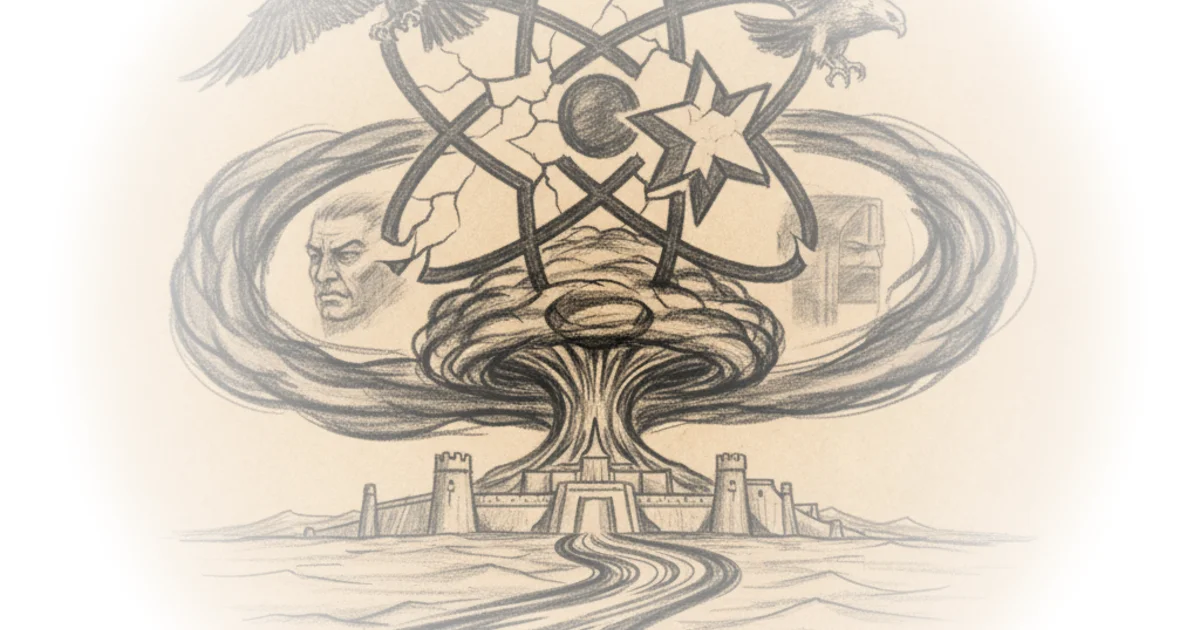
The claim is significant. But here's what's missing: there is no independently verified evidence that Iran was developing a nuclear weapon. The Obama-era nuclear deal with Iran — which committed Tehran to depleting its nuclear resources and allowing international inspectors — was not violated by Iran. It was violated by the United States. Iran has never detonated a nuclear weapon.
The Strike on the School
The impact of US and Israeli strikes inside Iran is clearer. Iranian officials say residential buildings in Tehran were deliberately targeted, killing civilians. A preliminary Pentagon report found that the United States was likely responsible for a double-tap strike on a girls' school in southern Iran that killed over 165 people — mostly young girls — in the initial days of the war.
The US and Israel have blamed Iran for the attack. Evidence suggests it wasn't Iran.
President Trump has repeatedly asserted that Iran was responsible for the disaster. When pressed on whether he would take responsibility, the commander-in-chief played dumb.
A report from CBS News last night also revealed that the White House is concealing some war costs from the American people. Six US service members were killed in a drone strike on a US base in Kuwait in the first hours of the US illegal war on Iran with Israel. Sources told CBS that dozens of US troops at the base were seriously injured — suffering burns, brain trauma, and shrapnel wounds.
Sources described a grim and chaotic scene after the strike on a tactical operation center outside Kuwait City on March 1st. Smoke filled the building, making rescue difficult. More than 30 military members remained in hospitals Tuesday night with battle injuries. On Tuesday, a Pentagon spokesperson said approximately 140 American service members have now been injured in the war.
Manufacturing Consent
The claim that the US hit a nuclear facility is a deliberate discursive response to a growing problem: many Americans — including those in Trump's own base — don't understand why America entered this war. The president ran on a platform of no new foreign wars.
This narrative mirrors the Iraq War, widely considered across the political spectrum to have been a mistake.
When the administration says "We've hit a nuclear facility," it manufactures consent. It creates a reason for the war: Iran was developing a weapon that would put the world at risk. But independent inspectors have found no such evidence. Benjamin Netanyahu has spent years trying to pull the entire world into a disastrous war with Iran on the basis that Tehran was months from acquiring a nuclear weapon — and that claim has simply not been verified.
Critics might note that framing this entirely as manufactured consent risks understating genuine concerns about regional stability. Some analysts genuinely believe Iran's weapons program represents a threat, even if the evidence remains disputed.
The Gulf in Crisis
Iran's defenses aren't purely military. An oil-laden cargo ship in the Persian Gulf exploded after being hit by a weapon overnight. Two ships were targeted in armed boat attacks in the Gulf near Iraq. Iranian media reported the vessels were struck after they failed to comply with warnings from the Revolutionary Guards Navy.
The closure of the 21-mile bottleneck between the Persian Gulf and the Arabian Sea has thrown global oil markets into crisis. Iran is using economic pressure to halt US attacks on the country. Oil prices rose over $100 per barrel — the biggest supply disruption in history, according to the International Energy Authority.
Last week, Trump promised the United States military would begin guiding ships through the strait to keep roughly one-fifth of the world's oil supply flowing. Energy Secretary Chris Wright said that undertaking might never happen.
"We're simply not ready. All our military assets are focused on destroying Iran's offensive capabilities."
Sixteen ships in the Gulf have come under attack. The rising price of transport, production, and heating is creating an inflationary shock affecting ordinary people worldwide.
Bottom Line
This piece's strongest argument is that the nuclear justification for war with Iran mirrors the same playbook used to sell the Iraq War — a widely accepted mistake. Its biggest vulnerability: dismissing genuine regional security concerns as pure manufactured consent may oversimplify a complex situation. What readers should watch for next is whether independent inspectors ever confirm what Israel claims to have hit, and whether oil price shocks reshape public opinion on both sides of the conflict.