Yale University offers a rare glimpse into how medieval poetry functions not just as art, but as a mechanism for moral and spiritual transformation. In this lecture transcript, the institution reframes Dante's Purgatorio not as a static religious allegory, but as a dynamic, almost biological evolution of the poet's voice, where the very act of writing becomes a form of prayer. For the busy reader, the takeaway is startling: the difference between a great poem and a transformative one lies not in its complexity, but in its ability to let an external truth dictate its rhythm.
The Architecture of Inspiration
The lecture, delivered by Professor David Lamas as a substitute for the regular instructor, centers on a pivotal moment in Canto 24 where Dante confronts his literary predecessors. Yale University writes, "Dante is claiming his novelty right and at the same time he's saying he's linking his own writing of poetry to the activity of a scribe." This distinction is crucial. The author argues that Dante moves away from the self-absorbed courtly love poetry of his youth, which was merely a reflection of the poet's own ego, toward a style where the poet acts as a vessel.
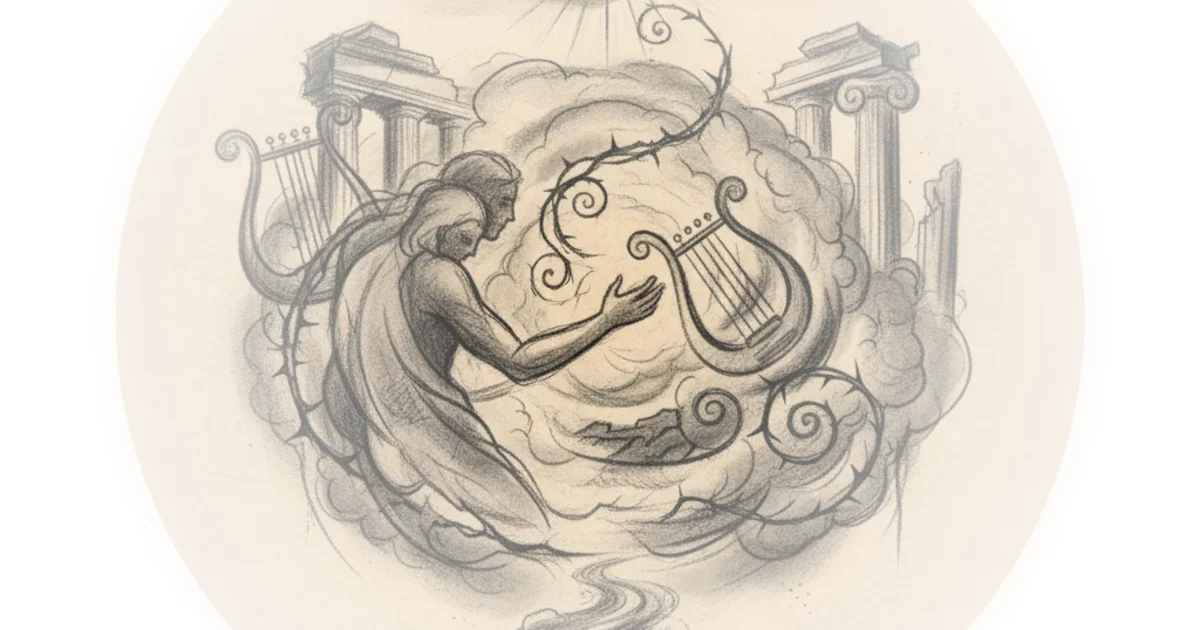
The core of the argument rests on the theological weight of the word "dictate." Yale University notes, "In the Monarchia, Dante's political treatise on Empire, he describes God as the only dictator, the only person who dictates." By positioning poetic inspiration as an internal instantiation of the divine, the lecture suggests that true creativity requires a surrender of the self. This is a bold claim in a field often obsessed with the author's unique genius. It suggests that the most profound art comes from listening rather than speaking.
"I am one who, when love breathes in me, take note, and in that manner which he dictates within go on to set it forth."
Critics might argue that this interpretation strips the poet of agency, reducing them to a mere stenographer. However, the lecture counters this by emphasizing the humility and the paradox of the phrase "I am one who." Yale University points out that this echoes the biblical declaration "I am Who I am," suggesting that Dante's uniqueness is found precisely in his willingness to be a conduit. The argument holds up well because it explains why Dante's poetry feels so distinct from his contemporaries—it is not trying to impress the reader with the poet's cleverness, but to transmit a higher order.
From Gluttony to Grace
The lecture masterfully connects the sin of gluttony in Canto 23 with the nature of bad poetry. Yale University explains, "The poetry that Bonagiunta represents was one that concentrated on worldly beauties and qualities... it feigned a service to the lady only to concentrate on the self of the poet." This is a brilliant synthesis of moral theology and literary criticism. The author posits that poetry focused solely on the self is a form of spiritual starvation, a gluttony that consumes without nourishing.
In contrast, the "Sweet New Style" that Dante champions is described as generative. Yale University writes, "When Bonagiunta is able to see the difference between the two styles of poetry... he says that your pens follow close behind the dictator." The lecture highlights how the penitents in Purgatory, once famished and disfigured, now move with purpose. "As birds that winter along the Nile sometimes make a troupe in the air then fly with more speed and go and file," the text quotes, illustrating a shift from the circular, chaotic movement of the damned in Inferno to the linear, progressive movement of the saved.
This framing is effective because it gives physical weight to abstract literary concepts. The transformation of the poet is mirrored in the physical transformation of the penitents. Yale University notes, "There is a progress that is counter that that opposes the circularity of the storm of birds in Inferno five." This parallel structure suggests that the evolution of a writer's style is inextricably linked to their moral development. A counterargument worth considering is whether this moralizing approach limits the appreciation of poetry that is purely aesthetic or playful. Yet, within the context of the Comedy, the argument is undeniable: form follows function, and function follows morality.
The Limits of the Past
The lecture also touches on the relationship between Dante and Virgil, noting that while Virgil was a father figure, his poetry had limits. Yale University writes, "The generative quality of Virgil's poetry didn't was intrinsic in the poetry itself but was based on Statius's particular reading of the text." This is a subtle but important point about the nature of influence. It suggests that the past is not a fixed monument but a resource that must be actively reinterpreted to remain alive.
The author argues that Dante's engagement with Virgil was a "misreading" that became a creative act. "Dante is engaged in a kind of sustained reflection on literary history and the powers of literature to engender moral conversion," Yale University states. This reframes the entire Divine Comedy as a conversation with history, where the past is constantly being revised to fit a new, Christian understanding of time and purpose. The lecture implies that we, as readers, must do the same: we cannot simply consume the past; we must digest it and let it change us.
"He that goes before me turned me from that life some days ago... his suckers have drawn me up events climbing and circling the mountain which straightens you whom the world made crooked."
Bottom Line
Yale University's analysis succeeds in demystifying Dante's complex theology by grounding it in the tangible mechanics of writing and the human desire for moral clarity. The strongest part of the argument is the connection between the sin of gluttony and self-referential poetry, offering a fresh lens through which to view literary history. Its biggest vulnerability is the assumption that all great art must serve a moral purpose, a stance that might alienate readers who value art for art's sake. For the busy professional, the lesson is clear: true innovation often requires the humility to let something greater than oneself dictate the terms of engagement.