This piece by Doomberg exposes a chilling reality: the very fuel that powers North America's economy is being siphoned off to finance the world's most violent criminal enterprises. It moves beyond the typical narrative of border security to reveal a sophisticated, transnational industrial crime ring that has turned energy theft into a multi-billion dollar revenue stream for drug cartels.
The Scale of the Theft
Doomberg opens with a stark illustration of the problem, describing how the oil tanker Cosmic Glory arrived in Mexico claiming to carry lubricant additives to dodge taxes, only to offload diesel directly into a black market network. "The great thieves lead away the little thief," the author notes, quoting Diogenes to frame the systemic nature of the corruption. This isn't just petty crime; it is an industrial operation. Doomberg writes, "Estimates from the last five years suggest that illegal diesel and gasoline make up anywhere between 16 and 27 per cent of Mexico's annual fuel consumption." The sheer volume—up to 290,000 barrels a day—means that a significant portion of the energy consumed in Mexico is stolen or smuggled, generating between $12bn and $21bn annually for organized crime.
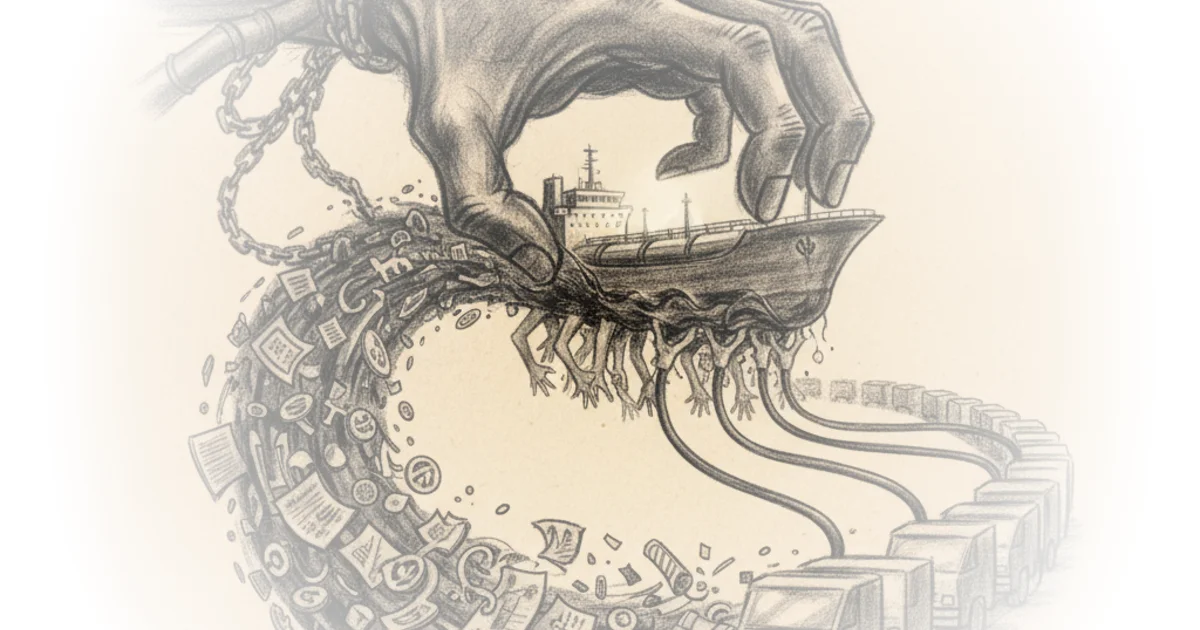
The author effectively argues that this trade has become the primary funding source for groups like the Jalisco New Generation Cartel (CJNG), surpassing even drug trafficking. "Stolen fuel becoming the most significant non-drug revenue source for Mexican cartels," Doomberg points out, citing the US Treasury. This reframing is crucial; it suggests that the war on drugs cannot be won without addressing the energy sector's vulnerabilities. A counterargument worth considering is whether focusing on fuel theft distracts from the root causes of cartel power, such as weak rule of law and economic disparity, but the financial data presented makes the fuel trade a critical pressure point that cannot be ignored.
A Transnational Loop
What makes Doomberg's analysis particularly disturbing is the revelation that this is not a one-way street. The theft creates a closed loop where stolen Mexican crude flows back into the United States. "The Cartels exploit this flow of crude oil between Mexico and the United States by smuggling illicitly obtained sour and heavy crude oil from Pemex across the US southwest border," the author writes, quoting a direct alert from the US Treasury's Financial Crimes Enforcement Network. These shipments are often mislabeled as hazardous waste to bypass scrutiny, sold at steep discounts, and the profits are repatriated to Mexico.
Doomberg emphasizes the complicity required for such a massive operation to function. "US importers, in many cases, also use networks of companies, including front and shell companies, to receive the stolen crude oil," the piece notes. This implicates not just Mexican officials but also US entities in the laundering of stolen energy. The author's choice to highlight the "molecular and monetary flows" creates a vivid picture of a system where the physical product and the illicit money move in perfect synchronization. Critics might argue that blaming US importers oversimplifies the issue of regulatory enforcement, yet the Treasury's explicit warning to banks suggests that the financial infrastructure is as compromised as the physical pipelines.
Stolen fuel has become the most significant non-drug revenue source for Mexican cartels, completing a lucrative circle of molecular and monetary flows.
The Political Stakes
The commentary then shifts to the political implications, questioning the level of awareness within Mexico's highest offices. Doomberg writes, "It has become apparent that high-ranking government officials in Mexico must be aware of what is transpiring, and some question whether senior members of President Claudia Sheinbaum's administration are directly complicit." This is a bold claim, suggesting that the state itself may be a partner in the crime or, at best, willfully blind. The stakes are existential for the national oil company, Pemex, and by extension, the Mexican economy. "If the situation is not reined in soon, the future of Pemex—and with it, the fiscal stability of Mexico itself—will be jeopardized," Doomberg warns.
The author presents a binary future: continued collapse or a decisive crackdown. "Should Sheinbaum seize the opportunity to mount a true crackdown on the cartels, Mexico could finally turn the corner." This framing places the burden of resolution on the executive branch, highlighting the immense risk involved in challenging such entrenched criminal networks. The human cost of this conflict is implicit but heavy; the violence used to coerce employees and bribe officials is the price paid for this illicit economy. Doomberg does not shy away from the brutality, noting that pipelines are tapped and employees are threatened, painting a picture of a nation held hostage by its own resources.
Bottom Line
Doomberg's strongest argument is the exposure of the transnational feedback loop that turns energy theft into a self-sustaining engine for cartel violence. The piece's greatest vulnerability lies in its reliance on the assumption that political will alone can dismantle a network that has deeply penetrated both the public and private sectors. Readers should watch closely to see if the administration in Mexico City can translate this awareness into action without triggering a catastrophic escalation in violence.