Daniel Parris challenges the modern obsession with cinematic perfection by applying rigorous data analysis to the very concept of a "bad" movie. While most film criticism relies on subjective taste, Parris uses Wikipedia traffic, rating variance, and historical anomalies to prove that cultural endurance often thrives in the wreckage of artistic failure.
The Alchemy of Flaws
Parris begins by dismantling the binary between "masterpiece" and "trash," arguing that true enjoyment often requires a dual perspective. "To consciously appreciate something 'bad'—like an entry from the Scary Movie franchise—you have to hold two competing ideas in your mind," he writes. The first is the objective reality that the film falls short of greatness, often by accident; the second is the subjective truth that these flaws make it eminently enjoyable. This framing is effective because it validates the viewer's experience without requiring them to pretend the film is high art. It acknowledges that the "stupidity heightens my enjoyment," a sentiment that resonates with anyone who has ever laughed at a movie that shouldn't work.
Enjoying movies like Twilight, The Room, or Plan 9 from Outer Space requires holding two ideas at once: that something can be both 'bad' and deeply enjoyable.
The author then moves to quantify this phenomenon, filtering out films that are merely forgotten in favor of those with a "second-rate" quality but an "outsized cultural footprint." He identifies a specific category of "bad" films defined by historical oddities, such as The Conqueror, a 1956 epic where John Wayne plays Genghis Khan downwind of a nuclear test site, resulting in a statistical anomaly where 41% of the cast and crew developed cancer. While Parris notes these are "historically notable 'bad' films" rather than good ones, the inclusion of such grim data points adds a layer of dark gravity to the analysis. Critics might note that conflating a film's artistic failure with the real-world tragedy of its production risks trivializing the human cost, yet Parris treats these instances as cautionary tales of Hollywood's excess rather than sources of entertainment.
The Economics of Disappointment
One of the most provocative moves in the piece is the decision to exclude box office performance from the final ranking. Parris argues that financial success is a poor proxy for cultural staying power, noting that "bad films can make money in the short term, but that's often where their legacy ends." He points to a graveyard of "lucrative-yet-artistically-bankrupt stinkers" like Jaws 3-D, describing the premise as something that "reads like a ChatGPT hallucination" yet was consumed by thousands of adults in 1983. This observation highlights a cynical truth about the industry: studios often exploit intellectual property to extract revenue from fans who are "tricked into seeing these films and were later frustrated by the exploitation of their fandom."
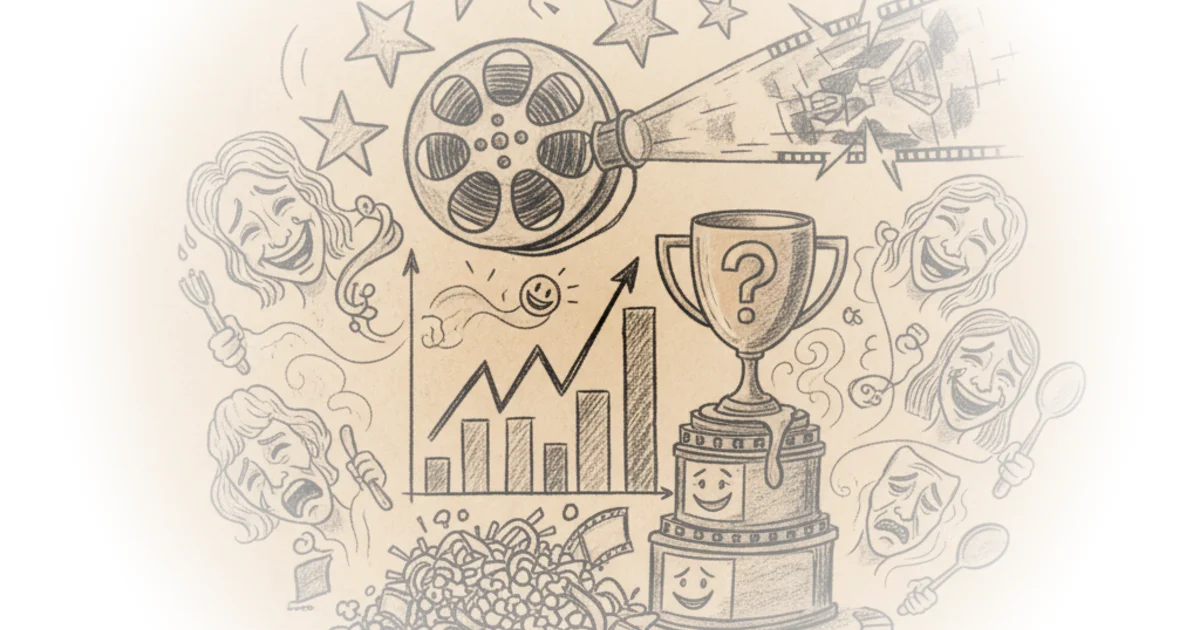
By focusing instead on rating variance and Wikipedia traffic, Parris isolates films that have sparked genuine, polarized debate. He explains that when opinions diverge, ratings skew toward extremes, creating a "hallmark of a beloved 'bad' movie: a title is simultaneously adored and reviled." This data-driven approach strips away the pretension of critical consensus, revealing that the most culturally relevant "bad" movies are often those that refuse to be ignored, even when they are terrible.
The Window of Cultural Openness
The piece concludes with a deeply personal reflection on why our relationship with "stupid" art changes as we age. Parris recounts a trip where he forced friends to watch EuroTrip, a film that relies on surface-level stereotypes and "raunchy misadventures." Despite realizing the film was a "terrible mistake" for an adult audience, he admits, "I have no regrets." He connects this to research suggesting that "open-earedness" wanes in the early twenties, causing people to demand that art "must possess a Metacritic score above 70... to justify two hours of my time."
Somewhere along the way, my relationship to art changed. This shift in movie-watching habits reminds me of an earlier analysis where I investigated when people stop finding new music.
This is the article's most poignant argument: that the ability to enjoy a "bad" movie is a casualty of adulthood and the pressure to curate a perfect cultural diet. Parris suggests that by demanding everything we consume "mean something," we drastically shrink the pool of watchable content. The piece serves as a reminder that the "so-bad-they're-good" genre is not just about low-budget filmmaking, but about a specific, fleeting window of human receptivity that we lose as we grow older.
Bottom Line
Parris's data-centric approach successfully reframes "bad" movies not as failures of cinema, but as unique cultural artifacts that survive precisely because they are flawed. The strongest part of the argument is the psychological insight that our inability to enjoy "dumb" art is a learned behavior of adulthood, not an objective measure of quality. However, the analysis occasionally glosses over the fact that some "bad" movies are bad because they are offensive or harmful, not just because they are clumsy, a distinction that matters when judging their cultural value.