Sam Denby exposes a paradox that most Americans accept without question: the very city built to embody American democracy is the one place where democracy functions least. While the National Park Service is beloved for preserving America's wild landscapes, Denby reveals how that same agency strangles the daily life of Washington, D.C., turning a vibrant capital into a jurisdictional anomaly where residents pay taxes but hold no voting power. This is not just a history lesson; it is a urgent look at how federal overreach is actively dismantling local autonomy in real time.
The Park Service Paradox
Denby begins by highlighting the strange duality of the National Park Service (NPS). He notes that while Americans adore the agency for its role in preserving nature, "in the nation's capital city, in Washington DC, they're viewed differently." The author explains that because D.C. is not a state, the NPS manages 90% of the city's park acreage, a mandate that clashes violently with urban needs. Denby writes, "The National Park Service, mandated to preserve and protect land for the betterment of future generations, simply doesn't do dog parks." This rigid interpretation of preservation prevents the creation of basic amenities like playgrounds or sports fields, which the agency deems "antithetical to the mandate."
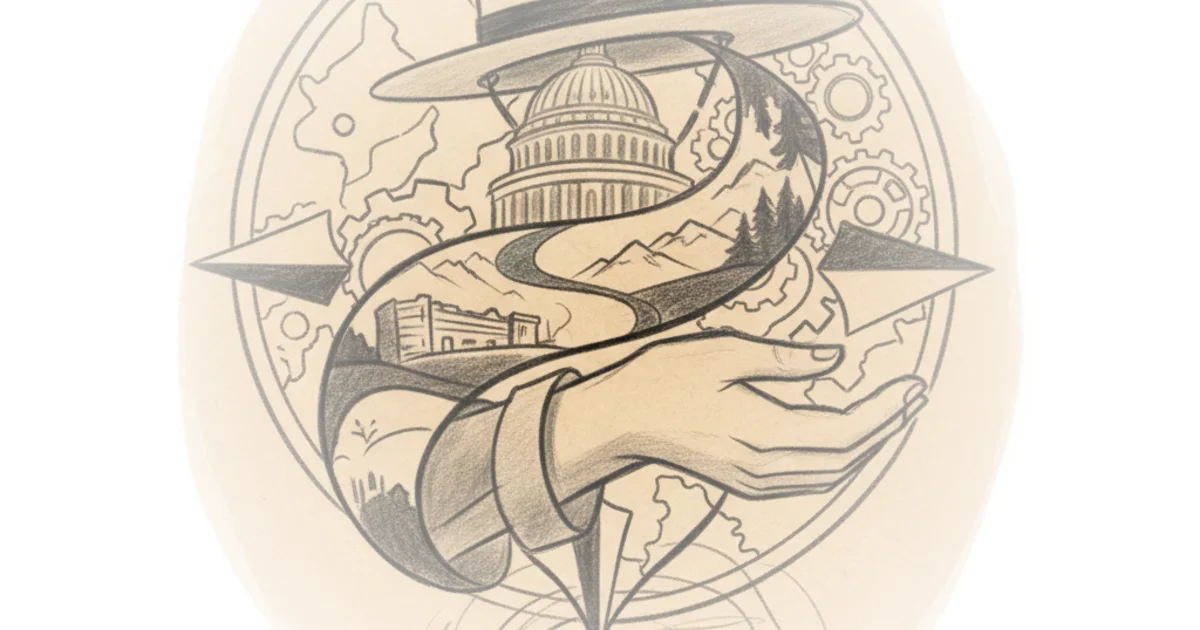
The commentary here is sharp because it moves beyond abstract governance to the tangible frustration of a resident who cannot let their dog off a leash or build a trail without federal obstruction. Denby illustrates this by describing how residents want to invest in the Chesapeake and Ohio Canal to bring in tourism, but the NPS prioritizes structural stability over community engagement. As Denby puts it, "The NPS, for their part, isn't really concerned with increasing passerbys... It's their job, as they see it, to protect the canal for future generations." This creates a standoff where local desires for vibrancy are held hostage by a federal mandate for stasis. Critics might argue that preserving historic infrastructure is a valid priority, but Denby effectively counters that the lack of flexibility turns a public asset into a museum piece that serves no one but the bureaucracy.
The Illusion of Home Rule
The piece then pivots to the political machinery, dissecting the "Home Rule Act" of 1973. Denby clarifies that while this act gave D.C. a mayor and city council, it did not grant true autonomy. He writes, "DC, for example, can set its own budget... but it can't by itself approve its own budget. It still requires congressional approval." This is the crux of the democratic deficit: the city raises its own money, yet Congress holds the power to block it. Denby describes the two mechanisms Congress uses to intervene: cutting funding in spending bills or initiating a disapproval procedure for local laws.
The author's analysis of this dynamic is particularly damning when he notes that while Congress rarely blocks laws, the threat is always present. "Generally, Congress leaves the city alone. Generally, city residents don't really care," Denby observes, describing a fragile peace. However, he argues this truce is breaking down. The piece details how Congress has historically blocked funding for local initiatives like abortion access and needle exchanges, proving that the federal government treats D.C. as a subordinate territory rather than a partner. The argument lands hard because it strips away the comforting narrative that D.C. is simply a city with a unique status; it is, in Denby's view, a place where "a legislative body that is populated by members that do not represent DC in any way" holds absolute veto power over local life.
In a nation so proud of its democracy, its very own capital city can't access the dollars it raised through local taxes.
From Status Quo to Structural Threat
Denby's most striking contribution is his documentation of the recent shift from passive neglect to active aggression. He details the 2020 painting of the "Black Lives Matter" mural and its subsequent removal in 2025 after political pressure. The author writes, "Mayor Bowser gave in, stating that the potential loss of money and then jobs would prove far more damaging to the city." This moment, Denby argues, signaled the end of the unspoken truce. The federal government is no longer just ignoring D.C.; it is actively reshaping it.
The commentary highlights the "glitch" in the 2025 budget, where Congress failed to update the provision allowing D.C. to spend its own tax revenues, effectively freezing a billion dollars of local money. Denby notes that while politicians call it a mistake, "as of August 2025, no bill to release the money for an increasingly desperate DC has reached the floor for a vote." This leaves the city in a state of emergency, forced into hiring freezes and begging for relief. The author's framing of this as a political weapon rather than an administrative error is crucial. It suggests that the lack of statehood is not a historical quirk but a tool for political leverage. A counterargument worth considering is that Congress has always held this power, and recent events are merely the latest iteration of a long-standing dynamic. However, Denby's evidence of the speed and severity of the recent interventions suggests a fundamental escalation in federal control.
Bottom Line
Sam Denby's coverage is a masterclass in connecting bureaucratic minutiae to the lived reality of democracy, proving that the lack of statehood is not a theoretical grievance but a daily operational crisis. The piece's greatest strength is its ability to show how federal mandates, from park management to budget approval, actively prevent D.C. from functioning as a normal city. The argument's vulnerability lies in its reliance on the assumption that the federal government's recent aggression is a permanent shift rather than a temporary political cycle, but the evidence of structural entrenchment is compelling. Readers should watch closely as the "glitch" in the budget becomes a precedent for how Congress might increasingly weaponize its power over the capital.