Freddie deBoer cuts through the fog of modern political discourse with a provocative claim: the most honest progressive voices are finally admitting that the recent era of social justice politics became toxic, yet the establishment media remains trapped in a cycle of denial. This piece is notable not for its anger, but for its diagnosis of a specific intellectual paralysis that prevents the left from learning from its own excesses. For a busy reader trying to understand why the cultural conversation feels so stuck, deBoer offers a roadmap out of the confusion by demanding we stop pretending everything was perfect.
The Two-Step of Denial
DeBoer identifies a pervasive pattern in how liberals have handled the backlash to "woke" culture. He argues that many have adopted a defensive maneuver: first denying that problematic behaviors occurred, and then, when the evidence becomes undeniable, retroactively claiming they always supported the movement. "A lot of people are deeply uncomfortable about whatever remains of 'woke,' but they're afraid to say so," deBoer writes. This observation is sharp because it moves beyond the usual partisan shouting match to look at the internal psychology of the left.
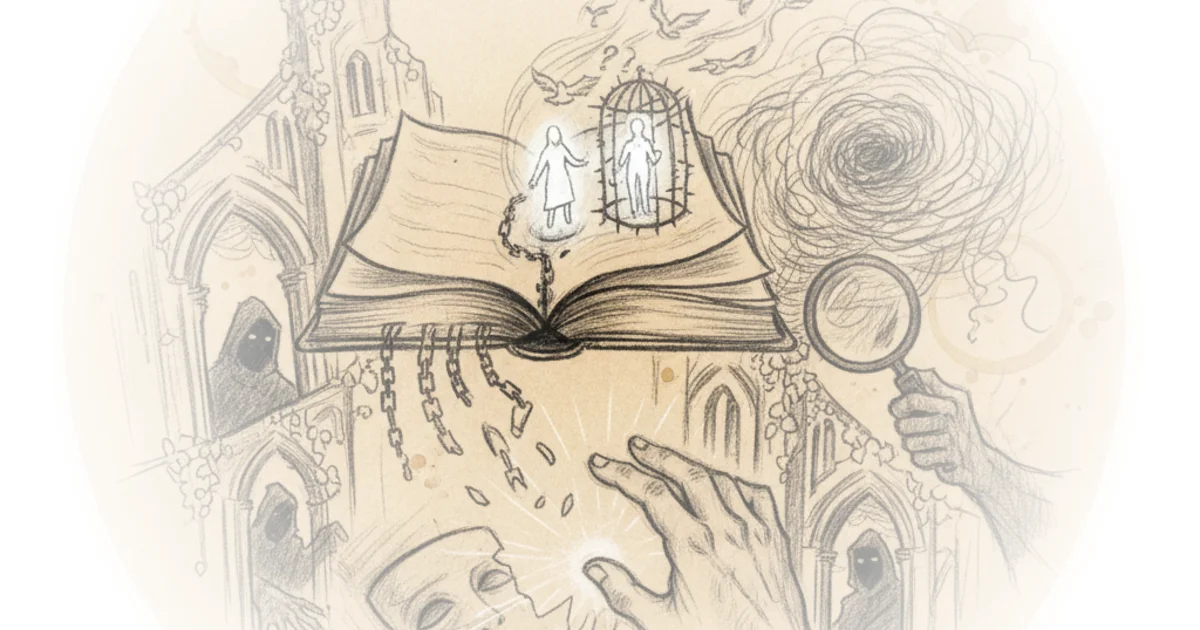
The author suggests that this hesitation stems from a fear of being "owned" by political opponents. He notes that "the preeminence of not being owned" has become the ultimate law for media liberals, preventing them from admitting fault or suggesting failure. This framing is effective because it explains why nuanced criticism is so rare; admitting a mistake is seen as a strategic weakness that could be exploited by the right. However, critics might argue that this fear is not just about political survival but also about protecting vulnerable communities from having their grievances dismissed entirely.
"We never had the woke postmortem, in media or anywhere else; we never actually had the conversation about how a majority of people who work in media had a sudden and massive ideological transformation that most have now quietly walked back without admitting to doing so."
This lack of a "postmortem" leaves the movement in a confused state. DeBoer points out that without this conversation, society is "stuck in this weird, confused space where we're post-woke without actually hashing out what in woke 1.0 was worth keeping and what's worthy of jettisoning." The argument here is that avoiding the hard truths about past failures guarantees that those same mistakes will be repeated.
The Cost of Absurdity
To illustrate the real-world damage of this ideological rigidity, deBoer lists a series of specific, often bizarre incidents that occurred during the peak of this movement. He details how a white woman's painting of Emmett Till faced demands for destruction, how a Mexican utilities worker was fired for a prank, and how a professor lost her job for showing a medieval painting of Muhammad in a history class. These examples serve as concrete evidence that the movement sometimes strayed far from its noble goals.
DeBoer highlights a particularly extreme proposal from public health experts who suggested that white people should be disadvantaged in receiving Covid vaccine access based on privilege. "That's a little extreme!" he writes, noting that such a stance alienates not just conservatives but people of all races. This section is crucial because it moves the debate from abstract theory to tangible policy failures. The reference to the case of Jason Arday further underscores this point, where deBoer argues that academia's "condescension towards Black scholars" created a culture of fear. He writes that the university system told Arday, "You are not capable of behaving like an adult... you are not strong enough to be subject to the same basic standards that we apply to everyone else."
"The absurdities of the peak woke era were indeed many and were indeed corrosive. Some of them were just absurd; some were more actively destructive."
This admission is the piece's most powerful moment. By acknowledging that the movement was "corrosive," deBoer challenges the reader to accept that good intentions do not excuse harmful outcomes. He contrasts this with the approach of politicians like Alexandria Ocasio-Cortez, who he suggests are willing to admit that "woke 1.0" was a little crazy. This willingness to separate the good from the bad is presented as the only path forward.
The Path to Clarity
DeBoer defines "woke" not as an undefinable buzzword, but as a specific political movement that "aggressively introduced" abstruse academic concepts into mainstream liberalism. He argues that this movement created a condition of "massive mutual surveillance where everyone constantly policed everyone else's morals." This definition is clear and direct, stripping away the vagueness that often plagues discussions on the topic. He asserts that while racism and sexism are real and need to be remedied, this does not excuse the "groupthink, the power games, the vindictiveness, the illiberalism, and the absolute lack of grace" that emerged.
The author concludes that the only way to move forward is to have these difficult conversations. "We can learn and move on and do better next time," he writes, but only if we stop practicing the politics of avoidance. This call to action is grounded in the belief that honesty is the only sustainable foundation for a political movement.
"But to do that, we have to have these conversations, and we're not helped by people like Broderick practicing avoidance with the two-step routine."
Critics might note that deBoer's focus on "absurdities" risks overshadowing the genuine progress made in areas like police accountability and workplace diversity. The balance between celebrating achievements and critiquing excesses is delicate, and deBoer's tone occasionally leans heavily toward the latter. Nevertheless, his insistence on clarity over comfort remains a vital contribution to the discourse.
Bottom Line
DeBoer's strongest argument is his insistence that the left cannot evolve without a honest reckoning of its own failures, a point that resonates deeply in a polarized climate where admitting fault is often seen as surrender. The piece's biggest vulnerability is its potential to be co-opted by those who wish to dismiss all social justice efforts as nonsense, a risk deBoer acknowledges but may not fully mitigate. Readers should watch for whether this call for a "postmortem" actually leads to constructive policy changes or merely fuels further cultural division.