Richard Hanania offers a rare, unvarnished self-audit on the friction between intellectual rigor and the visceral demands of modern populism. In reflecting on his recent profile in The Atlantic, he does not merely recount the experience; he dissects the very machinery of how elites and anti-elites construct competing realities, arguing that the rejection of institutional norms is the true catalyst for societal epistemic collapse. This is not just a defense of a book; it is a diagnosis of why rational policy arguments fail to resonate when the audience has abandoned the shared standards of truth required to understand them.
The Architecture of Elites
Hanania begins by redefining the term "elite," stripping away the common conflation of wealth with status. He argues that true elites are not defined by their bank accounts but by their standing within "established, usually long-standing" institutions like universities and legacy media. "Hanania defines elites not as the wealthy or powerful, but as people who derive status through their connections to 'established, usually long-standing' institutions," he writes. This distinction is crucial because it reframes the conflict: it is not a class war of rich versus poor, but a cultural war between those who value institutional validation and those who seek direct connection with the masses.
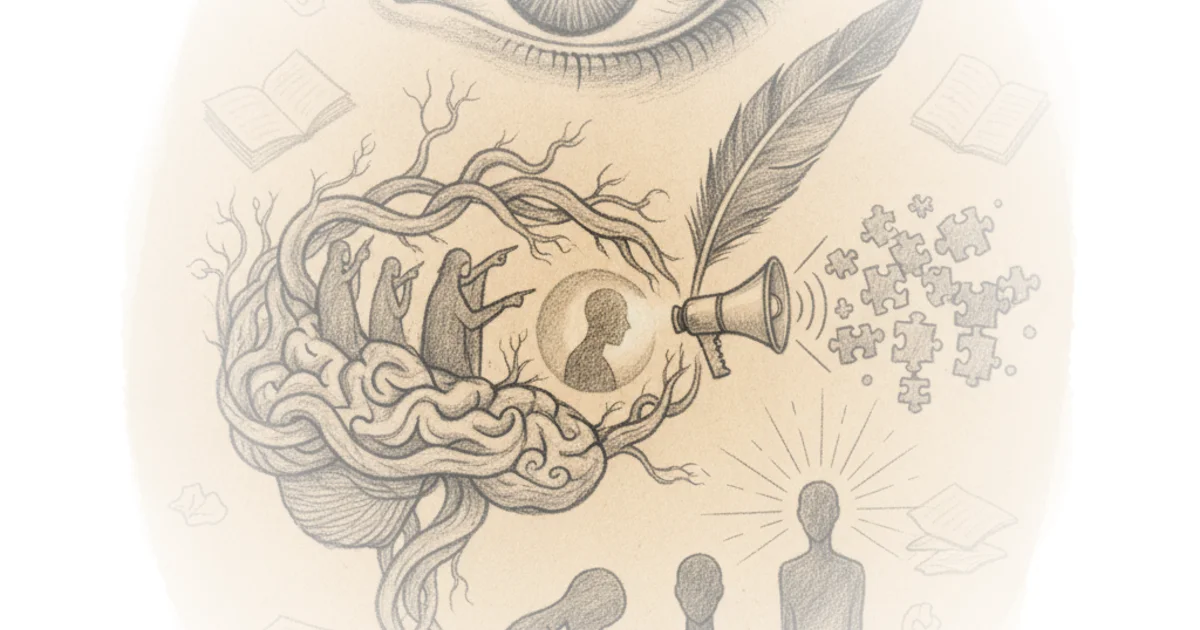
The author draws a sharp line between these gatekeepers and the populist movement, suggesting that the former, despite their flaws, are committed to truth-seeking norms. "Journalists and academics, he writes, might get some big things wrong—especially, to his mind, on race and gender—but they obey professional and ethical norms that point toward truth." This framing is compelling because it admits fallibility while insisting on a methodology that prioritizes evidence over emotion. It echoes the sociological insights of Pierre Bourdieu, who decades ago mapped how "cultural capital" operates as a currency of exclusion, though Hanania flips the script to argue that this capital is also the only barrier against the spread of demonstrable falsehoods.
"No matter how smart you are, you can't do that and expect to know anything about the world."
Critics might argue that Hanania's defense of these institutions ignores how they have historically excluded marginalized voices or how their "norms" can sometimes serve as a shield for groupthink. However, his point remains that without these shared norms, the very concept of objective reality dissolves into competing narratives.
The Epistemic Cost of Populism
The piece takes a darker turn as Hanania examines the consequences of rejecting these institutions. He posits that when people abandon mainstream media and scientific consensus, they do not simply become more independent; they become susceptible to conspiracy theories that thrive on emotional resonance rather than factual accuracy. "This is beyond coalitional politics, or them just playing to their base," Hanania observes. "They are bad at acquiring knowledge, because they've rejected the media and they've rejected scientific papers and every institution."
He illustrates this by contrasting the behavior of elite figures with populist influencers like podcasters and conspiracy theorists who gain status through a "direct connection to a mass audience." The danger, he suggests, is that this shift creates a feedback loop where truth is secondary to tribal affirmation. "Unlike elite authorities, these populist figures obtain their status via 'a direct connection to a mass audience or voters,'" he notes, highlighting a fundamental breakdown in the information ecosystem. The argument holds weight because it explains why factual corrections often fail: the audience no longer trusts the source of the correction, viewing it as an attack rather than a clarification.
The Personal and the Political
Hanania does not shy away from the personal attacks he received during the profiling process, particularly from Gilad Edelman, the Atlantic editor who wrote the piece. He acknowledges that Edelman found him "socially awkward yet oozing with self-regard," a critique Hanania admits is partially true but contextualizes as a necessary byproduct of the interview format. "During our two-hour lunch, the conversation almost never strayed from his favorite topics, which are Richard Hanania, Richard Hanania's analysis of politics, and Richard Hanania's place in the firmament of public intellectuals," he recounts with a mix of defensiveness and self-awareness.
This section reveals a tension in Hanania's own position: he champions the separation of the messenger and the message, yet he is acutely aware that his personal conduct often undermines his intellectual arguments. He admits that his past comments—ranging from dismissive remarks about gender issues to controversial takes on the Epstein case—make him a difficult ally for the very elites he defends. "I could certainly be a more effective messenger for this project if I didn't do stuff like hang out with Michael Tracey and join him in showing contempt for the parade of basketcases who politicians and the media insist on referring to as 'Epstein survivors,'" he concedes.
"The ideas are what count, and the ability to separate the messenger and the message is another one of those things elites are able to do better than populists."
This admission is perhaps the most honest part of his commentary. It suggests that while the intellectual framework of anti-populism is sound, the human element of executing it is fraught with contradictions. A counterargument worth considering is that Hanania's inability to separate his persona from his policy prescriptions might be a symptom of the very elite insularity he critiques, where personal virtue signaling often overshadows substantive debate.
The Strategic Dilemma
Looking forward, Hanania offers a stark prescription for the political center: abandon the cultural positions that alienate the working class, even if those positions are morally or intellectually correct. He argues that the left's focus on issues like gender identity is a strategic error that plays into the hands of populists. "The trans issue in particular riles up idiots like practically nothing else, and I say this as someone in no way sympathetic to gender theory," he writes. His recommendation is a cold, utilitarian calculation: moderate on social issues to regain political viability.
However, he admits that he has no intention of following his own advice, prioritizing the "things that I think the world needs to hear" over political expediency. This creates a paradox: the very people best equipped to defend institutional norms are often the ones most unwilling to compromise on the cultural battles that define the current era. "With Vance, as Trump's likely successor, going on Rogan and kissing up to him with novel conspiracy theories, there is little hope for a responsible or intellectually defensible right emerging in the near future," he concludes, painting a bleak picture of the political landscape.
Bottom Line
Hanania's commentary is a powerful, if uncomfortable, reminder that the battle for truth is not just about facts, but about the institutions that validate them. His strongest argument is that populism is an epistemic crisis that cannot be solved by better messaging alone, but his greatest vulnerability is his own refusal to align his personal conduct with the rational, moderate stance he advocates. The reader should watch for how this tension plays out as the political center struggles to find a voice that is both intellectually rigorous and politically palatable in an age of emotional mobilization.