Most alarming isn’t that Britain relies on America—it’s that its leaders won’t admit they’ve outsourced sovereignty. Novara Media’s interview with Angus Hanton exposes a nuclear deterrent that can’t be triggered without U.S. permission. For listeners navigating today’s Middle East tensions, this isn’t theory—it’s a live wire.
The Economic Surrender
Novara Media lands this by spotlighting data most British politicians ignore: "They employ 2 million Brits not 1 million." That scale of corporate control—far exceeding Germany’s 400,000 or France’s 300,000—isn’t accidental. Hanton argues the UK actively dismantled safeguards, like Gordon Brown’s shift from PEPs to ISAs, which let pensions flood into foreign stocks. "We’ve basically set up a jumble sale of our businesses," he states, noting how underpriced British firms attract U.S. takeovers (Deliveroo, Spectrris) while tax incentives bleed capital overseas. This lands because it reframes "free trade" as self-sabotage—the UK didn’t just open its economy; it handed the keys to Silicon Valley and Wall Street.
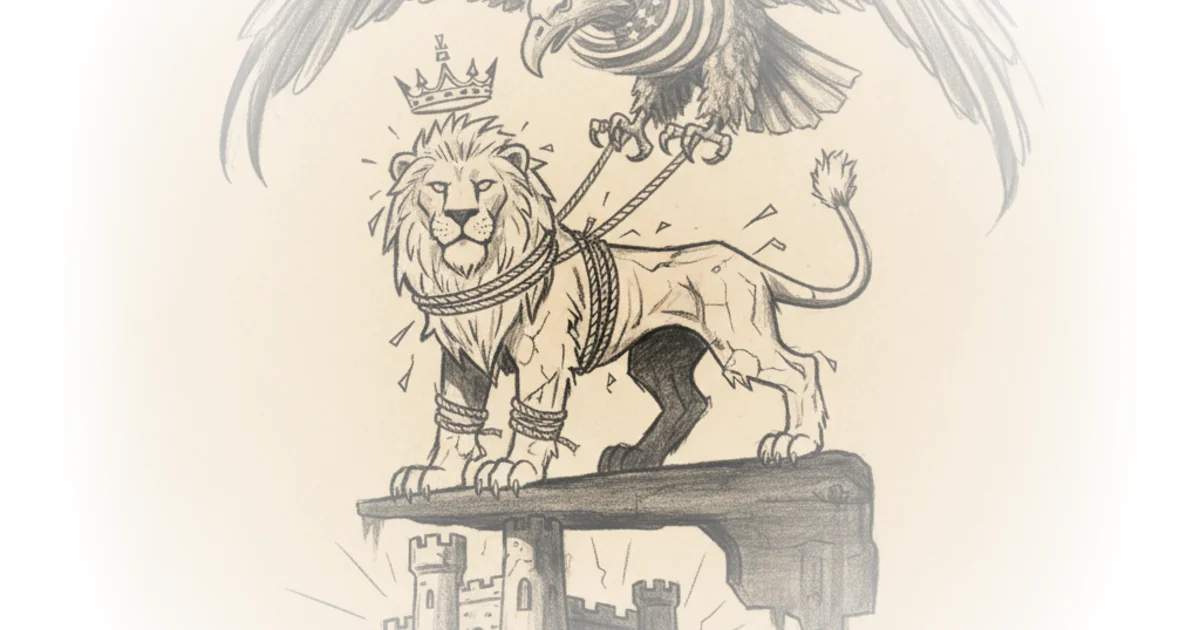
Critics might note U.S. investment brings jobs and innovation, but Hanton’s evidence of asymmetric dependence—where Britain’s service-heavy economy leans into sectors dominated by American tech—feels underaddressed in mainstream debate. The real sting? "It’s far worse... we’re much more dominated economically" than European peers who blend economic nationalism with EU protections.
We’ve got weapons which make us a target, but we’re not free to use them as we want.
When Politics Bends
Novara Media wisely traces how economic control spills into foreign policy. Hanton cites the Huawei ban—where Britain sacrificed 5G rollout despite BT’s endorsement—as proof "the Americans are quietly dictating what we do." He’s equally sharp on cultural capture: "Our town square is controlled mostly from California," meaning social media shapes British discourse via U.S.-owned platforms. This framing works because it connects dry corporate stats to lived reality: when Americans own Airbnb and the algorithms governing public debate, sovereignty erodes from the ground up.
Yet the piece overlooks why Britons tolerate this. Is it genuine belief in the "special relationship," or manufactured consent? Hanton hints at media complicity ("the British weren’t interested in finding out more") but doesn’t dissect the propaganda machinery enabling it.
Strategic Vulnerability
Here’s where Hanton’s argument becomes urgent. On nuclear deterrence, he dismantles the myth of independence: "I don’t think we could use them without their consent." With U.S. personnel embedded at UK bases and F-35s requiring American tech, Britain couldn’t fight any conflict without U.S. alignment—even if, hypothetically, American interests diverged during a Middle East crisis. Novara Media underscores this isn’t speculation but observable reality: during the Huawei row, Britain scrapped economic logic for U.S. demands. The chilling implication? Britain pays £100 billion for weapons that make it a target while forfeiting their use.
A counterargument worth considering: U.S. protection does shield Britain from threats like Russian aggression. But Hanton’s evidence—that dependence deepened after his book’s release via fresh takeovers—suggests the cost now outweighs the benefit.
Bottom Line
Novara Media’s strongest contribution is quantifying Britain’s vassalage with IRS data and employment stats few dare cite. Its biggest vulnerability is offering no path to recalibration—leaving readers wondering whether this relationship is reversible. Watch for how Rachel Reeves’ rumored pension reforms confront this jumble sale; if they don’t, the surrender continues.