In a global landscape where national identity crises are often framed as clashes between secular values and religious fundamentalism, this piece offers a startling counter-narrative: that a cohesive society can thrive not on shared dogma, but on shared cultural fluency. Noah Smith, channeling the insights of writer Hiroko Yoda, challenges the prevailing American anxiety that a lack of institutional faith inevitably leads to social fragmentation, suggesting instead that Japan's "rigid" social fabric is held together by something far more subtle than theology.
The Myth of Religious Necessity
Smith introduces a perspective that flips the standard Western debate on its head. While pundits in the United States often argue that a nation cannot survive without a spiritual backbone, Yoda argues that Japan maintains stability through a unique cultural flexibility. "Japanese, as a nation, don't subscribe to any one faith," Smith writes, highlighting the common saying: "born Shinto, married Christian, buried Buddhist." This observation is crucial because it dismantles the idea that deep social cohesion requires exclusive theological commitment.
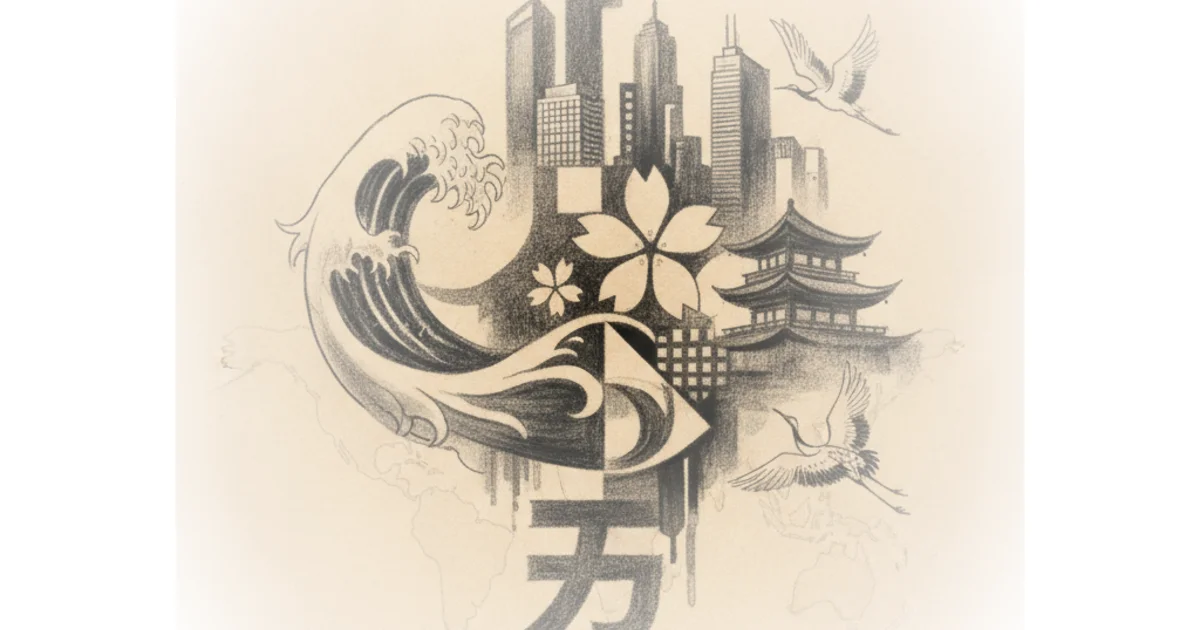
The author notes that Americans often treat religion like a buffet, picking and choosing elements while discarding the rest. Derek Thompson is cited warning that this approach lacks endurance: "You can't just pick and choose... They only wanted the parts of religion they liked and left the others behind." Yet, Smith points out the irony that Japan does exactly this with spiritual traditions without suffering a corresponding collapse in social trust or community spirit. The argument here is provocative: perhaps the American obsession with finding a "vertical spine" of religious purpose is a cultural blind spot rather than a universal requirement for survival.
We just did. If you'd asked us what we believed, I honestly don't think we would have even understood the question.
This framing is effective because it moves beyond abstract political theory to the texture of daily life. Smith describes how Japanese people carry amulets and visit shrines not as acts of doctrinal belief, but as cultural rituals. "They were simply cute ways to wish," Yoda explains through Smith's narration. This distinction matters. It suggests that in Japan, identity is performative and participatory rather than confessional. Critics might note that this view romanticizes a society where conformity can be oppressive, masking the pressure to "read the air" as a benign cultural trait. However, the piece successfully challenges the assumption that secularism equals fragmentation.
The High-Context Barrier
As demographics shift and Japan faces a shrinking population, the definition of national identity is being forced to evolve. Smith highlights a surprising finding from a Stanford survey: resistance to immigration in Japan is not primarily driven by race, but by language ability. "Japanese language ability is" the deciding factor, Smith reports. This shifts the debate from ethnicity to cultural competence.
The article explains that Japanese is a "high-context" culture where meaning is often implied rather than stated. To speak fluently, one must understand the unspoken rules of social interaction. "You're expected to kuuki wo yomu — 'read the air' and intuit meaning," Smith writes. This is a profound reframing of what it means to be Japanese. It suggests that the barrier to entry for immigrants isn't their skin color or ancestry, but their ability to navigate the subtle, implicit social codes that bind the society together.
This aligns with historical shifts in how Japan views its own identity. While figures like Shintaro Ishihara once championed a rigid, ethno-nationalist vision of Yamato-damashii (the Japanese spirit), the current reality is more pragmatic. The article notes that 62% of Japanese respondents want immigrants to adopt "etiquette and customs," but once language fluency is achieved, acceptance of diverse ethnic backgrounds rises significantly. This suggests a society that is willing to expand its definition of belonging, provided newcomers master the cultural code.
To me Japanese isn't what you look like; it's how you act. In other words, it's how you read the air.
This argument carries weight because it offers a concrete mechanism for integration that differs from the American model of "melting pot" assimilation or European debates on multiculturalism. However, one must consider whether this high-context requirement creates an invisible barrier just as formidable as explicit racism. If "reading the air" is impossible without decades of immersion, does this not effectively exclude many potential contributors? The piece acknowledges that far-right factions still exist and use foreigners as scapegoats, but argues that demographics and cultural traditions are ultimately pushing against them.
Bottom Line
The strongest part of this argument is its refusal to accept the premise that religious decline must lead to social decay; it offers a tangible alternative model where shared behavior supersedes shared belief. Its biggest vulnerability lies in potentially underestimating how exclusionary "high-context" cultural norms can be for outsiders who cannot intuitively grasp them. Readers should watch whether Japan's pragmatic approach to identity holds as immigration numbers rise, or if the pressure of demographic decline will force a harder line between insiders and outsiders.