Iris Fung of Asimov Press has done something rare in the field of neurotechnology: she has moved the goalposts from science fiction to plausible engineering. While the idea of running a human brain on a computer was dismissed as absurd just a few years ago, Fung argues that three specific, recent breakthroughs have converged to make a full emulation not just possible, but likely within the next few decades. This is not a speculative manifesto; it is a rigorous assessment of the industrial pipeline required to map 86 billion neurons, and it suggests we are standing on the precipice of a discovery tool that could revolutionize medicine and our understanding of consciousness itself.
The Shift from Absurdity to Engineering
Fung begins by acknowledging the sheer scale of the challenge that once made the concept laughable. She recalls that in 2023, the Wellcome Trust estimated mapping a mouse brain would cost billions and take nearly two decades, requiring an army of electron microscopes. "Given this projection — not to mention the added complexity of scaling this to human brains — I remember finding the idea of brain emulation absurd," she writes. This admission is crucial; it grounds the piece in reality rather than hype. The pivot in her argument comes from identifying a triad of technological shifts that have shattered those old cost and time barriers.
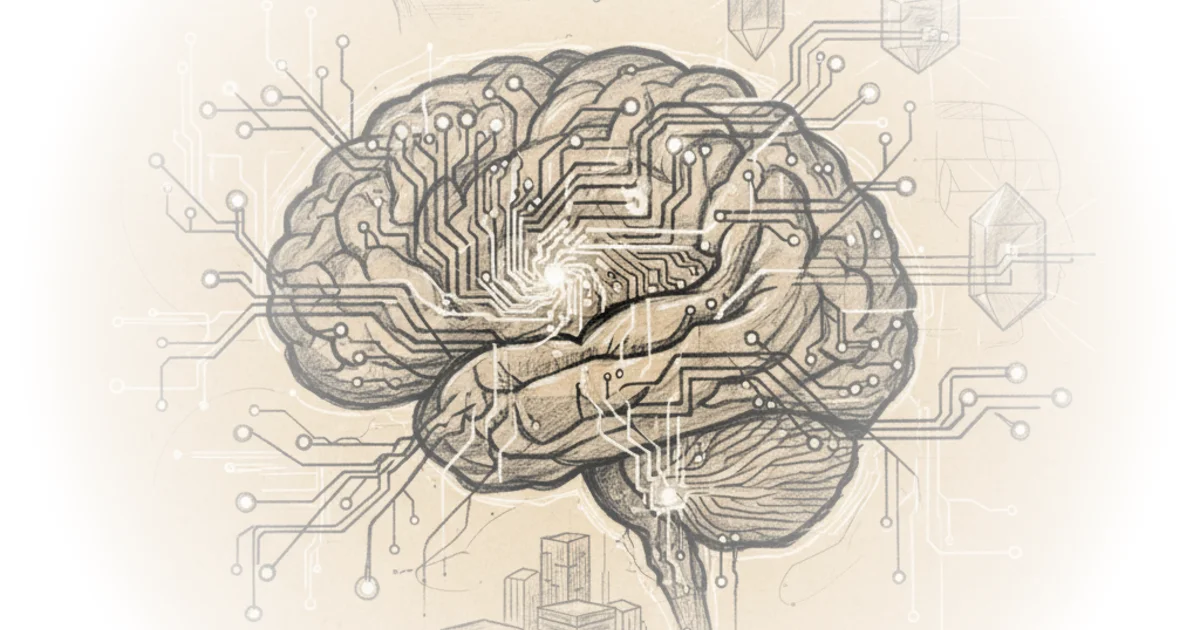
First, she highlights expansion microscopy, which allows scientists to physically swell brain tissue to twenty times its size, making it possible to trace connections with light rather than the slow, expensive electron microscopy. Second, she points to protein barcoding developed by the nonprofit E11 Bio, which stains neurons in distinct colors to simplify tracing. Finally, she notes the release of PATHFINDER by Google Research, an AI tool capable of proofreading massive amounts of neural data with high accuracy. "Three recent breakthroughs have provided a path toward mapping the full mouse brain in about five years for $100 million," Fung asserts. This reframing is powerful because it replaces the vague promise of "AI solving everything" with concrete, incremental hardware and software improvements.
By building brains in silico, we will come to understand neuroscience. (Or, to quote Richard Feynman, "What I cannot create, I do not understand.")
The author's confidence here is well-placed, yet it invites a necessary counterpoint. Critics might argue that even if we can map the wiring, we may still lack the biological context—the chemical soup of hormones and the dynamic environment of a living body—to make the simulation truly functional. Fung anticipates this by distinguishing between a mere map and a functional emulation, but the leap from a static map to a dynamic, conscious simulation remains the field's greatest unknown.
Beyond Alignment: The True Value of Emulation
One of the most compelling aspects of Fung's coverage is her candid evolution regarding the purpose of this technology. Initially, she, like many in the AI safety community, hoped that emulating human brains would help align artificial intelligence with human values. "When I began researching brain emulation, my motives were primarily centered around constraining risks and harms from advanced AI," she admits. However, she has since updated her view, noting that the velocity of AI development may have outpaced the utility of this specific alignment strategy. This intellectual honesty strengthens her credibility; she is not selling a solution to a problem she no longer believes exists.
Instead, she pivots to a more immediate and tangible value proposition: brain emulation as the ultimate scientific discovery tool. She draws a parallel to how humanity has historically borrowed from nature to create new materials and drugs. "I think of brain emulation models as the scientific discovery tool for studying the computational solutions nature has arrived at, so that we might deploy them elsewhere," she explains. This framing shifts the conversation from the abstract fear of sentient machines to the practical application of reverse-engineering nature's most complex computer. It suggests that before we worry about a digital brain becoming conscious, we should worry about the potential for digital brains to cure mental illness or design new drugs by running experiments in a virtual environment.
Accurate brain emulation models also suggest that one could run at least some experiments digitally before performing them in vivo, saving valuable resources in contexts such as mental health research.
This argument resonates deeply when viewed against the backdrop of other biological modeling efforts, such as the decades-long struggle to map the GLP-1 receptor pathway. Just as understanding that specific receptor led to a revolution in treating obesity and diabetes, Fung suggests that a full brain map could unlock treatments for conditions we currently view as intractable. The potential to test hypotheses on a digital twin before touching a living patient is a profound ethical and economic shift.
The Distinction Between Simulation and Emulation
A critical part of Fung's analysis is her insistence on the difference between current AI models and true brain emulation. She uses a brilliant analogy to clarify this for a general audience: "This is similar to how airplanes achieve flight using jet engines and a metal frame, rather than by replicating the wings, feathers, and muscles of birds." Large language models, she argues, are airplanes; they mimic the output of human thought without replicating the underlying biological architecture. True emulation, by contrast, seeks to instantiate the actual neural wiring and firing rates of the brain.
She acknowledges that we are not there yet. Even the most advanced human brain model, created in 2024 by researchers at Fudan University, ran at a fraction of biological speed and relied on coarse data extrapolated from MRI scans. "Even with access to a supercomputer, the researchers also had to downscale the total number of synapses per neuron to an average of 600, roughly five- to ten times less than reality," Fung notes. This admission of current limitations prevents the piece from sounding like a sales pitch. It highlights that while the path is clear, the climb is steep.
The challenge is not just computational power, but the sheer volume of data. Fung points out that a single digital neuron can have millions of parameters, and scaling this to 86 billion neurons requires a datacenter's worth of compute. "Scaling this up 150,000 times, to capture all the neurons in a fruit fly, is possible with today's consumer gaming hardware," she writes, contrasting this with the massive infrastructure needed for a human brain. This comparison effectively illustrates the exponential nature of the problem.
The unique advantage of brain emulation models, I'd argue, is that they combine the manipulability of computational models with the biological realism of actual neural systems: a sweet spot that neither traditional neuroscience nor pure AI simulation can occupy.
This "sweet spot" is the core of Fung's thesis. It suggests a future where we can manipulate variables in a brain model with the ease of a computer program while retaining the biological fidelity that pure AI lacks. However, a counterargument worth considering is the risk of over-simplification. If the model is manipulated too much to be computationally feasible, does it lose the very biological realism it promises to preserve? Fung touches on this but leaves the reader to ponder the trade-off between speed and accuracy.
Bottom Line
Iris Fung's analysis is a masterclass in updating one's worldview based on new data, transforming a once-absurd idea into a concrete engineering roadmap. Her strongest argument lies in reframing brain emulation not as a path to artificial consciousness, but as a revolutionary tool for drug discovery and mental health research. The piece's biggest vulnerability is the assumption that the biological complexity of a living brain can be fully captured in a static digital model, a hurdle that remains unproven. Readers should watch for the next generation of connectomics data, as the gap between mapping a mouse and mapping a human will be the true test of this emerging pipeline.