Matthew Clayfield delivers a startling verdict: the most profound cinematic experience of the decade isn't a blockbuster or a prestige drama, but a fourteen-hour documentary about a contemporary art exhibition imploding in real time. He argues that in an era of fragmented attention, only extreme duration can force the kind of deep, unbroken focus that reshapes how we perceive reality itself.
The Architecture of Attention
Clayfield begins by dismantling our modern definition of "long." He contrasts the passive consumption of binge-watched television with the active, almost physical endurance required by cinema. "In the theatre, we are being asked to concentrate for that long," he writes, noting that while we happily watch a season of a show in a day, we do so while ironing or doing crosswords. The author suggests that true immersion is impossible when the viewer retains the option to multitask. This framing is effective because it reframes the viewer's passivity not as a comfort, but as a barrier to genuine engagement.
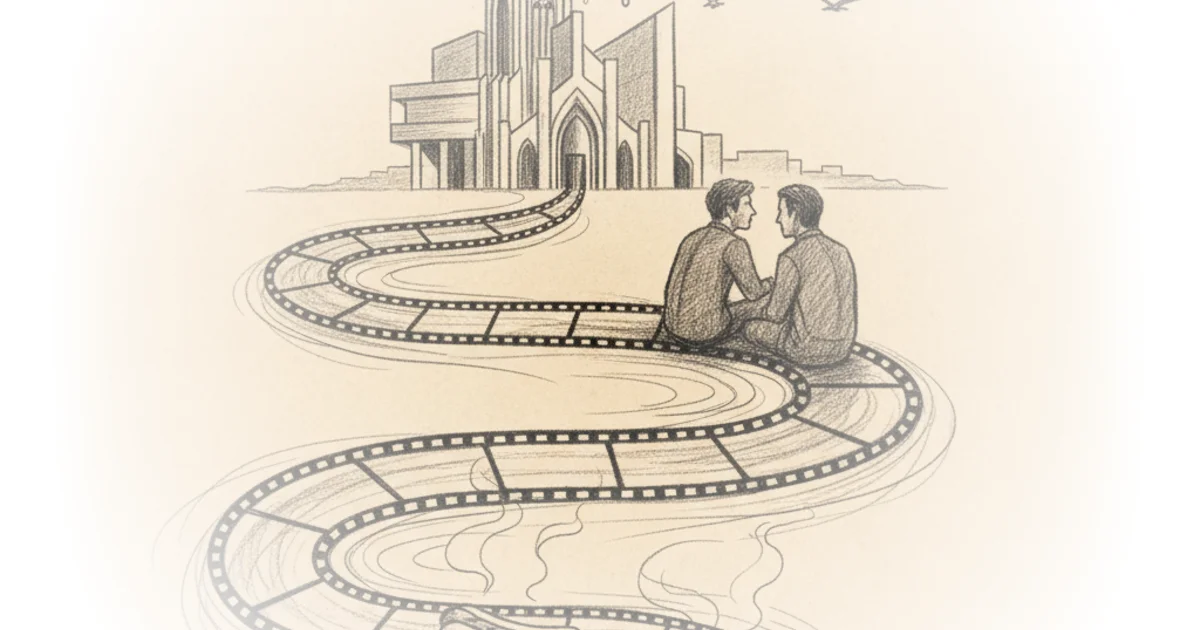
The piece posits that exergue – on documenta 14, a film by Greek filmmaker Dimitris Athiridis, succeeds precisely because it refuses to let the audience look away. Clayfield admits his own initial hostility toward contemporary art, recalling a moment in Melbourne where he "had to leave a show... after beginning to hyperventilate in rage." Yet, he concedes that the film transcends the art itself. "A lot of it was trash," he admits, "but I'd be lying if I said that I didn't understand the passion of the show's curators for that art." This honesty lends weight to his subsequent analysis; he is not a convert to the art world, but a skeptic forced to confront the human drama behind the scenes.
Extreme duration changes your relationship to reality outside the cinema, too.
The Tragic Figure at the Center
The core of Clayfield's argument rests on the character of Adam Szymczyk, the artistic director of the exhibition. Rather than a dry institutional critique, the film offers a portrait of a man caught between his vision and the crushing weight of logistics and politics. Clayfield describes Szymczyk as a "cross between Ian Curtis, Nick Cave, Daniel Cohn-Bendit, Giorgio Vasari, and maybe Andy Warhol, with the emphasis on Ian Curtis." This vivid, almost literary description anchors the abstract concept of curatorial failure in a tangible human struggle.
The author highlights a specific sequence where Szymczyk, hungover and sleep-deprived, apologizes on the phone while in a taxi, only to deliver a "remarkable" speech moments later. "He plays every fiddle available to him," Clayfield observes, noting the narcissism but also the genuine stakes. The film captures a man who "doesn't respect the institution... or, rather, respects it so much that he wants it to be better than it is." This nuance is crucial; it prevents the narrative from becoming a simple takedown of the art world, instead presenting a complex study of idealism colliding with bureaucracy.
Critics might argue that focusing so heavily on the director's personal turmoil risks romanticizing the chaos of the event, potentially obscuring the deeper structural issues within the art world that the exhibition was meant to address. However, Clayfield anticipates this, suggesting that the personal collapse is the only way to understand the institutional failure.
Time as a Sculptural Element
Clayfield elevates the discussion from a review to a philosophical inquiry by invoking Gilles Deleuze and the concept of the "time-image." He argues that while Hollywood cinema is dictated by plot, exergue allows time to dictate movement. "Cinema remains the only visual art in which duration plays an outsized role," he asserts, contrasting the film with the "choose-your-own-adventure" nature of reading or the distracted viewing of television. The author suggests that sitting in a dark theater for days, "fully focused," creates a state of being "a horse wearing blinders" that is surprisingly liberating.
The piece draws a sharp line between the experience of the film and the actual event it documents. While the exhibition documenta 14 was a "critical and political disaster," the film itself is described as "fantastic." Clayfield notes the irony that the subsequent exhibition, documenta 15, was an "unmitigated disaster" that the film barely mentions, yet the focus remains on the human cost of the first event. "You live in it," he writes of the cinematic experience. "You are forced to live in it." This insistence on the physical and temporal reality of the viewing experience is the piece's most compelling contribution to film criticism.
You are, for a moment, a horse wearing blinders. It reminds you that blinders are not actually a bad thing.
Bottom Line
Clayfield's strongest argument is that extreme duration is not a gimmick but a necessary tool for reclaiming attention in a distracted age, transforming the viewer from a passive consumer into an active witness. The piece's vulnerability lies in its reliance on the viewer's willingness to endure the same marathon as the author, a commitment that may feel inaccessible to many. Ultimately, the commentary serves as a powerful reminder that the value of art—whether on screen or in a gallery—often lies not in the object itself, but in the time we are willing to give it.