This podcast episode from Yale University doesn't just recount history; it exposes a terrifying continuity in how we process truth. The most striking revelation isn't about the Progressive Era itself, but how a young Walter Lippmann, writing in 1922, diagnosed the very same information crisis we face today: a world moving too fast for human brains to comprehend, forcing us to rely on dangerous shortcuts. Yale University argues that the tools we use to manufacture consent in politics are identical to those used to sell products, a link that remains as relevant now as it was a century ago.
The Crisis of Information Overload
Yale University frames Lippmann's work not merely as a historical artifact, but as a prescient warning about the collision of technology and democracy. The hosts note that Lippmann was a "smart young man trying to look out at this rapidly changing world and make sense of it." This framing is effective because it humanizes the intellectual struggle, moving beyond dry policy analysis to the psychological toll of modernity. Lippmann observed that the sheer volume of new information created a paradox: citizens were expected to have informed opinions on global events they could never personally verify.
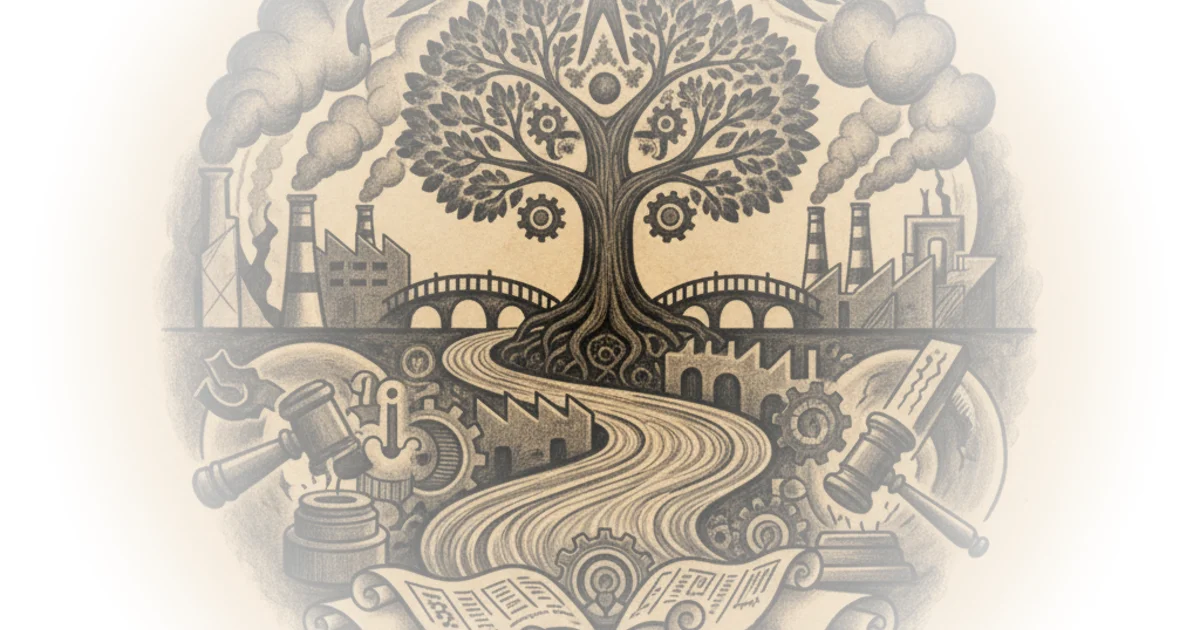
As Yale University puts it, "The modern world is moving fast and creating all of these challenges of information and decisionmaking... and he's deeply concerned with this and he's trying to figure out a way to get good information." This concern feels unnervingly familiar to anyone scrolling through a news feed today. The argument holds up because it identifies a structural flaw in democracy that technology exacerbates rather than solves. The speed of communication outpaces the speed of human understanding, leaving a vacuum that is easily filled by manipulation.
Critics might argue that Lippmann's diagnosis was too pessimistic, ignoring the potential for an educated public to self-correct through better access to information. However, the podcast suggests that access alone is insufficient without the cognitive bandwidth to process it.
"If you conceive of politics as a conversation between the people, the person who is given power and the people who give the power... any technology that shapes that conversation shapes democracy."
The Invention of the Stereotype and Consent
The episode's most provocative claim is that Lippmann didn't just observe public opinion; he helped invent the vocabulary we use to describe its manipulation. Yale University highlights how Lippmann introduced the concept of the "stereotype" not as a slur, but as a necessary cognitive shortcut for navigating a complex society. "You cannot possibly in a complicated modern society that is fast-moving get to know every person on an individual level," the hosts explain, noting that we turn to categories and shorthands to survive. This reframing is crucial; it shifts the blame from individual prejudice to the structural impossibility of total knowledge.
Furthermore, Yale University points out that Lippmann coined the phrase "manufacture of consent," a term that has become the bedrock of modern media criticism. "It's about the ways that you make people think that they are buying into whatever. It's a product, it's a political system, it's a war effort," the commentary notes. This distinction is vital. It suggests that democracy is not a natural state of affairs but a constructed one, vulnerable to the same marketing techniques used to sell soap. The hosts observe that this idea was so potent that "political operators must have seized on this set of ideas here."
The argument is strengthened by the admission that Lippmann himself grew skeptical of the public's ability to govern. "Well, Litman himself, I think over the course of his life becomes less and less sure that he does believe in democracy," Yale University notes, pointing to his growing faith in a "bureau of experts" to tell the public what is true. This pivot is the piece's most uncomfortable moment. It suggests that the solution to the chaos of public opinion might be the very thing that undermines it: a technocratic elite deciding what the masses should know.
"We're going to create this bureau of experts, right? This panel of experts who are going to tell you what's true and then you don't have to worry about it cuz they'll figure it out and they'll give you the good information and it's such a dream."
From Radio to the Executive Branch
The narrative then shifts to how the executive branch eventually mastered these tools, specifically under Franklin Roosevelt. Yale University contrasts Lippmann's theoretical anxieties with Roosevelt's practical mastery of radio. The administration didn't just use the technology; it understood its emotional resonance. "Franklin Roosevelt is really the first president who says oh this right this is a form that's good and I can use this to shape public opinion," the hosts explain. This highlights a critical evolution: the realization that the medium is the message, and that controlling the medium means controlling the narrative.
The commentary effectively links the theoretical concerns of the 1920s to the political realities of the 1930s. While Lippmann worried about the "irrationality of human nature," the executive branch found a way to harness it. The hosts note that Roosevelt's approach addressed both ends of the spectrum: "I'm thinking about the public I'm shaping public opinion I am I am you know the citizens matter... on the other hand it's about shaping and control." This duality remains the central tension in modern governance. The administration's ability to project a unified message through new technologies set a precedent that every subsequent leader has followed.
Bottom Line
Yale University's analysis succeeds in connecting the dots between early 20th-century anxieties and our current digital chaos, proving that the struggle to define truth in a mass-media age is not a new problem but a persistent condition. The argument's greatest strength is its refusal to treat Lippmann as a mere historian, instead presenting him as a co-architect of the modern information landscape. Its vulnerability lies in the implicit acceptance that expert-led "manufacture of consent" might be the only viable alternative to chaos, a trade-off that risks eroding the very democratic ideals it seeks to protect. Readers should watch for how today's algorithms are the modern equivalent of Lippmann's stereotypes, shaping our reality before we even know we've been influenced.
"If you believe in democracy and if you believe because of that that public opinion matters... You're going to be thinking about what ultimately ends up being propaganda."
The Enduring Legacy of Lippmann
Ultimately, the piece serves as a warning that the tools of democracy are also the tools of its subversion. Yale University demonstrates that the "manufacture of consent" is not a conspiracy but a systemic feature of modern communication. As the hosts note, "There are two terms that people often point to as coming out of this book... stereotype... and... manufacturer of consent." These concepts are not just academic; they are the operating system of our current political reality. The episode leaves the listener with a sobering realization: the gap between the complexity of the world and the capacity of the human mind is the space where democracy is won or lost.
Critics might argue that the podcast overstates the inevitability of manipulation, ignoring the resilience of civic engagement and independent journalism. Yet, the historical evidence presented suggests that without constant vigilance, the "bureau of experts" and the "manufacture of consent" will always be the default setting for mass communication. The legacy of Lippmann, as framed by Yale University, is a reminder that in a world of infinite information, the most dangerous thing of all is the illusion of understanding.