Andrew Heard transforms a superhero television review into a piercing meditation on the paradox of legacy: the very admiration children hold for their parents can become the catalyst for their most dangerous mistakes. Rather than offering a standard recap of plot points, Heard argues that the show's central conflict isn't about villains or time travel, but about the human inability to skip the necessary, often painful, steps of growth.
The Illusion of Shortcuts
Heard frames the narrative around the universal desire to emulate greatness without enduring the grind that created it. He writes, "When you have an example, you have something worth striving towards... Not because you want to take over and stop your example from doing what they want, but because you admire them." This observation cuts through the sci-fi veneer to reveal a relatable psychological truth. The author suggests that the protagonist, Barry, finds himself in a unique bind where his own success has created a standard that his daughter, Nora, feels compelled to match immediately, ignoring the years of failure that built his competence.
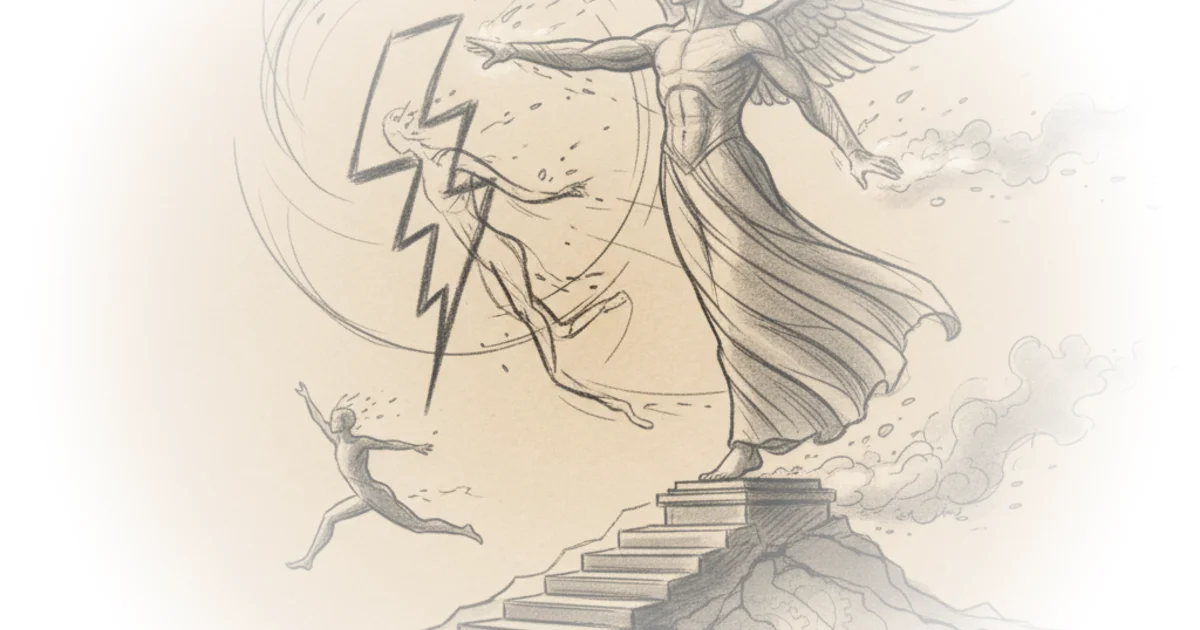
The core of Heard's argument is that the show uses the metaphor of speed to illustrate the necessity of patience. As Heard puts it, "See it takes time to hone your skills Nora. You can't just skip rungs on the ladder and jump right to the big stuff. That's not how it works." This dialogue, attributed to the character within the show but highlighted by Heard as the thematic anchor, serves as a critique of modern instant-gratification culture. The author effectively uses the superhero genre to ask a question that applies to any high-stakes profession: can we teach the next generation to be responsible without stripping them of their ambition?
"You're obviously good at forensics but you shouldn't interfere. People like us need to be, responsible."
Heard notes that this responsibility becomes complicated when the role model is a parent who is physically absent for most of the child's life. The author points out the irony that Barry, who built his life on saving others, is now struggling to save his daughter from herself. He writes, "He had to become who he is on his own... However, the better he got, the more famous he became and the more people look up to him." This creates a feedback loop where the child's perception of the parent is based on legend rather than reality, making the parent's actual advice seem like a betrayal of the child's potential.
The Contradiction of Parenting Heroes
The commentary shifts to the specific tragedy of the parent-child dynamic in high-risk professions. Heard observes that parents often become "larger than life in the eyes of their children," yet remain "just ordinary people doing something dangerous for a living." This disconnect is the engine of the drama. The author highlights a poignant moment where Barry admits to the missed milestones of a normal childhood, asking, "But her being here now, don't you feel like we missed all those firsts? That we skipped all the good stuff?"
Heard argues that the show's brilliance lies in how it exposes the impossibility of the parent's position. Barry cannot tell his daughter not to be a hero because he is one, and he cannot explain the dangers of the job without validating her desire to do it. As Heard paraphrases the internal conflict: "To tell her not to use them is going to cause so many problems and contradictions." This framing elevates the story from a simple family drama to a structural critique of how we socialize children of public servants. Critics might note that the show occasionally relies on convenient time-travel mechanics to resolve these emotional knots, but Heard's analysis holds firm on the emotional reality: the lesson is that you cannot skip the process of learning, even with superpowers.
The Danger of Wrong Role Models
Perhaps the most compelling section of Heard's piece is his analysis of what happens when the primary role model is absent. He writes, "Children don't always get the best role models in their parents... But that doesn't change the need in their kids for a hero to idealize." The author suggests that a vacuum of guidance will inevitably be filled by someone else, often with disastrous results. This is not just a plot device; it is a warning about the vulnerability of youth when they lack a grounded mentor.
Heard draws a sharp parallel between Nora's mistakes and her father's history of misplaced trust. "It's both a positive and a negative part of what Barry does. He trusts that people are worth trusting despite their terrible track record of turning on those he shouldn't," Heard observes. The author implies that this trait of optimism, while heroic, is also a fatal flaw that gets passed down. The text underscores that children often repeat the lessons of their parents, but in a distorted way. "Kids often repeat the mistakes of their parents and rarely ever find a way to avoid them," Heard writes, noting that the consequences are often worse because the lessons were learned from a distance or from the wrong source.
"I guess greatness isn't hereditary."
This quote, attributed to a character realizing the limits of legacy, serves as the pivot point for Heard's final argument. The author suggests that the show ultimately rejects the idea of inherited destiny in favor of earned wisdom. The daughter's journey is not about becoming a better version of the father, but about learning to be a person who can handle the weight of the father's legacy without being crushed by it.
Bottom Line
Heard's commentary succeeds by refusing to treat the source material as mere entertainment, instead extracting a profound lesson on the necessity of struggle and the dangers of bypassing the learning curve. The piece's greatest strength is its ability to humanize the superhero archetype, revealing that the most difficult battles are not against monsters, but against the expectations of those we love. The argument's only vulnerability is its reliance on the audience's familiarity with the show's specific lore, but the underlying theme of intergenerational friction is universal enough to stand on its own.