Matt Yglesias makes a provocative claim that cuts against the grain of modern progressive activism: the most potent path to racial justice isn't always the one activists are currently shouting about. He argues that the movement's fixation on criminal justice reform has inadvertently sidelined the housing policy changes that could dismantle structural racism more effectively, all while ignoring the political realities of building a winning coalition.
The Political Calculus of Reform
Yglesias begins by dissecting the disconnect between popular progressive economic policies and the actual agenda being pursued. He notes that research by David Broockman and Josh Kalla suggests that "moving to the center actually backfires on the Democratic Party" on certain cultural issues, yet he warns that the economic agenda progressives champion is often too radical to be electorally viable. "The big ones are: allow more doctors and engineers to immigrate, don't cut Social Security, raise the minimum wage to $15 an hour," he writes, listing policies that are popular but fail to capture the imagination of the left's base. The core of his argument is that while these policies are safe, they are not the transformative economic agenda many progressives envision. He points out that even "abundance agenda ideas are not super-popular either," suggesting that the political juice lies in moderation, not in maximalism.
Critics might argue that this pragmatic approach risks abandoning the very principles that define the progressive movement, turning politics into a game of lowest-common-denominator compromise. However, Yglesias insists that "in electoral terms, all the juice is in moderating on key issues. Then if you win, you get to govern and you need to try to do a good job."
The Housing Blind Spot
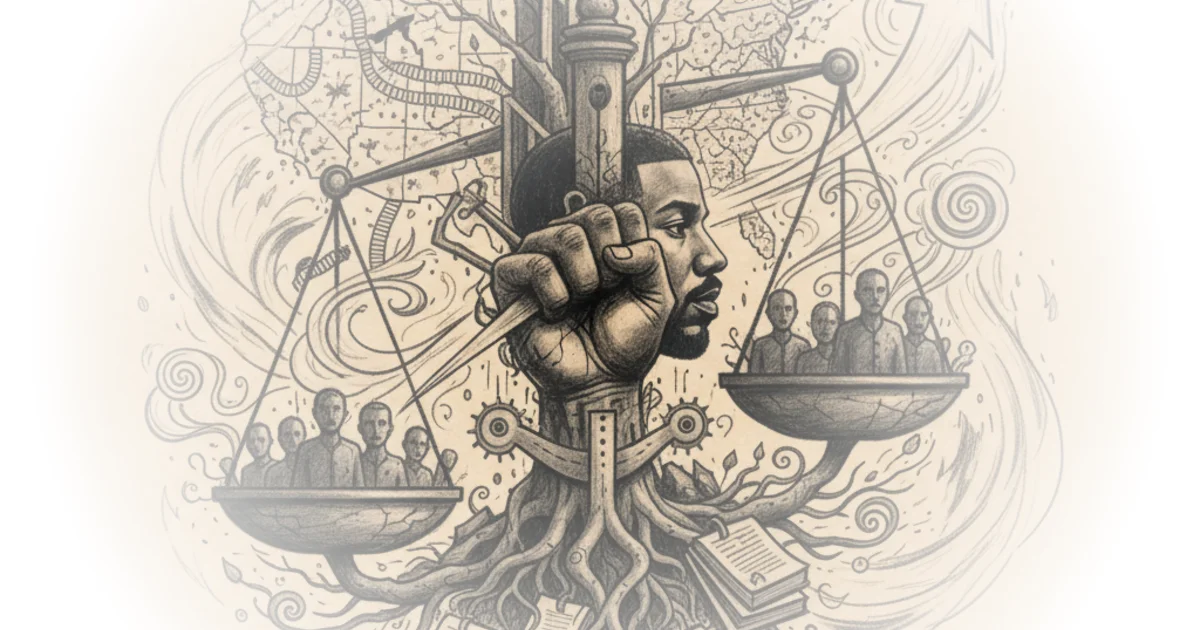
The piece shifts to its most compelling section when addressing the racial justice movement's obsession with criminal justice over housing. Yglesias observes that while activists focus on police reform, they often ignore the foundational role of land use policy. He reminds readers that "the first-ever big anti-segregation victory at the Supreme Court was a case striking down explicit racial zoning... handed down all the way back in 1917." This historical anchor is crucial; it demonstrates that the legal framework for segregation was baked into American land use long before the Civil Rights Act of 1964, and unlike school segregation, it was never fully unwound.
"Racial justice activism and political advocacy is very much focused on criminal justice as the main driver of structural racism, and make political decisions accordingly."
Yglesias argues that this focus is a strategic error. He explains that the YIMBY (Yes In My Backyard) movement, which advocates for zoning reform, has deliberately downplayed the racial justice angle to build broader coalitions. He cites the example of Connecticut, where a group formerly known as "Desegregate CT" rebranded to "Pro-Homes Connecticut." The reason, he notes, is that "if people develop the impression that the purpose of zoning reform is to help African-Americans while making white people worse off, that's going to mean zoning reform doesn't happen." By framing the issue as a win-win for property taxes and public sector pensions, reformers have found more success than by leaning into the racial justice narrative.
A counterargument worth considering is that this strategic reframing might dilute the moral urgency of the issue, treating racial equity as a secondary benefit rather than a primary goal. Yet Yglesias maintains that avoiding "coalition tensions" is essential, noting that while housing reform battles environmentalists, criminal justice reform battles police unions, and "from a coalition-management standpoint, it's the opposite" of what one might expect regarding political alliances.
The Human Cost of Algorithmic Pricing
In a surprising pivot, Yglesias tackles the ethics of dynamic pricing, using a personal anecdote about buying Tylenol for a sick child. He worries that technology will enable stores to charge different prices based on a consumer's perceived willingness to pay. "The Lazy Person price is going to be high," he writes, describing a scenario where affluent, time-poor shoppers get gouged while thrifty, diligent shoppers maintain competitive equilibrium. He admits this sounds like a "nightmare" for the individual but argues that, distributionally, it might be progressive in the long run.
"In a world of ubiquitous price discrimination, running a store becomes much more lucrative... But the extra profit margin is going to come from bilking people who are rich."
He suggests that while the short-term impact is a reduction in consumer surplus for everyone, the long-term effect could be a transfer of wealth from the wealthy to the poor, provided regulators set aside a basket of essential commodities with guaranteed low prices. This nuanced take challenges the standard populist outrage against price discrimination, suggesting that the "Lazy Guy Privilege" of the affluent is currently subsidizing the thrift of the poor, and that algorithmic pricing might eventually reverse that dynamic.
The Dating App Effect
Finally, Yglesias addresses the decline in sexual activity among young people, pushing back against the idea that social media and the fear of being filmed are the primary causes. He posits that the rise of dating apps has fundamentally altered how people meet. "The emergence of dating apps as a purpose-built infrastructure has crowded out basically all other ways of meeting people," he argues. He suggests that the decline in dancing and spontaneous social interaction is a symptom of this shift, not the cause. If people are swiping instead of dancing, the social friction that once led to romance is simply removed from the equation.
Bottom Line
Yglesias's most valuable contribution is his willingness to challenge the strategic orthodoxy of the racial justice movement, arguing that the path to equity may require setting aside the most emotionally resonant narratives in favor of politically viable policy changes. His biggest vulnerability lies in the assumption that the long-term benefits of algorithmic pricing will outweigh the immediate harms to consumer trust. Ultimately, the piece serves as a stark reminder that good intentions without political strategy often lead to stagnation.