In a media landscape obsessed with the perfectly plated and algorithmically optimized, Alison Roman offers a radical act of culinary honesty: a breakfast so ugly it was never photographed. This piece is not merely a recipe; it is a manifesto against the performative nature of modern food culture, arguing that the most nourishing meals are often the ones that vanish before they can be documented. For the busy professional navigating the exhaustion of constant content creation, Roman's admission that she is "tired of taking photos of everything I cook or eat" lands with the weight of a shared secret.
The Aesthetics of Survival
Roman begins by dismantling the myth of the effortless morning meal. She describes warming brothy beans in a skillet, crushing them with a wooden spoon so old it has "whittled" down from years of use. "They became a sort of refried bean texture, creamy bits studded with whole beans and bits of ham hock that had been shredded into the previous incarnation," she writes. The description is visceral and unglamorous, prioritizing texture and history over visual appeal. This grounding in the physical reality of cooking—where tools wear down and food looks like "hell" even when it tastes fabulous—resonates because it strips away the filter that usually separates the home cook from the professional chef.
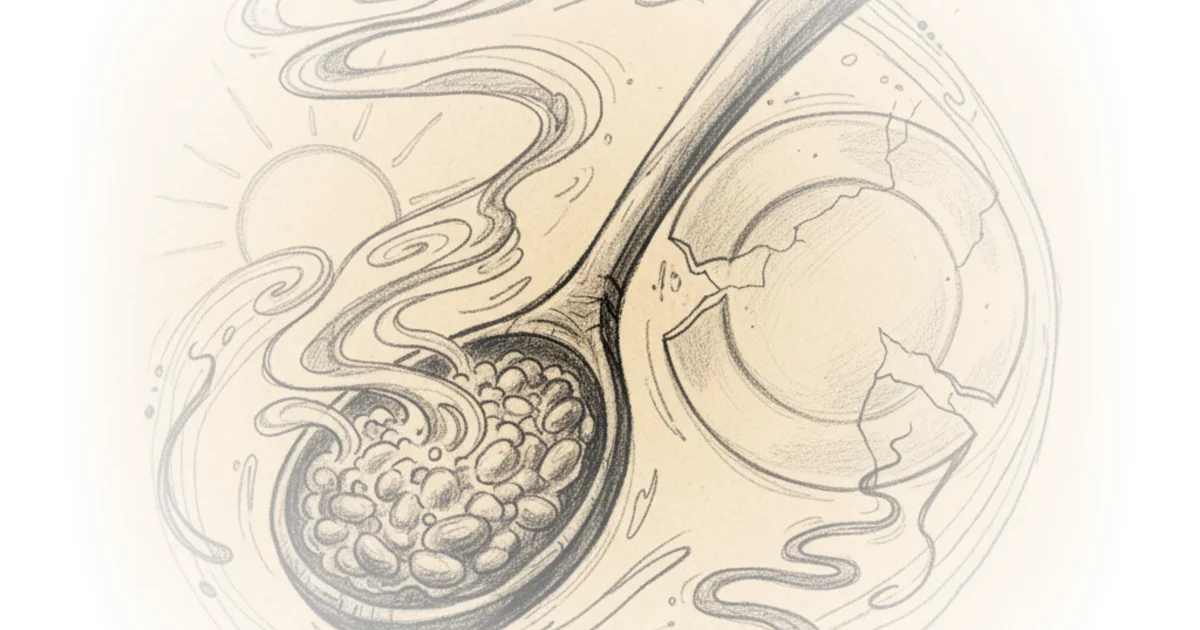
The narrative takes a sharp turn into the logistics of modern parenthood and labor. Roman notes that she was "concurrently pumping" while deciding whether to chop an onion for her burrito. "You've done enough," she tells herself, leaving the onion whole. This moment reframes the act of cooking not as a leisure activity, but as a negotiation with time and energy. The decision to skip the garnish isn't a failure of technique; it is a strategic choice to preserve sanity. As Roman puts it, "This was an ugly burrito, not a thing anyone needed to see." The admission challenges the reader to consider how much of their own daily labor is performed solely for an audience that may not even exist.
This was an ugly burrito, not a thing anyone needed to see.
Critics of the "anti-aesthetic" food movement might argue that visual appeal is an intrinsic part of the dining experience, or that sharing beautiful food inspires others to cook. However, Roman's argument suggests that the pressure to document every meal has become a barrier to actually enjoying it. She admits that sometimes a "stunning plate of perfect spring pasta goes 'unlensed' because it's too dark in my dining room or I forget or I'm too hungry." The loss of the photo does not diminish the quality of the meal; in fact, it may enhance the memory of the taste by removing the distraction of the camera.
The Economics of Documentation
Roman pivots to a broader critique of how food media operates, specifically regarding her own cookbook, Dining In. She recounts readers telling her, "I love that roasted cauliflower and dates recipe, but I didn't make it for so long because there's no photo. Why isn't there a photo?" This feedback loop reveals a troubling dependency: the utility of a recipe is often judged by its visual documentation rather than its flavor profile. Roman reflects on her own editorial choices, admitting, "At the time, in my mind, someone would rather have the recipe without the photo than not have the recipe at all, but now I think, maybe not!" This is a significant concession. It suggests that the industry's obsession with imagery has successfully conditioned consumers to undervalue text-based instruction.
The piece also touches on the shifting economics of food sourcing, noting that eggs from the farmers market are "undeniably better — and now cheaper — than the ones at the grocery store." Roman wonders if this price inversion might "encourage more people to shop at farmers markets?" While this is a hopeful observation, it overlooks the logistical barriers many face, such as travel time and limited hours, which often make the grocery store a necessity rather than a choice. Nevertheless, the point stands that the value of food is increasingly disconnected from its packaging and presentation.
As Roman concludes, she promises to finally share the recipe for the "unlensed" spring pasta, complete with ramps, pea shoots, and "so much lemon it was almost tart." She acknowledges the irony: "If a tree falls, etc. I guess this is your reminder to try that recipe if you have that book." The reference to the old adage implies that the existence of the dish matters more than its visibility. The promise of the recipe in the inbox serves as a corrective to the visual noise, offering substance over spectacle.
Bottom Line
Roman's strongest argument is that the pursuit of culinary perfection often obscures the simple joy of eating, a sentiment that feels urgently necessary in an era of curated feeds. The piece's vulnerability lies in its reliance on the author's privileged position; not everyone has the time, resources, or support system to prioritize taste over documentation. Ultimately, the reader is left with a compelling challenge: to cook for the stomach, not for the screen.
If a tree falls, etc. I guess this is your reminder to try that recipe if you have that book.