In a landscape where legal analysis often defaults to partisan scoring, Devin Stone cuts through the noise with a rare, uncomfortable clarity: the real danger isn't who is pardoning whom, but the erosion of the unspoken norms that keep the presidency from becoming a family business. Stone doesn't just dissect the mechanics of the recent pardon; he exposes the terrifying precedent set when a leader admits the system is rigged, then proceeds to rig it further.
The Norm vs. The Law
Stone's central thesis rests on a distinction that is easy to miss but vital to understand. He acknowledges the legal reality immediately: "there's no dispute that legally the president does have the power to issue this pardon." However, he pivots sharply to the moral and institutional cost. The argument is that while the Constitution grants the power, the health of the republic relies on the restraint not to use it for personal gain.
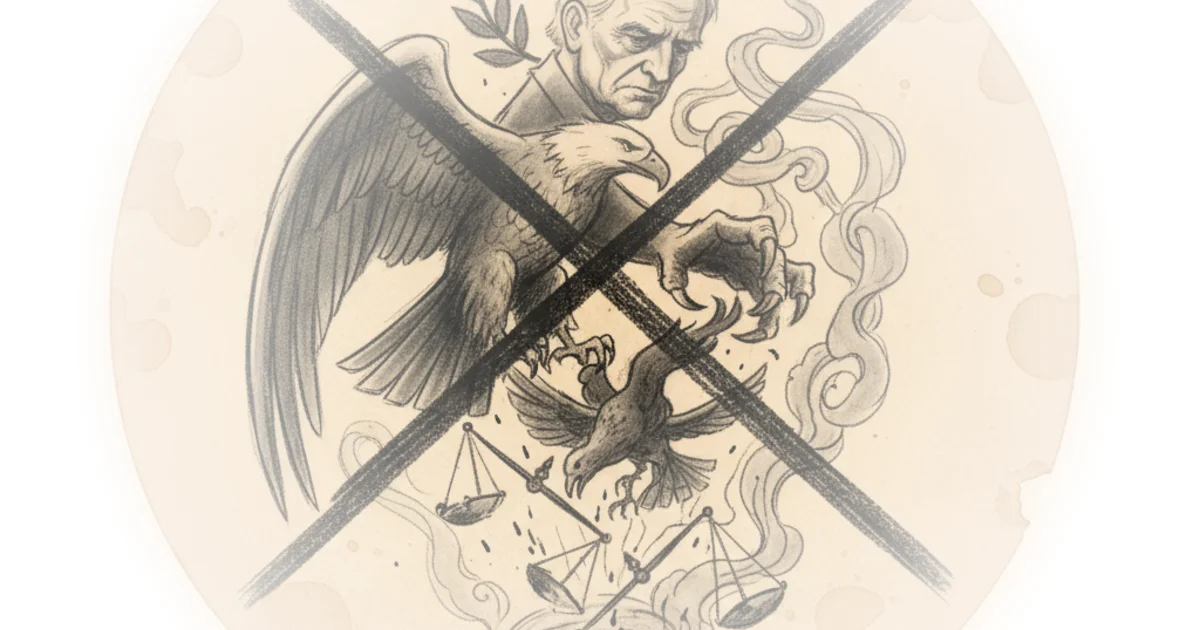
Stone frames the President's own words as the smoking gun. He notes that the President previously swore, "I will not pardon him," and "I will abide by the jury decision." By breaking this explicit promise, Stone argues, the administration has done more than just free a son; it has validated a narrative that undermines the entire justice system. "President Biden swore several times that he would not pardon Hunter because he believed in the due process of law and now he's changed his mind undermining the rule of law," Stone writes. This is a devastating critique because it comes from a place of understanding the human element. Stone admits, "it is completely understandable that an aging father doesn't want to see his only surviving son go to jail," yet he insists, "it is as understandable as it is indefensible."
This framing is effective because it refuses to let the "he's just a dad" defense absolve the "he's the President" responsibility. It forces the listener to confront the conflict between private affection and public duty without resorting to caricature.
The Double Standard Trap
The piece takes a bold turn when addressing the inevitable "both sides" argument. Stone anticipates the counter-claim that political pardons are a bipartisan tradition, citing the 88% of pardons from a previous administration that went to allies, and the historical precedents set by other presidents. Yet, he refuses to let this become a game of "who did it worse."
A world where we're tallying up the pardons to see whose worse is one where we all lose.
Stone's analysis here is crucial for busy listeners who might be tempted to dismiss the current event by pointing to past grievances. He argues that acknowledging the corruption of the past does not justify the corruption of the present. "To say that both sides do it or get bogged down in a question of who does it worse belies the fact that this is always unjust," he asserts. This is a strong, principled stand that elevates the commentary above the usual political mudslinging.
However, a counterargument worth considering is whether Stone underestimates the strategic necessity of the pardon. The President's team argues that the prosecution was politically motivated and that a future administration might weaponize the DOJ further. Stone acknowledges this risk but pushes back: "those are supposed to be the risks you either believe in the institution... and let it run its course or you don't." He suggests that if the fear of political retaliation is the only reason to break the norm, then the norm itself is already dead. This is a tough pill to swallow for those who view the current political climate as an existential threat to the rule of law.
The Collateral Damage to Justice
Perhaps the most profound insight in Stone's commentary is the unintended consequence of the pardon on the credibility of other high-profile prosecutions. By claiming that his son was "selectively and unfairly prosecuted simply because he is his son," the President has inadvertently created a shield for those facing similar charges.
Stone points out the tragedy of this move: "if the president himself says that the Department of Justice is political and selectively prosecutes his son it is much harder to defend the Trump prosecutions." He notes that the Department of Justice, under Attorney General Merrick Garland, worked tirelessly to ensure those cases were "apolitical and not to mention much of the prosecutions were based on what was just plainly out in the open." By validating the claim of selective prosecution, the administration has handed ammunition to those who claim the entire justice system is a political weapon.
This pardon and the justifications for this are also going to retroactively paint the Trump prosecutions in a tainted light.
Stone's observation that "neither was [Hunter] selectively prosecuted" is a hard truth that challenges the official narrative. He notes that while some aspects of the prosecution were legally aggressive, the underlying crimes were real and admitted to. "Hunter did the crimes he even wrote a book about it," Stone reminds us. The argument that the prosecution was a miscarriage of justice is, in Stone's view, a convenient fiction that serves to justify the pardon but damages the integrity of the courts.
Bottom Line
Devin Stone's commentary is a masterclass in separating the legal from the ethical, delivering a verdict that is as painful as it is necessary: the President had the power to do this, but the act itself signals a collapse of the norms that prevent the presidency from becoming a tool for personal protection. The strongest part of the argument is its refusal to accept "both sides" as an excuse, instead insisting that the erosion of standards is a cumulative disaster. The biggest vulnerability lies in the assumption that the public cares enough about abstract norms to punish the administration at the ballot box, a hope Stone himself seems to doubt. The real story isn't the pardon itself, but the long, slow unraveling of the belief that the law applies equally to everyone, including the President's family. "